Greece makes a great deal of wine and exports comparatively little of its best, which means most of what is worth drinking has to be drunk in the country. It is also one of the few places where the grape names on the label will be unfamiliar even to confident wine drinkers, since the indigenous varieties never spread the way French ones did. That unfamiliarity is the opportunity. Here is enough to order well, whether in a taverna or at a winery.
Three names that unlock most wine lists
Assyrtiko is the white to know. It is grown across the country but belongs above all to Santorini, where it gives a bone-dry, high-acid wine with a distinctly mineral, saline character that goes with grilled fish almost automatically. If you like a crisp, unoaked white, this is the safest bet on any list.
Agiorgitiko is the approachable red, grown chiefly around Nemea in the Peloponnese. It is softer and fruitier than the other major red, works at a range of price points, and is the one to order if you want something red that will not fight the food.
Xinomavro is the serious red, from the north around Naoussa and Amyndeo. It is high in acid and tannin, ages well, and is frequently compared to nebbiolo for its combination of pale colour and firm structure. It rewards attention and can be austere when young, so it is a better second choice than a first.
Learn those three and most Greek wine lists become navigable. Everything else, and there is a great deal of everything else, is a bonus rather than a requirement.
Reading a label in an unfamiliar alphabet
The other barrier is script. Plenty of Greek labels are printed in Greek letters, sometimes with no Latin transliteration at all, which makes a shop shelf harder to read than it needs to be.
A few words do most of the work. Ktima means estate, the equivalent of domaine or château, and it tends to sit at the front of a producer’s name. Oinos is simply wine, and oinopoieio is the winery itself. Beyond that, the grape name is usually the largest word after the producer, so recognising assyrtiko, agiorgitiko and xinomavro in Greek letters is most of the battle.
Greece also uses the standard European quality tiers, so a bottle may carry a protected designation of origin or the broader protected geographical indication, generally shown by their Greek abbreviations. Neither is a promise of quality on its own, and a great deal of interesting Greek wine sits deliberately in the wider category. Treat the region and the producer as the useful signals and the tier as background.
Retsina, and why it deserves another look
Retsina is wine flavoured with pine resin. The practice descends from the era when resin was used to seal wine vessels and the flavour came along with the seal, and it survived into the modern industry as a style in its own right. Its reputation abroad was built on very cheap bulk versions, and that reputation is not entirely undeserved.
What has changed is that a number of producers now make retsina deliberately and carefully, from decent fruit and with a restrained hand on the resin. The result is a dry white with a pine and herb note rather than a wall of it, and it is genuinely good with fried food, salty cheese and the sort of small plates covered in our food guide. Try it once from a producer someone recommends rather than writing it off.
House wine and how to order it
In a family taverna, the wine that arrives in a jug or a small metal carafe is a normal part of the meal rather than the cheap option. It is often local, sometimes made by relatives of the owner, and can be very good. It can also be rough, and there is no way to tell from the menu.
The sensible approach is incremental. Order the smallest measure first, usually a quarter or half litre, taste it, and then commit to more if it works. Nobody will think anything of it. Where the house wine is poor, bottles from the region are usually available and still reasonable, and switching after a taste is completely normal behaviour.
Let someone else drive between the wineriesHalf-day tasting tours around Santorini and Nemea handle the transport, which matters more than usual on a wine daySantorini, and why its wine costs what it does
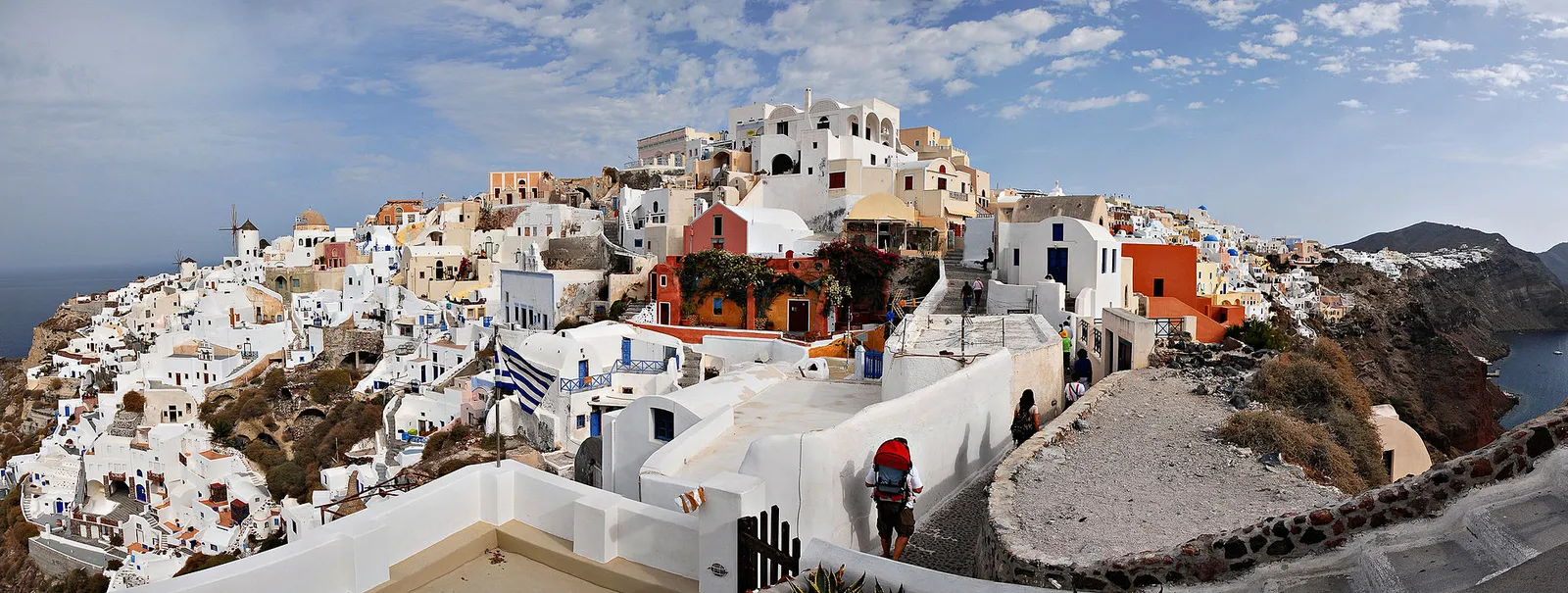
Santorini deserves its own paragraph because it explains the prices. The island is dry, fiercely windy and volcanic, and the vines are trained into a low woven coil called a kouloura, with the grapes growing sheltered on the inside. It protects the fruit from wind and sand and helps it draw on the overnight humidity, and it is one of the strangest and most memorable sights in the fields.
That method is labour-intensive, yields are very low, and vineyard land competes with hotel development. The result is that assyrtiko from Santorini costs considerably more than equivalent wine from the mainland. It is worth drinking on the island, where the wineries are close together and an afternoon of tasting is easy to arrange around the rest of a stay, as our Santorini guide sets out.
Beyond the famous regions
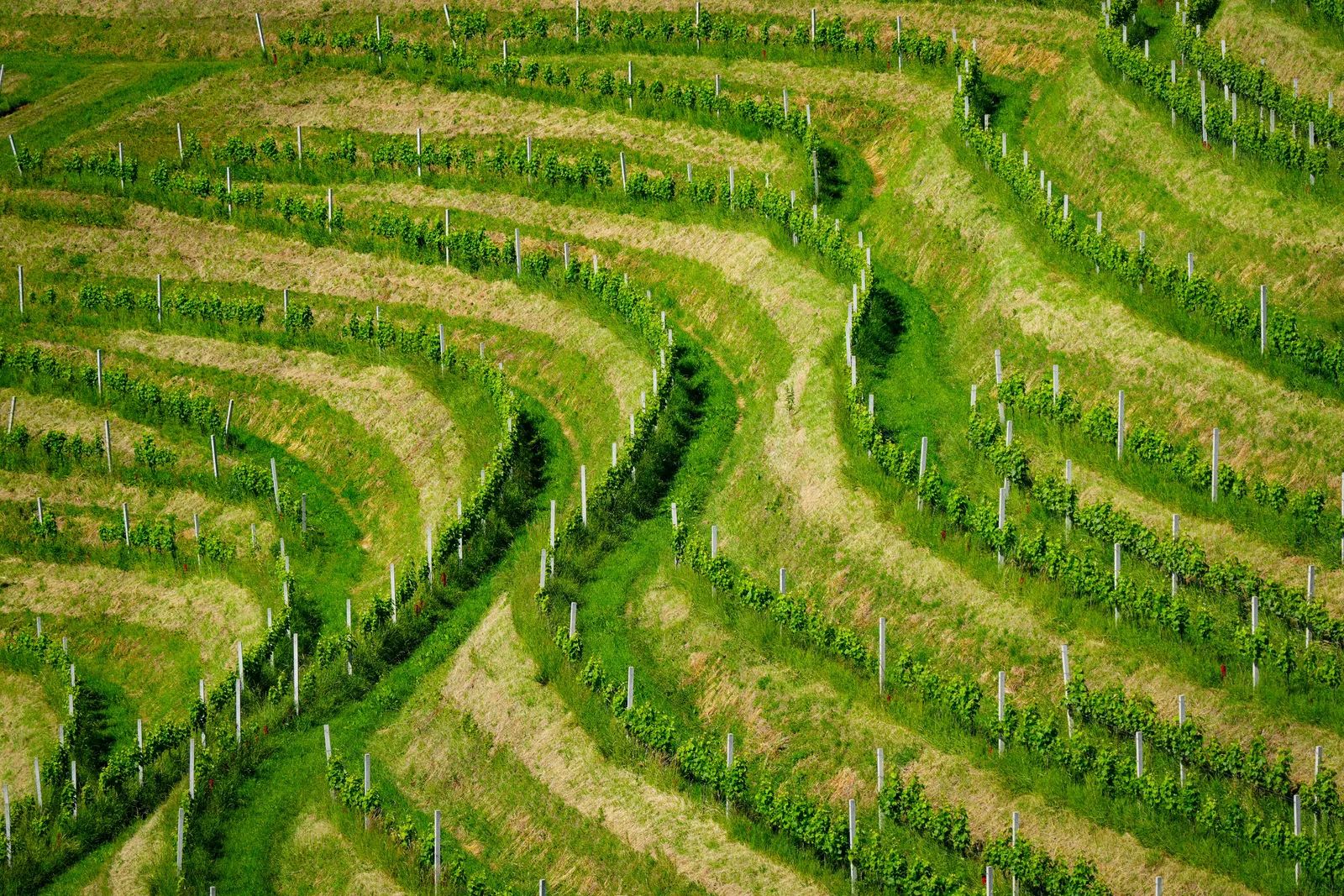
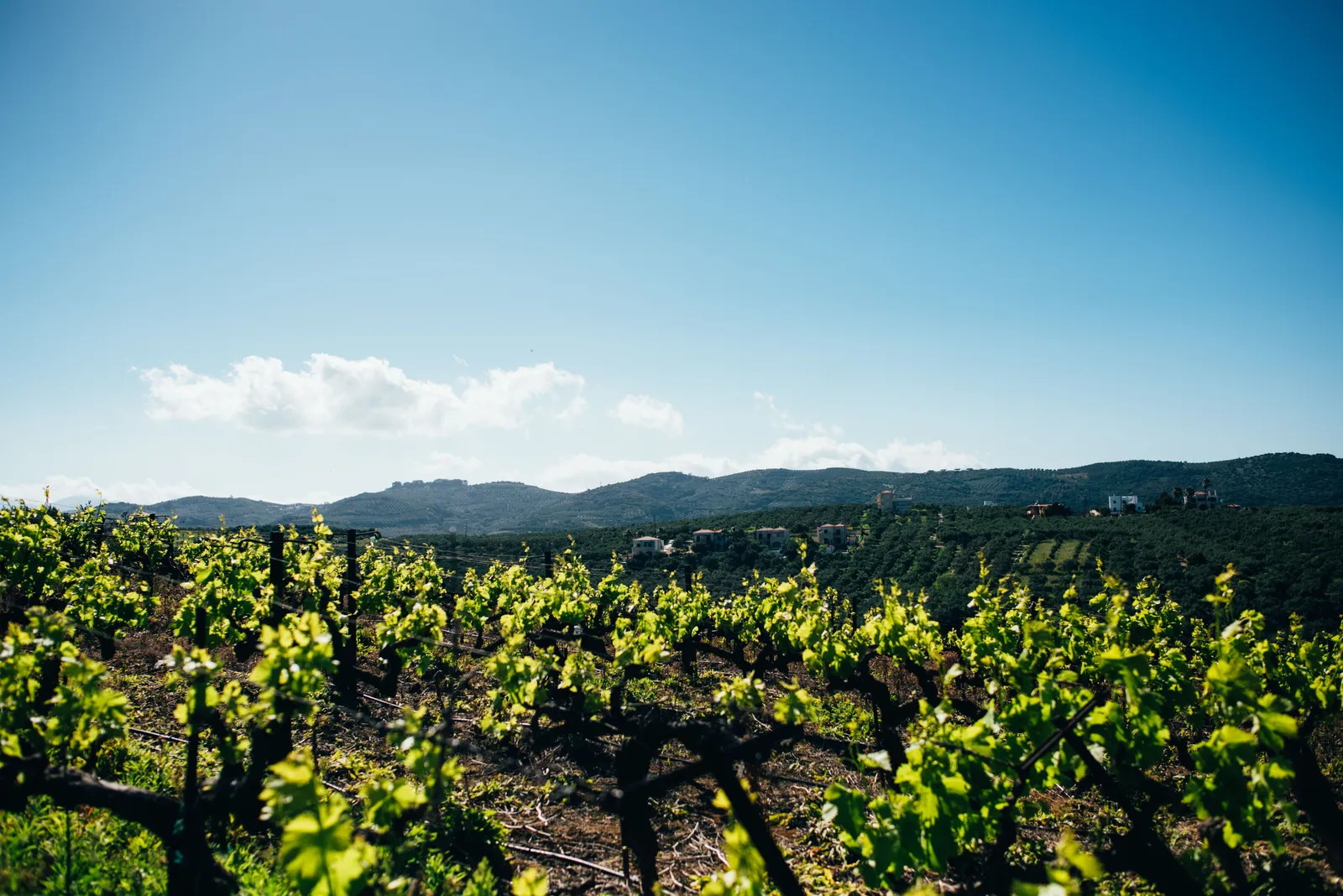
The rest of the country is where the value sits. Crete has an increasingly serious scene in the hills inland from the north coast, working with local grapes such as vidiano and liatiko that almost never leave the island, and it pairs naturally with the food and the driving distances described in our Crete guide. Macedonia in the north is the xinomavro heartland. The Peloponnese covers both moschofilero, an aromatic white from Mantinia, and the Nemea reds.
Two practical notes for anyone planning visits. Winery opening hours vary widely and many smaller producers expect a booking rather than a drop-in, so confirm directly before driving out. And if you find something you like, buying at the winery is often the only realistic way to get it, since a great deal of Greek wine simply never reaches export markets at all.