Ask Greeks where to eat and a surprising number will say Thessaloniki rather than Athens. The country’s second city has the food culture, the student population and the late nights, and it also has Roman monuments, Byzantine churches on the UNESCO list, and Ottoman remains, layered on top of each other along one long waterfront.
An hour south, Halkidiki puts three peninsulas into the Aegean, and they are genuinely different from one another. Five days covers the city and two of the three fingers. Read first time in Greece for the basics and the Greek food guide, because in this part of the country you will use it.
Itinerary at a glance
| Day | Area | Signature experience |
|---|---|---|
| 1 | Thessaloniki | The waterfront, the markets and the upper town |
| 2 | Vergina and Pella | The royal tombs of Macedon, underground |
| 3 | Kassandra | The busy finger, and the beaches that earn it |
| 4 | Sithonia | The empty finger, and the coast road |
| 5 | Mount Athos and back | The monasteries from the sea |
Day 1: Thessaloniki
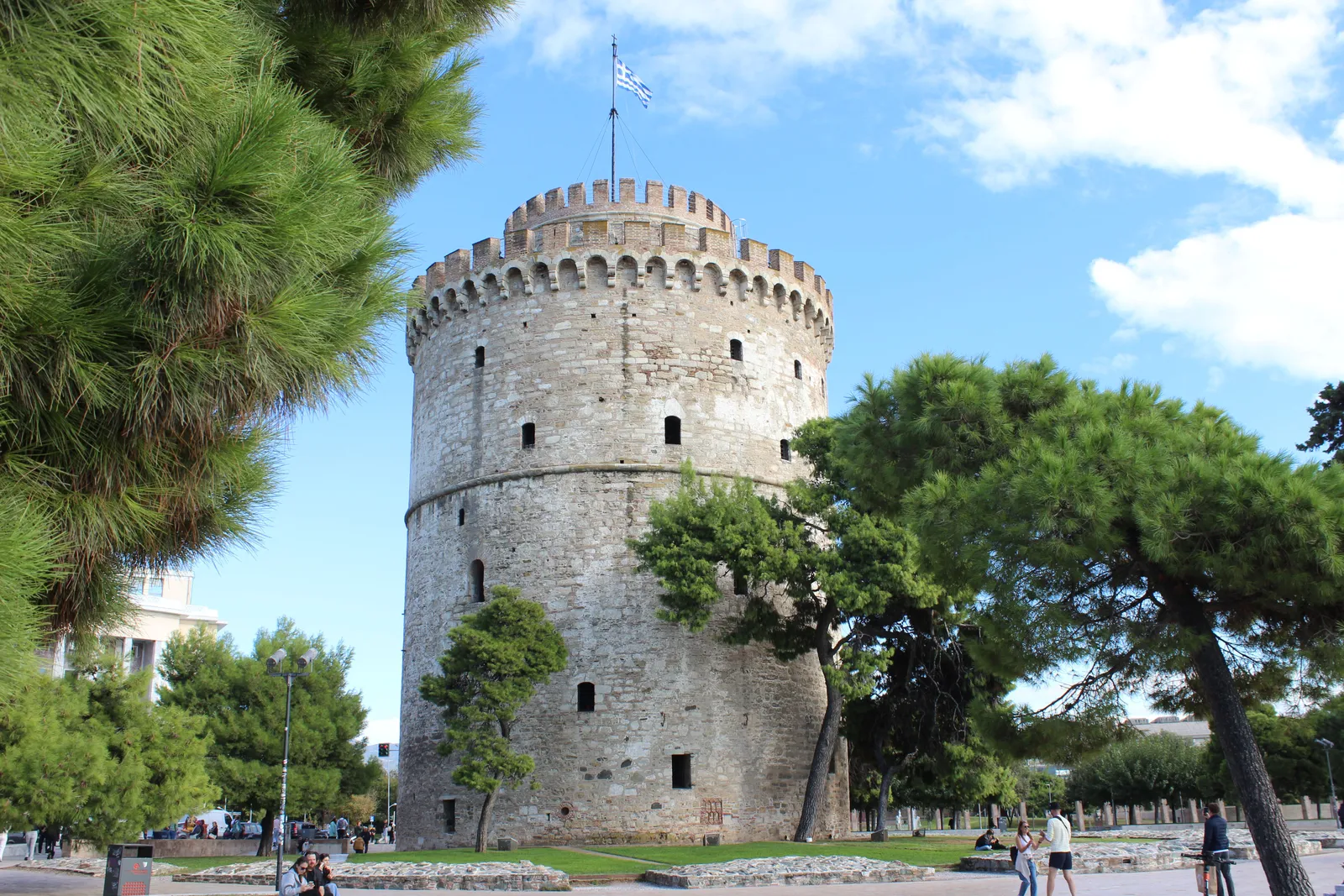
Start at the White Tower on the seafront and walk. The promenade runs for kilometres and is where the whole city goes in the evening, so save part of it for after dark.
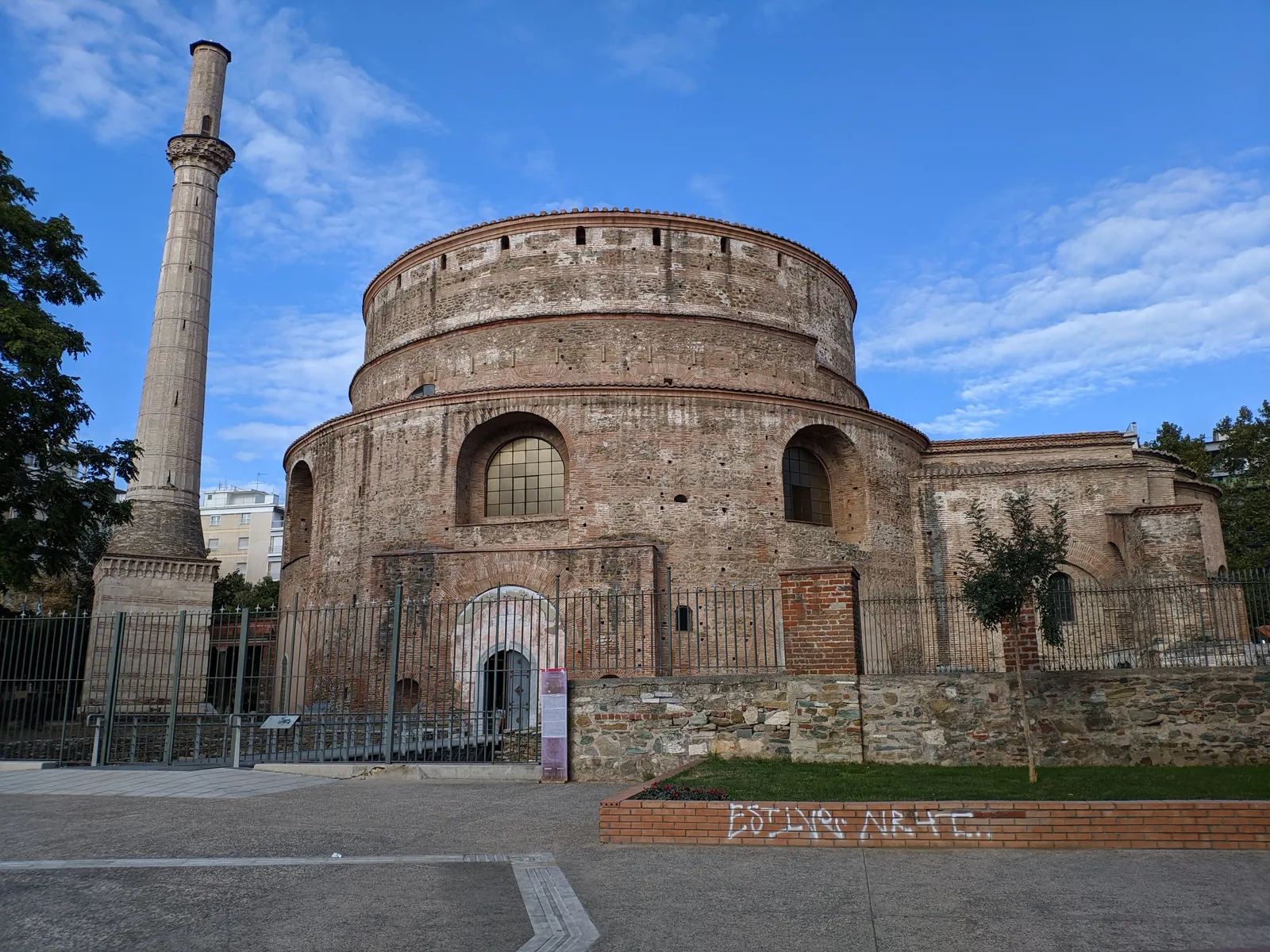
Inland, the Rotunda is a Roman building from around 300 AD, later a church and then a mosque, and its minaret still stands next to it. Behind it the Arch of Galerius carries carved battle reliefs, and below ground the Roman forum sits open in the middle of the modern city.
Climb to Ano Poli, the upper town, which survived the great fire of 1917 that destroyed most of the centre. Ottoman era wooden houses, narrow lanes and the Byzantine walls with a view down over the whole gulf.
Wow moment of the day: the markets. Modiano and Kapani in the centre are working food markets, loud and unpolished, and the small ouzeri tucked among the stalls are where you eat.
Order in the local style: lots of small plates with ouzo or tsipouro, bougatsa for breakfast the next morning, and koulouri from a street cart. The city’s Sephardic Jewish community, which was the majority population for centuries until it was destroyed in the Holocaust, left traces in the food and is documented in the Jewish Museum, which is worth an hour.
Day 2: The Macedonian kings
An hour west, Vergina is the ancient Aigai, the first capital of Macedon, and the reason to come is underground.
The royal tombs were found intact in 1977 beneath a burial mound, and the museum is built inside the mound itself. You walk into a dark space and the tomb facades are there, painted, with the grave goods in cases around them: gold larnakes, armour, a wreath of hammered gold oak leaves so fine it barely looks like metal. One of the tombs is widely identified as that of Philip II, father of Alexander the Great.
Wow moment of the day: the gold oak wreath, and the fact that you are standing inside the burial mound rather than looking at objects removed from it.
Pella, on the way back, is the later capital and where Alexander was born, with extraordinary pebble mosaics of hunting scenes still in place.
Honest note: both sites are indoors or partly covered, which makes this a good hot day or wet day option.
Day 3: Kassandra
The first finger is the developed one: resorts, beach bars and the busiest strips in northern Greece. That reputation is fair for the middle of it, and it is not the whole story.
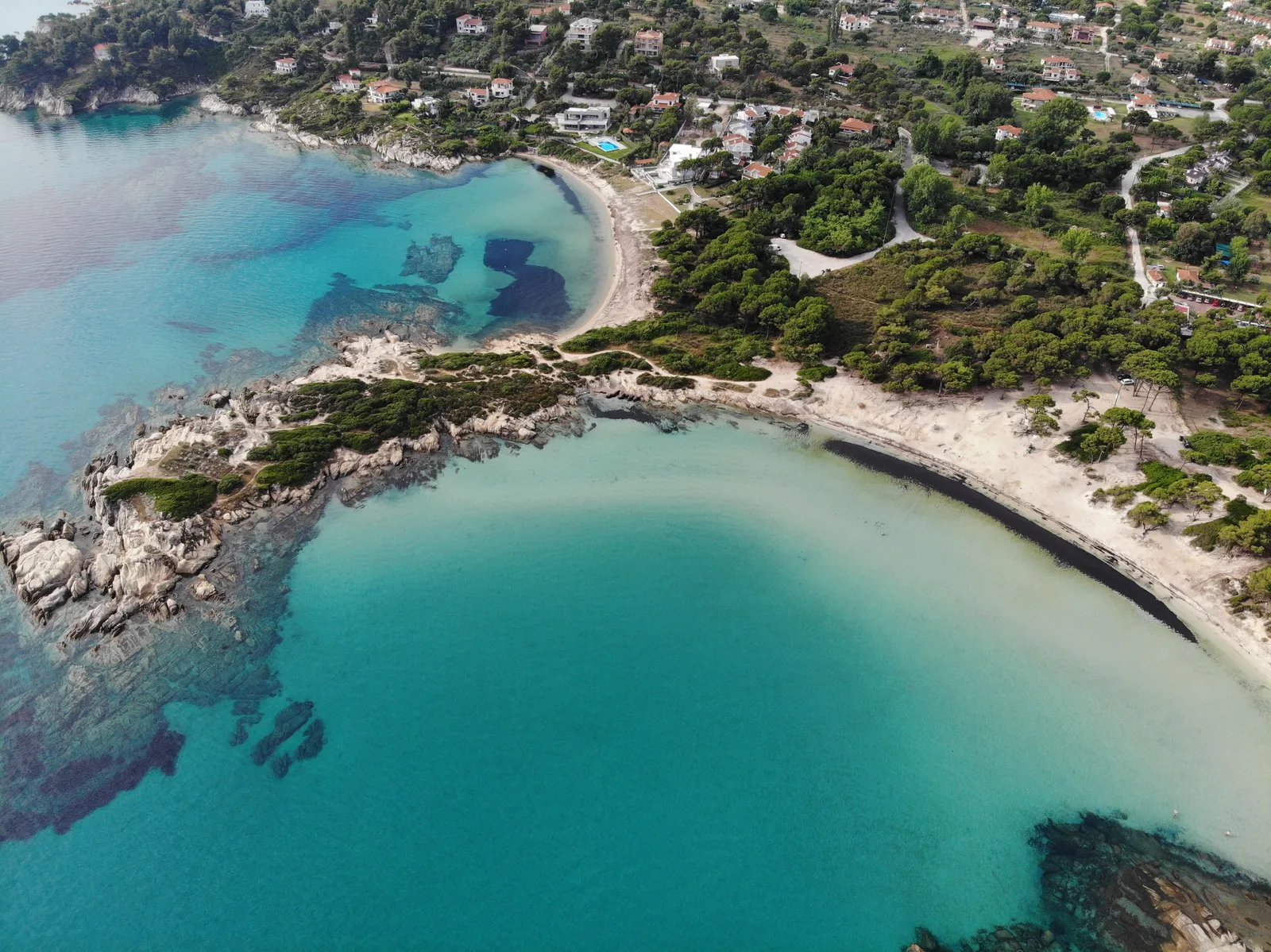
The good parts are at the edges. Possidi at the western tip has a long sand spit running out into the sea with water on both sides. Kalogria and the bays on the west coast are pine backed and calmer. Afytos is a preserved stone village on a cliff above the sea, with a view along the whole gulf, and it is the prettiest thing on this peninsula by a distance.
Honest note on timing: Halkidiki is where Thessaloniki goes at weekends and where much of the Balkans holidays in August, so a summer weekend on Kassandra is genuinely busy. Midweek, or June and September, is a different place.
Day 4: Sithonia
The middle finger is the one to give a full day to. It is mountainous, pine covered, far less built up, and a single road loops the whole coastline with a bay every few kilometres.
Drive it. The east coast has the famous ones, Kavourotrypes with its sculpted white rock and small coves, and the long sands at Sarti. The west has Porto Koufo, a huge natural harbour almost entirely closed off from the sea, and the viewpoint above it. Vourvourou in the northeast has a scatter of small islands offshore that you can reach in a rented boat with no licence, which is the best half day here.
Wow moment of the day: the road itself, on the stretch around the southern tip, where it climbs and the whole open Aegean appears with Mount Athos across the water.
Day 5: Mount Athos from the water
The third finger is the Athos peninsula, an autonomous monastic state of twenty monasteries that has been self governing for over a thousand years.
It cannot be visited casually, and it is important to know why before you plan around it. Entry requires a permit issued in limited numbers well in advance, and women are not permitted to enter at all under a prohibition that has stood for centuries and is still enforced in law.
What everyone can do is see it from the sea. Boats run along the coast from Ouranoupoli, staying offshore at the required distance, and the monasteries appear one after another: fortified, enormous, built into cliffs above the water, in a landscape that has almost no roads. It is one of the strangest coastlines in Europe.
Ouranoupoli itself, the last town before the border, has a Byzantine tower on the beach and is a pleasant last lunch.
Then drive back to the city. If you have an evening flight, the waterfront is a good place to spend it.
Practical tips
- You need a car for everything outside the city. Buses reach the main Kassandra resorts and little else. See car rental in Greece.
- When to go: June and September for the coast, and the city is good all year. August is the regional peak. See the best time to visit Greece.
- Getting here: Thessaloniki has an international airport and a rail link south. It is a long way from the islands, so treat this as its own trip rather than an add on.
- Athos permits must be arranged in advance and are limited daily. Do not plan a day around walking in.
- Eating: this is a small plates city, and portions are built for sharing. See the Greek food guide.
- Beaches: for how the north compares, see the best beaches in Greece.
- Budget: northern Greece is noticeably cheaper than the famous islands for both rooms and meals. See the Greece budget guide.