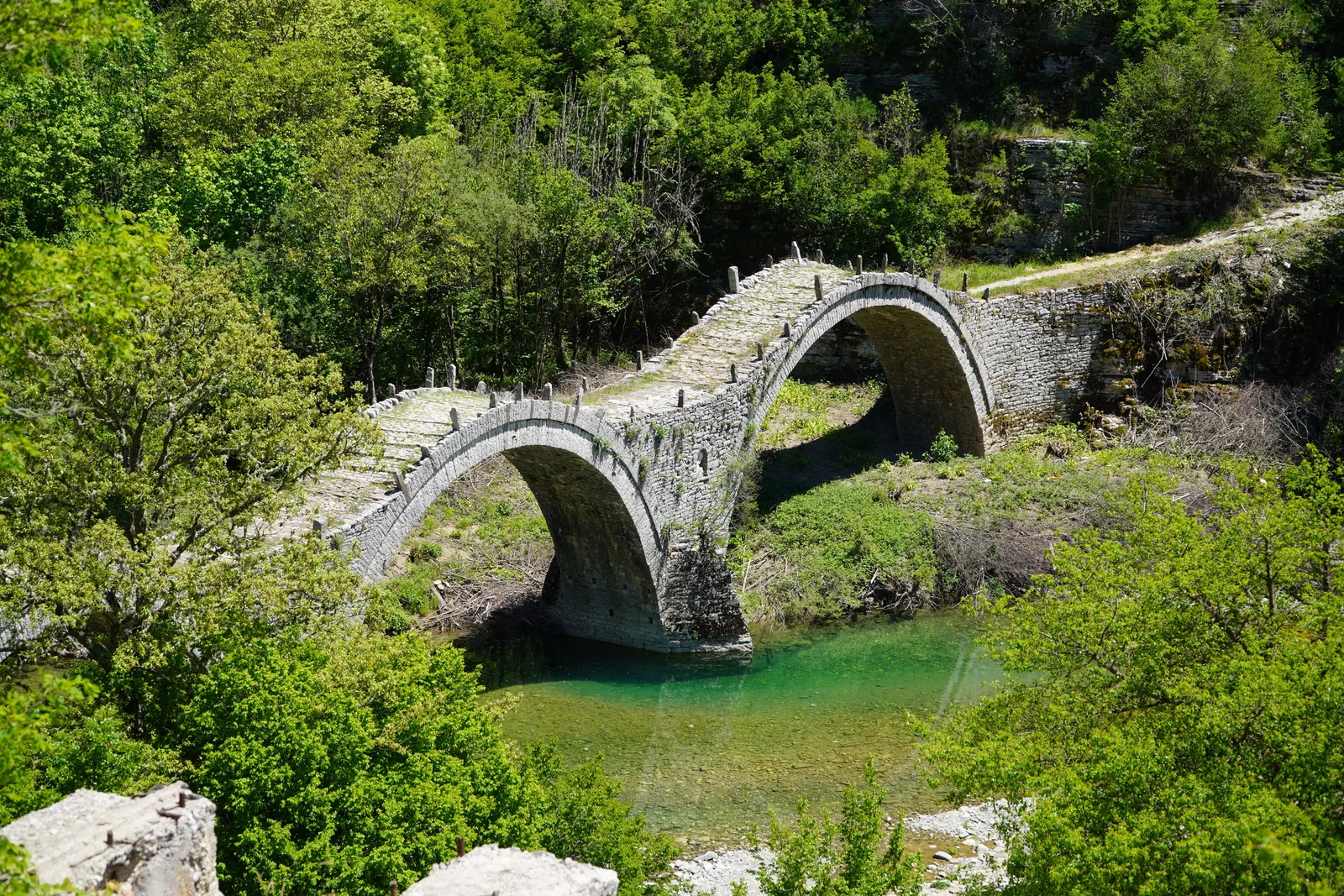
There is a corner of Greece with no beaches, no ferries and no white villages, and it is one of the most beautiful places in the country. Epirus, in the northwest against the Albanian border, is high, wet and forested. Its heart is Zagori, a cluster of forty six stone built villages spread across the mountains, linked historically by single and double arched packhorse bridges that still stand over the rivers.
Between them runs the Vikos gorge, which by the ratio of its depth to its width is among the deepest in the world. Five days and a car is the right amount. This works well after Meteora and Delphi, which is a two hour drive away.
Itinerary at a glance
| Day | Area | Signature experience |
|---|---|---|
| 1 | Ioannina | A lake with an inhabited island in the middle |
| 2 | Central Zagori | The bridges, and the Vikos viewpoint |
| 3 | The gorge | Down into it, all day or half |
| 4 | Papingo and the towers | Rock pools under the Astraka towers |
| 5 | Metsovo or the coast | Mountain cheese, or the Ionian shore |
Day 1: Ioannina
Ioannina sits on a lake under the mountains and is the capital of Epirus, a proper working city rather than a tourist town. Its old quarter is enclosed by a walled citadel on a promontory into the water, with two mosques still standing from the Ottoman period. The Aslan Pasha mosque houses the municipal ethnographic museum, and the Byzantine museum sits in the Its Kale inner citadel nearby.
Wow moment of the day: the island. A short boat ride out into the lake, there is a small inhabited island with no cars and no name other than “the island”, with a village of a few hundred people, several monasteries in the woods, and the room where Ali Pasha, the effectively independent ruler of the region, was killed in 1822. You can still see the bullet holes in the floorboards, which the museum makes rather a lot of.
Eat the food this region is known for: pites, layered pies of greens, cheese or leeks, which in Epirus are a serious craft rather than a snack.
Ioannina is also where the silversmithing tradition of the region lives, and the museum of silverwork in the citadel is worth an hour.
Day 2: Into Zagori
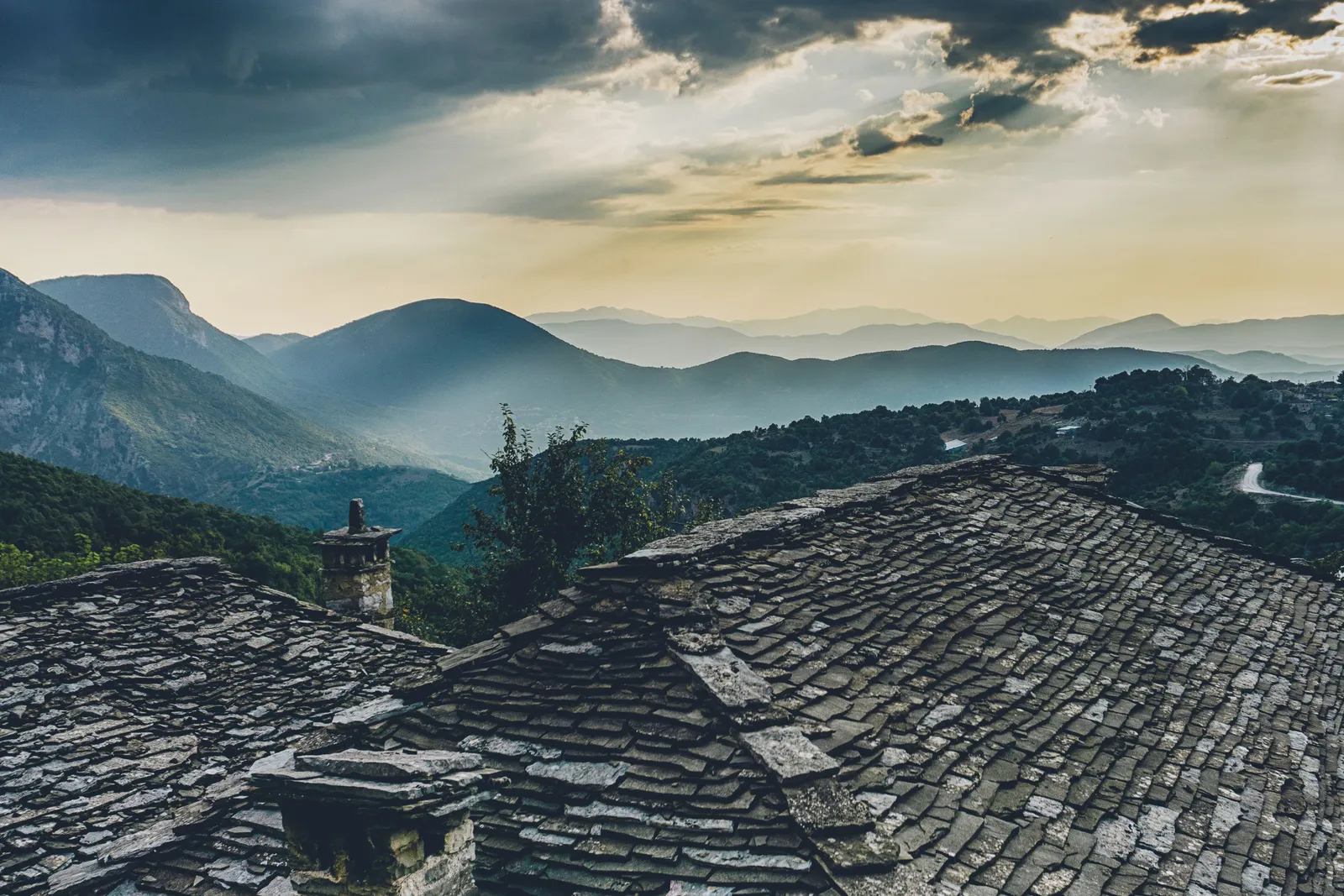
Drive up into the mountains. The villages here are built entirely of grey stone, walls and roofs alike, and they were prosperous in the Ottoman period under a special tax arrangement that left them largely self governing. That money paid for the schools, the mansions and the bridges.
The bridges are the signature of the region. Arched packhorse bridges, some single span and some triple, built in the eighteenth and nineteenth centuries by travelling crews and paid for by individual merchants, whose names they still carry. The Kokkorou, Plakidas and Kalogeriko bridges near Kipi are the classic cluster and several are within a short walk of each other.
Base yourself in Monodendri, Kapesovo, Vitsa or Dilofo. Honest note: these are small villages, accommodation is in restored stone guesthouses rather than hotels, and there is often exactly one taverna. Book ahead, especially at weekends when Greeks come up from the cities.
End the day at the Oxia viewpoint above Monodendri, which looks straight down into the Vikos gorge.
Day 3: The Vikos gorge
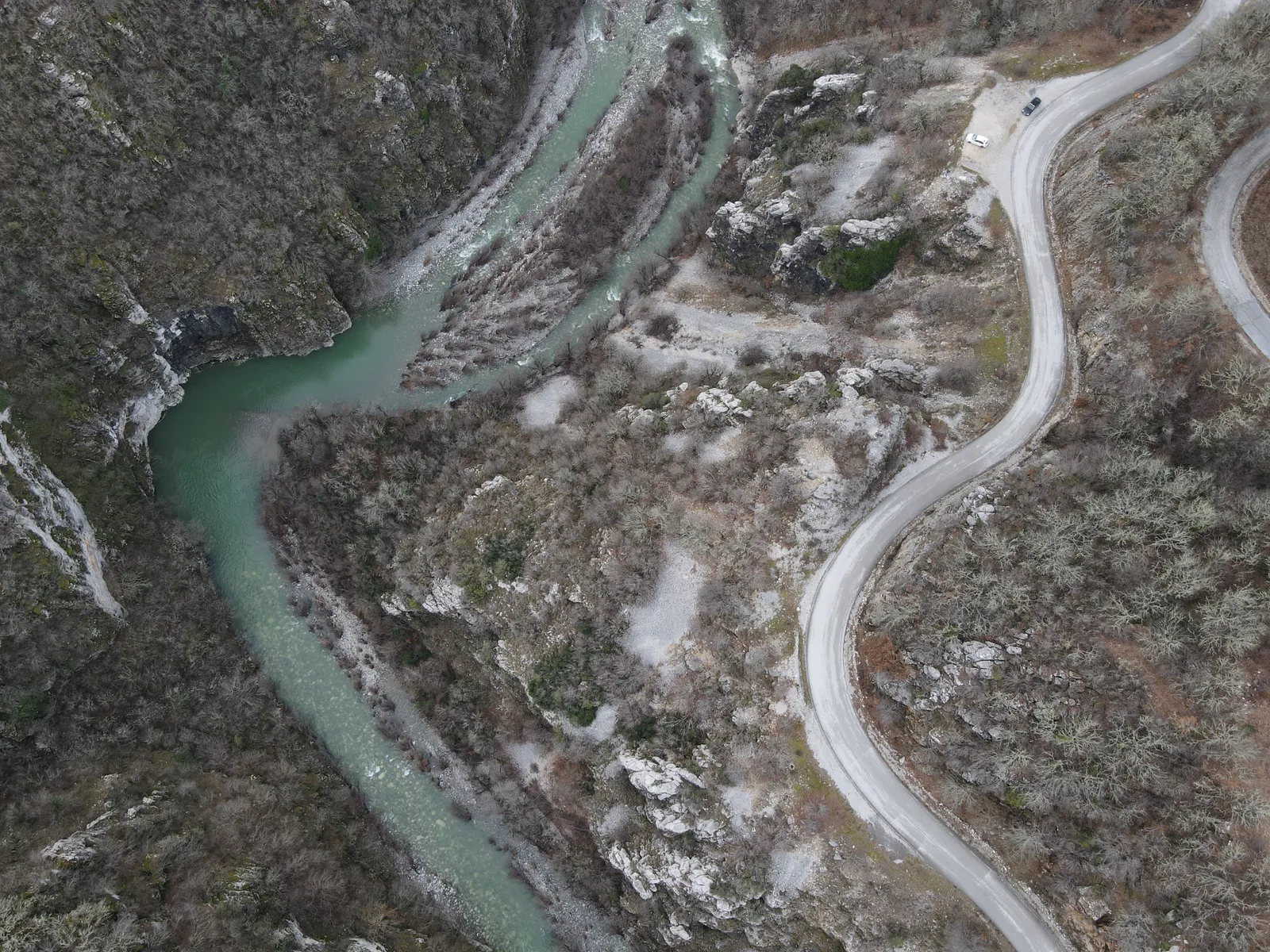
The gorge runs about twenty kilometres between Monodendri and the Papingo villages, with walls up to around nine hundred metres. The full through hike is a demanding day: a steep stone stepped descent, a long walk along the riverbed, and a hard climb out at the far end.
Honest safety note. This is a serious mountain route, not a stroll. It needs proper boots, several litres of water, an early start and a plan for getting back to your car, since the two ends are far apart by road. Mobile coverage in the gorge is poor. In spring the riverbed can hold water, and in summer the river through the gorge is usually dry, which surprises people who expect to refill from it. Do not go alone and do not start it in the afternoon.
The shorter version is genuinely good. Walk down the stone steps from Monodendri as far as the floor and back up, which takes a couple of hours and gives you the scale. Or drive round and walk up from the Voidomatis springs at the northern end, where the river emerges cold and startlingly clear.
Before you set off, look into the Agia Paraskevi monastery clinging to the cliff edge at Monodendri, with a ledge path beyond it cut into the rock face.
Day 4: Papingo
The two Papingo villages, Megalo and Mikro, sit under the Astraka towers, a wall of vertical limestone that dominates everything. This is the mountaineering end of Zagori and the base for the climb up to the Drakolimni, a small alpine lake at around two thousand metres.
Wow moment of the day, and it needs no climbing: the kolymbithres, a chain of natural rock pools scoured smooth by the stream above Papingo, where the water runs through polished white basins. It is a short walk from the road and it is cold enough to take your breath, which after a mountain day is the point.
Honest note: the pools are slippery and the rock is smooth by definition. People do get hurt here, so take it slowly and do not jump into water you have not checked.
Eat in the village in the evening. Mountain cooking in Epirus means pies, wild greens, trout from the rivers, and slow cooked goat, with local cheeses that travel less well than the food of the islands and are correspondingly better here.
Day 5: Metsovo, or down to the sea
Two very different ways to finish.
Metsovo, east of Ioannina on the mountain pass, is a Vlach town of steep streets and wooden balconies, known across Greece for its smoked metsovone cheese and its wine. It has a folk museum in a restored mansion that is one of the better ones in the country, and it is directly on the road back east if you are continuing to Meteora.
Or drive west to the Ionian coast, which is under two hours away. Parga is a stacked amphitheatre of a town under a Venetian castle, and the Acheron springs nearby are where the ancients placed the entrance to the underworld, now a cold clear river you can walk and raft in. Sivota and the beaches south of it are the quiet end of this coast.
Practical tips
- You need a car. There is effectively no useful public transport between the Zagori villages. See car rental in Greece.
- When to go: late spring for the wildflowers and full rivers, and autumn for the colour, which in these forests is genuinely spectacular. Summer is pleasantly cool compared with the islands. Winter brings snow and some roads close. See the best time to visit Greece.
- Weather: this is the wettest region in Greece. Bring a layer and a waterproof even in summer.
- Hiking cover: check that your policy covers mountain walking, and know the numbers. See travel insurance for Greece and emergency numbers in Greece.
- Combining it: Epirus pairs naturally with Meteora, and with the Ionian islands via the port at Igoumenitsa. See island hopping by ferry.
- Food: the pies alone are worth the drive. See the Greek food guide.