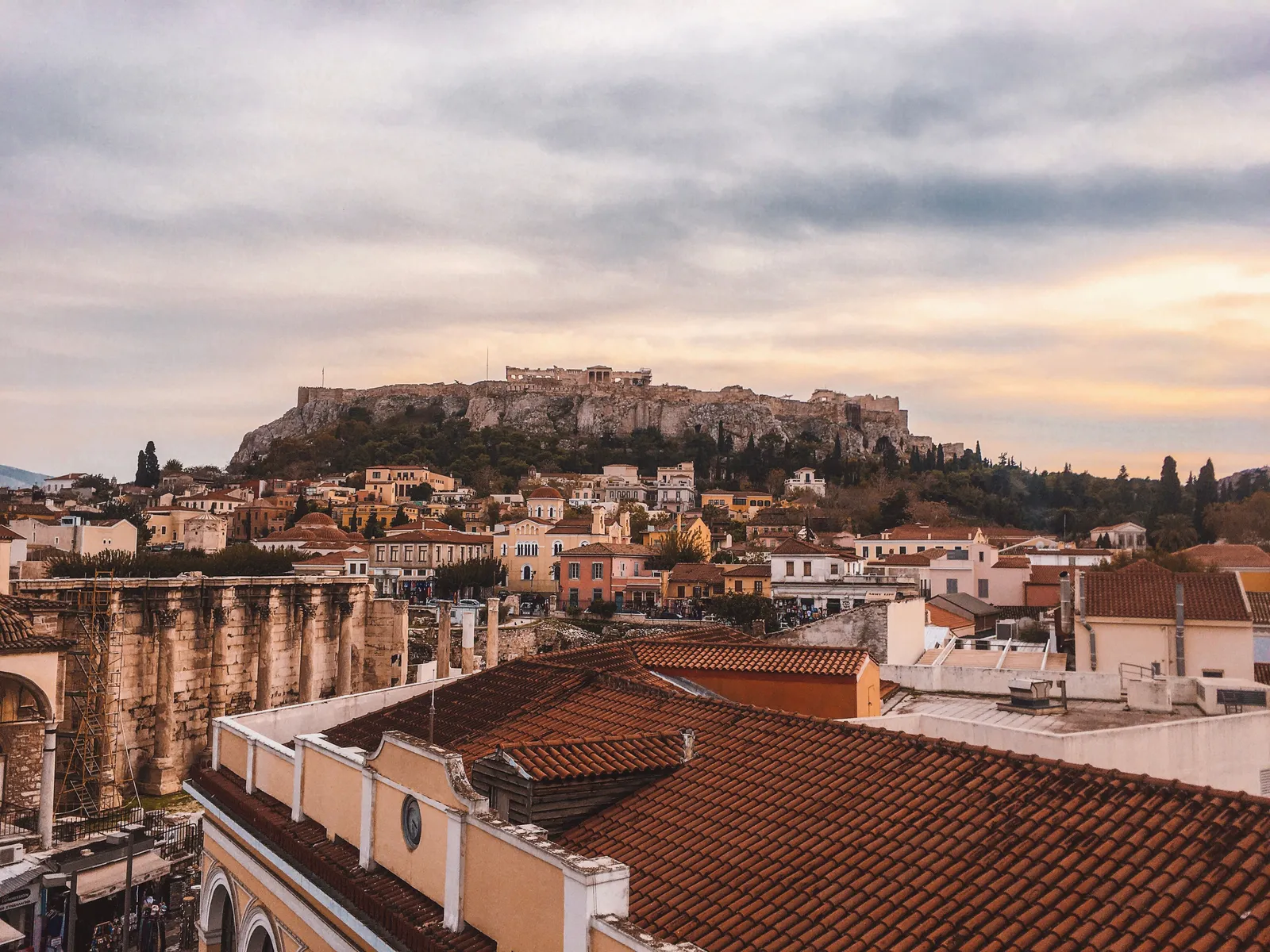
Athens rewards a short stay more than most European capitals, and almost all of that reward is concentrated in a walkable core around one rock. So the question is not really which neighbourhood is nicest. It is how much walking you are willing to do to reach the Acropolis, and what you get in exchange for doing more of it. The areas closest to the rock charge the most and feed you the worst. The areas a little further out reverse both of those.
What the map actually costs you
Nearly every visitor wants the same two things: the Acropolis in the morning and a good dinner in the evening. Athens makes you trade between them. The historic streets directly under the rock are beautiful and expensive, and the restaurants on them are aimed squarely at people who will eat there once. Twenty minutes out, the cooking improves sharply and the rooms cost less.
Treat every walking time below as a range rather than a promise. Athens is hilly, the pavements are uneven in the old quarters, and between June and September the heat stretches a ten minute walk into something considerably less pleasant. The rock also has more than one entrance, a main western one and a southeastern one near the museum, so the walk from your room differs depending on which you use.
Plaka and Monastiraki, sleeping in the old core
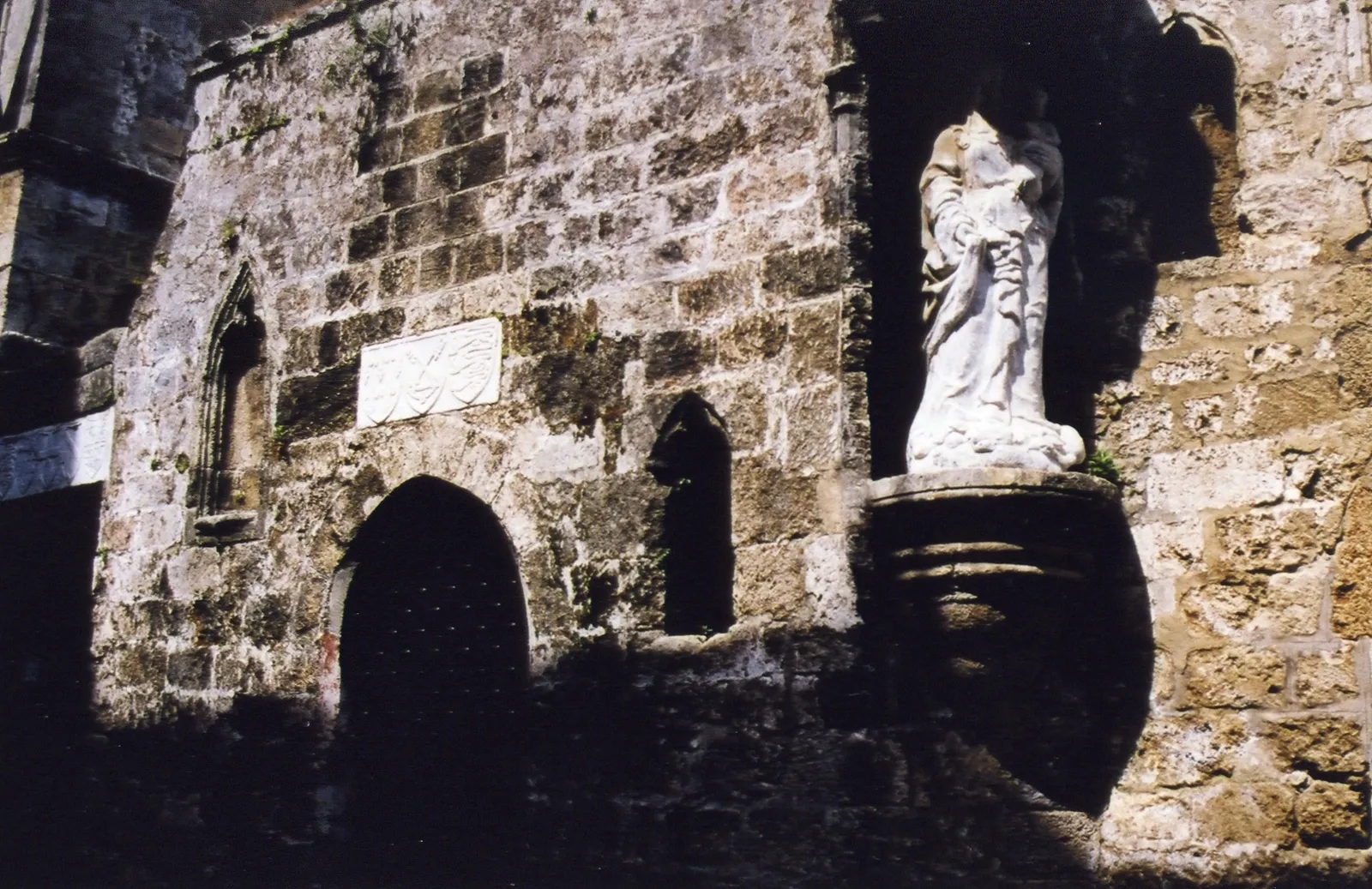
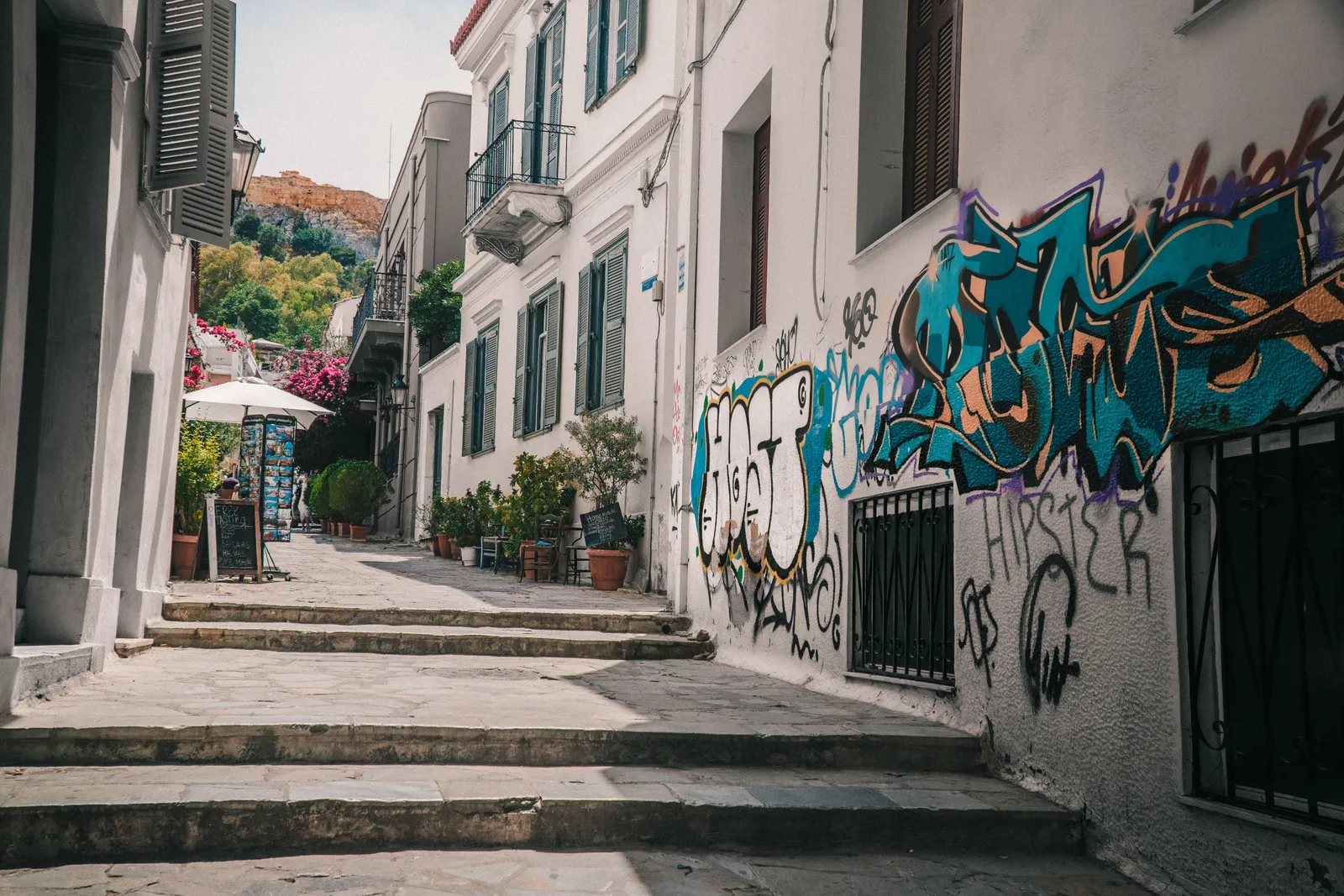
Plaka is the oldest surviving neighbourhood, a tangle of narrow lanes, bougainvillea and stepped streets climbing towards the rock, with Anafiotika at the top looking more like a Cycladic village than a capital city. You are roughly five to fifteen minutes from the Acropolis Museum on foot. It is the most atmospheric place to sleep in Athens and the least honest place to eat, and it is priced accordingly.
Monastiraki, immediately north, is the flea market square with its metro interchange and the classic view back up to the Parthenon. It is livelier, cheaper and better connected, with the rooftop bars that supply most of the photographs people come home with. It is also busy and loud, and the difference between a room on the square and a room three streets back is the difference between sleeping and not. Neither area is dangerous, they are simply crowded.
Koukaki, the quiet walk-everywhere pick
Koukaki sits on the southern side of the Acropolis and is the neighbourhood most often recommended by people who have stayed in all of them. It is residential, low-rise and full of neoclassical houses with balconies, with the Acropolis Museum a short walk away and the pedestrianised Dionysiou Areopagitou promenade running along the base of the rock.
What you get for the extra few minutes is a real neighbourhood: bakeries, tavernas and small plates places that serve locals, and rooftop bars with much the same view as Monastiraki at noticeably lower prices. Rooms tend to be better value here than anywhere else within walking distance of the rock. For most visitors on a first trip, this is the answer.
Pick the neighbourhood before you pick the roomIn Athens the difference between two areas ten minutes apart is a different trip, not a different addressSyntagma and Kolonaki, transport and the polished end
Syntagma is the transport heart: Parliament, the National Garden, the changing of the guard on the hour, and the metro line that runs straight to the airport. It is not a neighbourhood with much character of its own, and it is the most business-like part of central Athens, but for anyone arriving late, leaving early or moving on to a ferry it is the most practical base in the city. Reckon on roughly fifteen to twenty five minutes on foot to the Acropolis.
Kolonaki, on the slope of Lycabettus above it, is the smart quarter: designer shops, galleries, and cafes where the coffee costs what it costs in any capital. It suits repeat visitors and anyone who wants a city rather than a sightseeing base, and it is a genuinely pleasant place to spend an evening. It is further from the ancient sites than anywhere else on this list except the coast, at roughly twenty to thirty minutes downhill and rather longer coming back up.
Psyrri and Pangrati, where dinner is better
Psyrri is the one that has changed most. Once industrial and rough, it is now the densest concentration of bars, meze places and late food in the centre, a short walk from Monastiraki and still visibly unpolished in a way that some travellers love and others do not. It is a good base if the evenings matter as much as the mornings, and a poor one if you want silence.
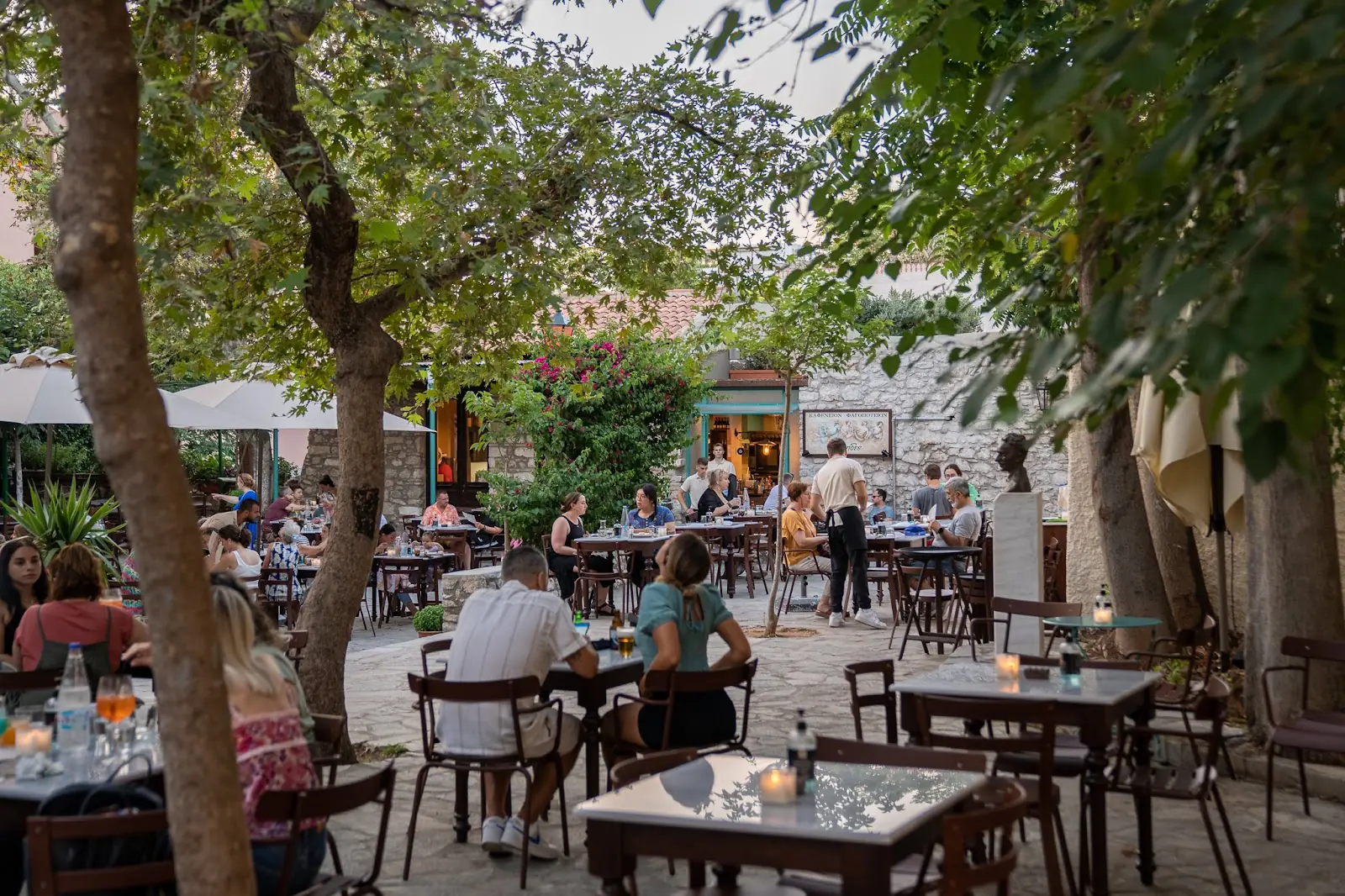
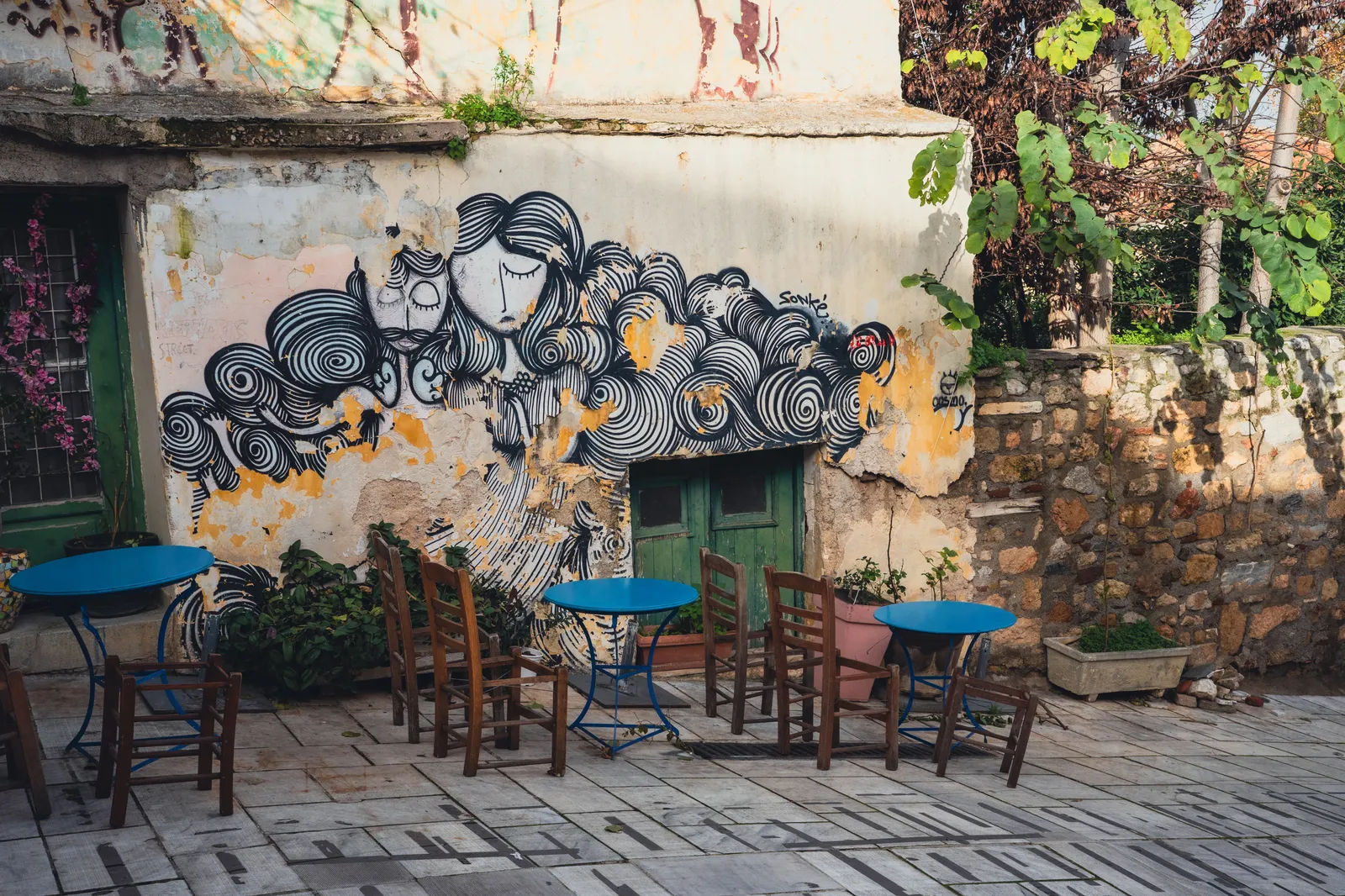
Pangrati is the opposite: quiet, residential, green around the old Panathenaic Stadium, and home to some of the best ordinary tavernas in the city, the kind serving magirefta and house wine at prices the tourist streets abandoned years ago. It is around twenty to thirty minutes on foot from the Acropolis, or a short bus or taxi ride, and it is where you stay on a second visit. Our guide to where to eat in Athens goes further into both.
The Riviera, and choosing in one paragraph
The Athens Riviera runs south from the city through Palaio Faliro, Glyfada and Vouliagmeni: proper beaches, marinas, seafood and a resort feel, connected to the centre by tram and bus. Journeys into the historic core run roughly half an hour to an hour each way depending on where you stay and when you travel, which makes it a poor choice for a two night sightseeing trip and a good one for a longer stay or a relaxed few days before a flight home.
So: two or three nights and it is your first visit, take Koukaki, or Plaka if atmosphere beats value for you. Arriving late or leaving early, take Syntagma. Eating is the priority, take Pangrati or Psyrri. Beach days at the end of a longer trip, take the Riviera. Whichever you pick, book early, because the well-placed mid-range rooms go first. For how an Athens stay fits into a wider trip, see our guide to where to stay in Greece, and for the one booking you should make before anything else, see visiting the Acropolis.