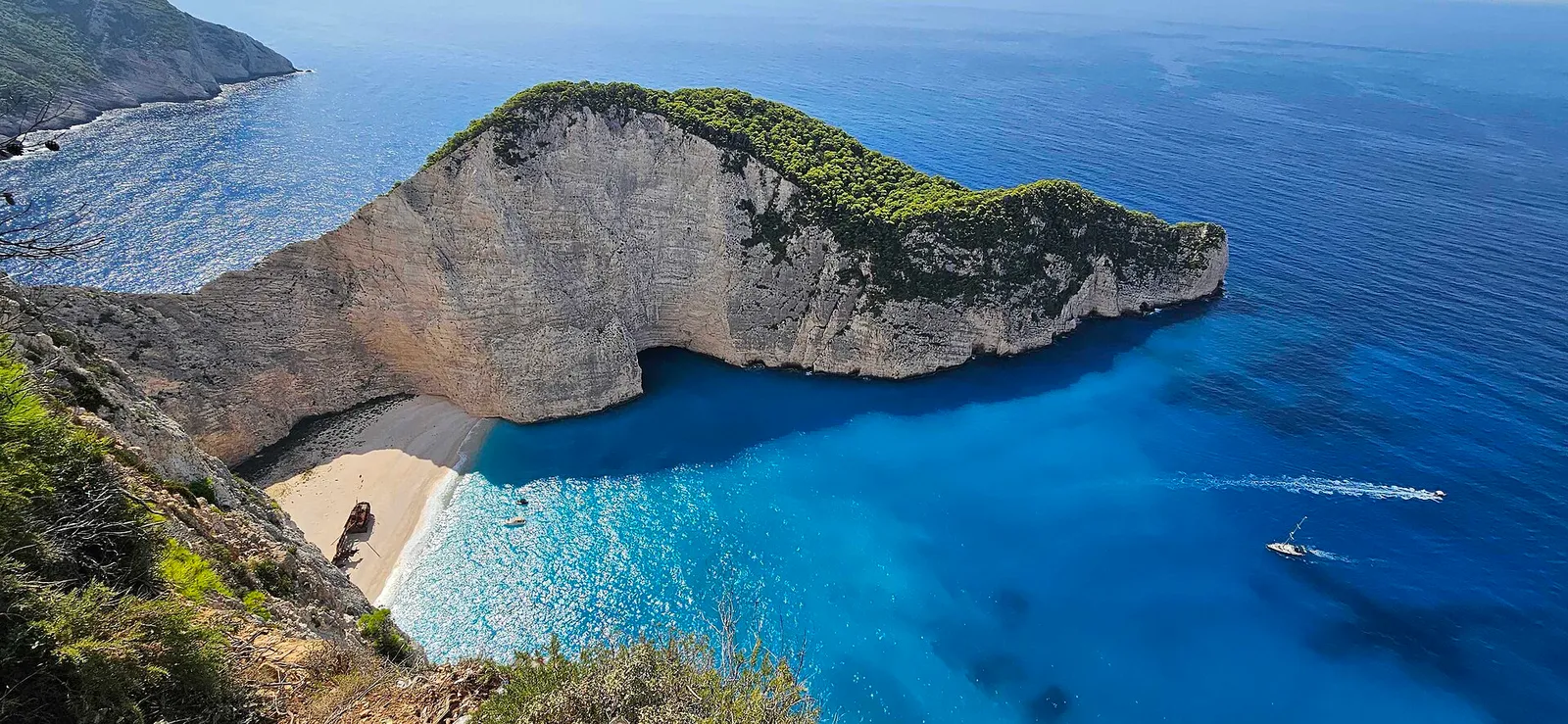
There are a handful of images that sell Greek islands on their own, and the shipwreck in the white cove on Zakynthos is one of them. What the image does not show is that reaching the sand has become complicated, that the cliffs above it are unstable, and that a good proportion of visitors now see the cove only from about 200 metres up. None of that makes the trip pointless. It does mean planning it properly is worth more here than at most beaches.
What the place actually is
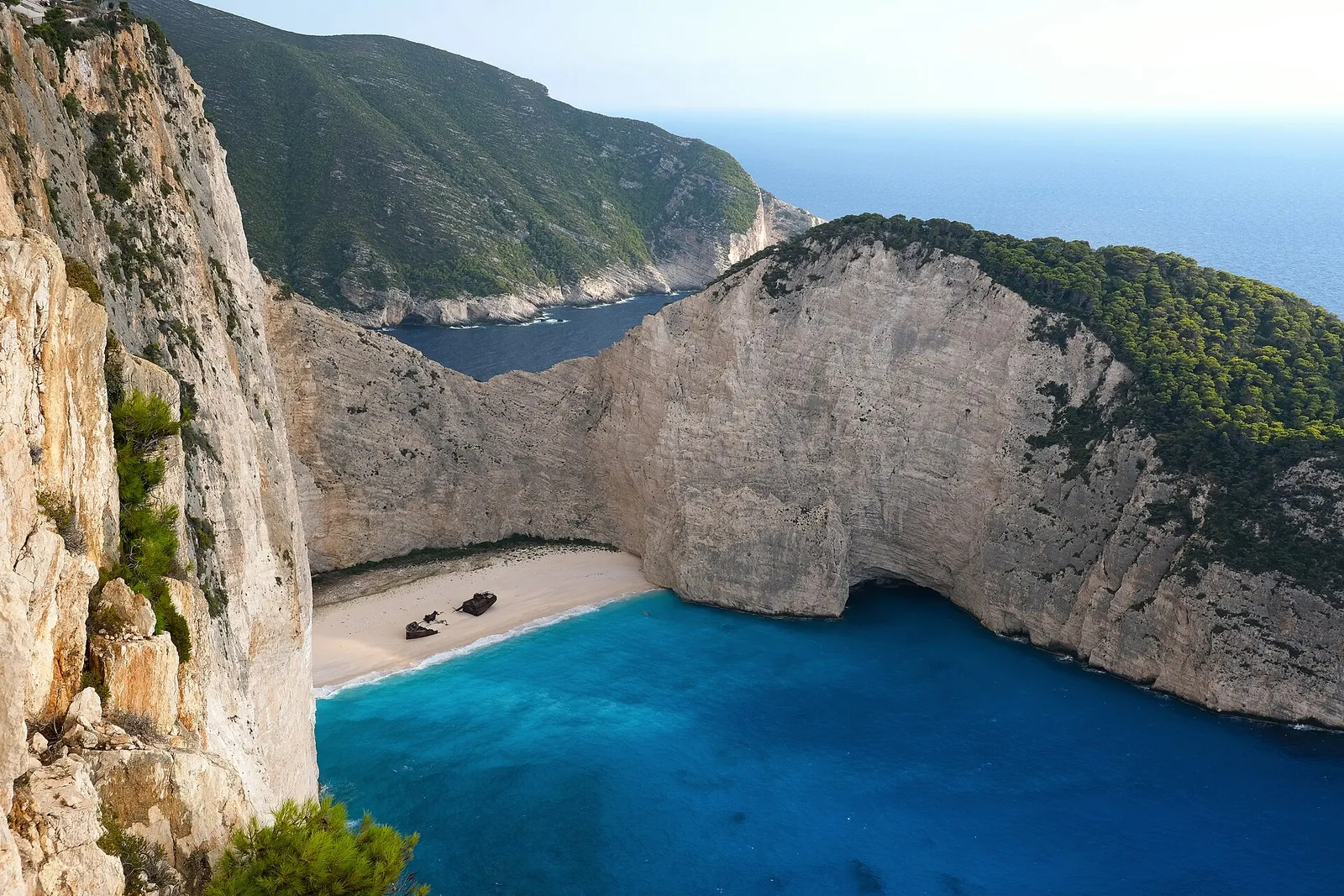
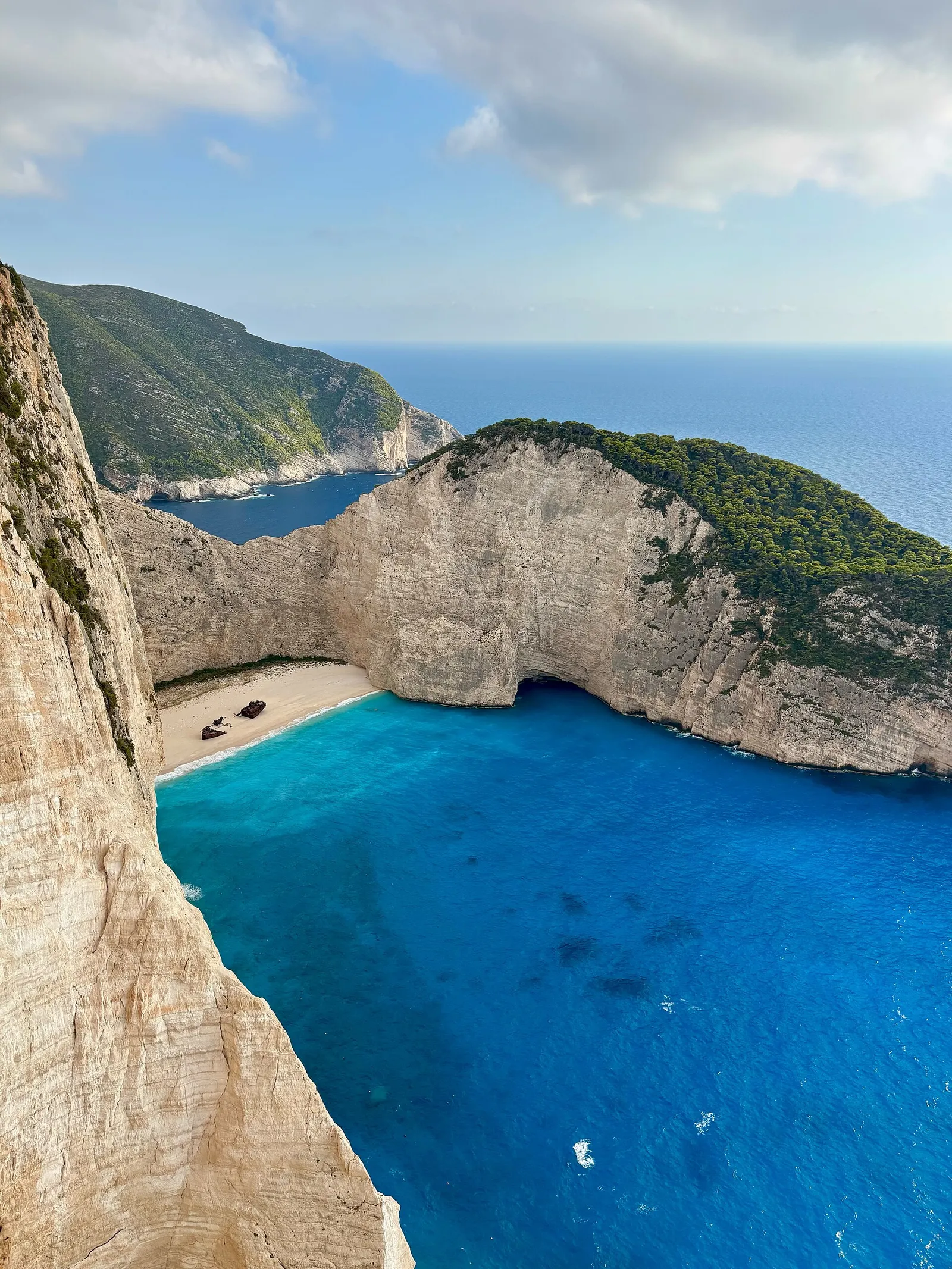
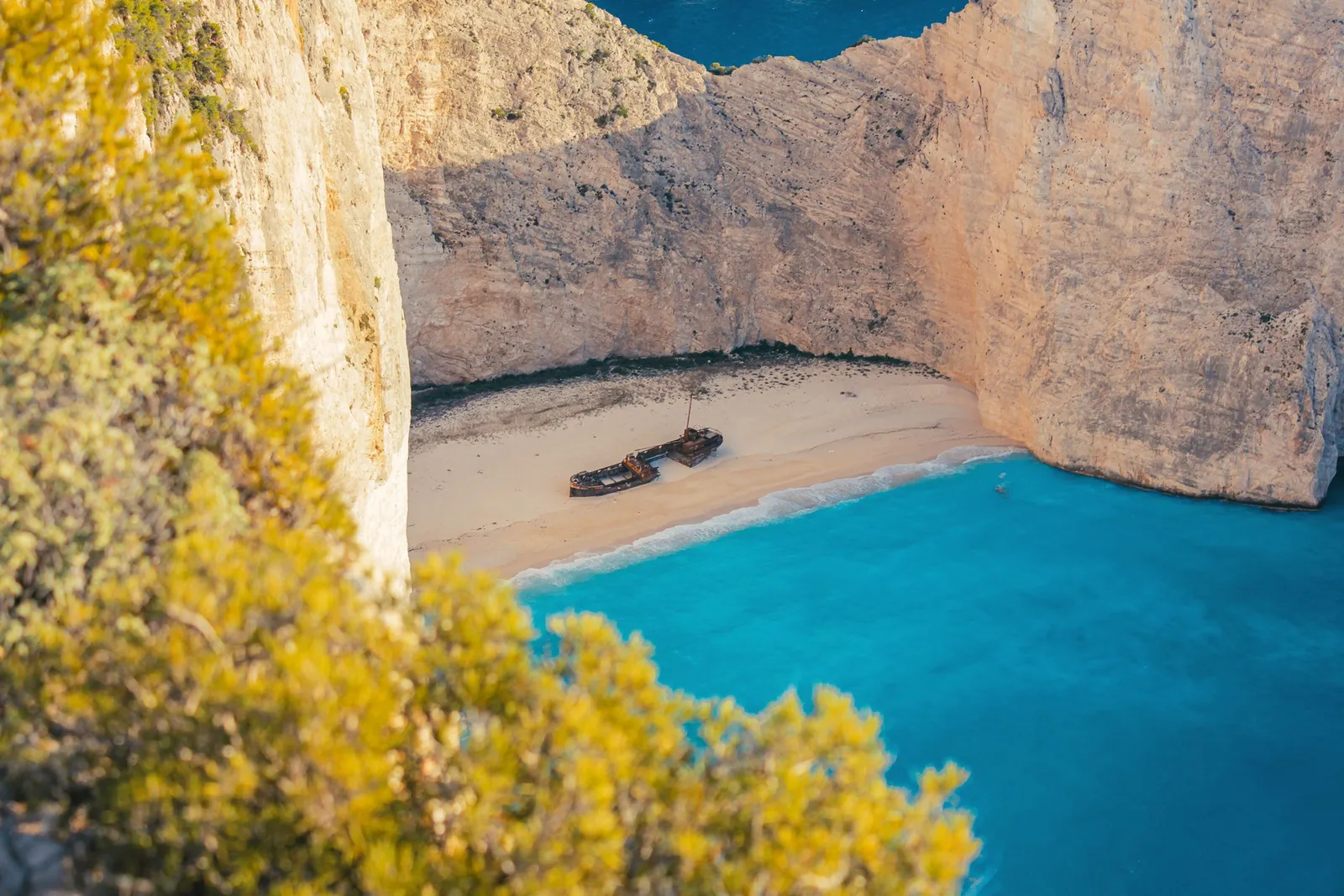
Navagio, which simply means shipwreck, is a cove on the northwest coast of Zakynthos enclosed by high limestone cliffs, with a rusting freighter half buried in the sand. The ship ran aground there decades ago and has been sitting in the cove ever since, slowly corroding.
How the wreck ended up there is the question most people ask first, and the honest answer is that the accounts vary and none can be confirmed by looking at the ship itself. What is documented is that the hull keeps changing: sections have rusted through and shifted after storms, and photographs a decade apart show a visibly different wreck. The postcard is frozen in time; the real ship is not.
There is no road to the beach and no path down. The only ways to see it are by boat into the cove, or from the clifftop above, and those are two different excursions on two different sides of the same problem. Understanding that before you book saves a great deal of confusion, because a lot of listings are vague about which one they are selling.
Why access keeps changing
The cliffs shed rock. That is not a theoretical hazard: there have been rockfalls into the cove causing injuries, and the authorities have responded at various points by barring boats from landing, closing the clifftop viewing platform, or prohibiting swimming close to the cliff face.
Beach access and the clifftop platform are managed separately, so one can be open while the other is closed. Do not assume boats running means the platform is too, or the reverse.
The rules have shifted more than once and have changed mid-season. This is the reason it is worth checking the current position with a local operator or the municipality a short time before you travel, rather than trusting any written guide. Whatever the current signage says, staying away from the base of the cliffs is sensible even when the sea is flat and other people are not bothering.
Reaching it by boat
Boats run from several points on the island, and the crossing length varies a lot. Porto Vromi on the west coast is the closest departure and the shortest trip. Agios Nikolaos in the north and the harbour at the main town run longer excursions that usually bundle the cove with the Blue Caves.
The crossing itself is part of the draw: the cliffs close in, and the wreck comes into view from the water in a way photos do not capture. Around midday, several boats can be anchored together, the sand fills up, and a stop on the beach is shared time rather than a private moment.
The question to ask before booking, and to ask explicitly, is whether the trip lands or only passes. Landing was banned through the 2026 season, with boats kept at least 50 metres off, so treat any listing that promises time on the sand with caution until the current rules are confirmed, and note that the difference is not always clear from the description. It is also worth asking what happens if landing is cancelled on the day for weather or regulatory reasons, since that is a realistic outcome rather than an edge case.
Ask one question before you bookTrips to the cove either land on the sand or cruise past it, and the listing does not always say whichBig tour boats or a small hire boat
The choice is not only about price. A large tour boat carries dozens of passengers on a fixed schedule and is the cheaper, simpler option if a set departure time suits you, though it means less control: you land and leave when the boat says so, often alongside several other large boats doing the same.
A smaller hire boat, self-driven for those with the right licence or run with a private skipper, costs more but buys flexibility: timing the crossing outside the main tour window, lingering longer if conditions allow, and reaching quieter corners of the cove the larger boats avoid. For a swim with the wreck rather than a glimpse from a crowded deck, that is usually the better trade if the extra cost is not an issue.
Either way, the access rules apply equally. A private boat is not exempt from a closure, and a smaller boat close to unstable cliffs is not automatically the safer choice.
Seeing it from the clifftop
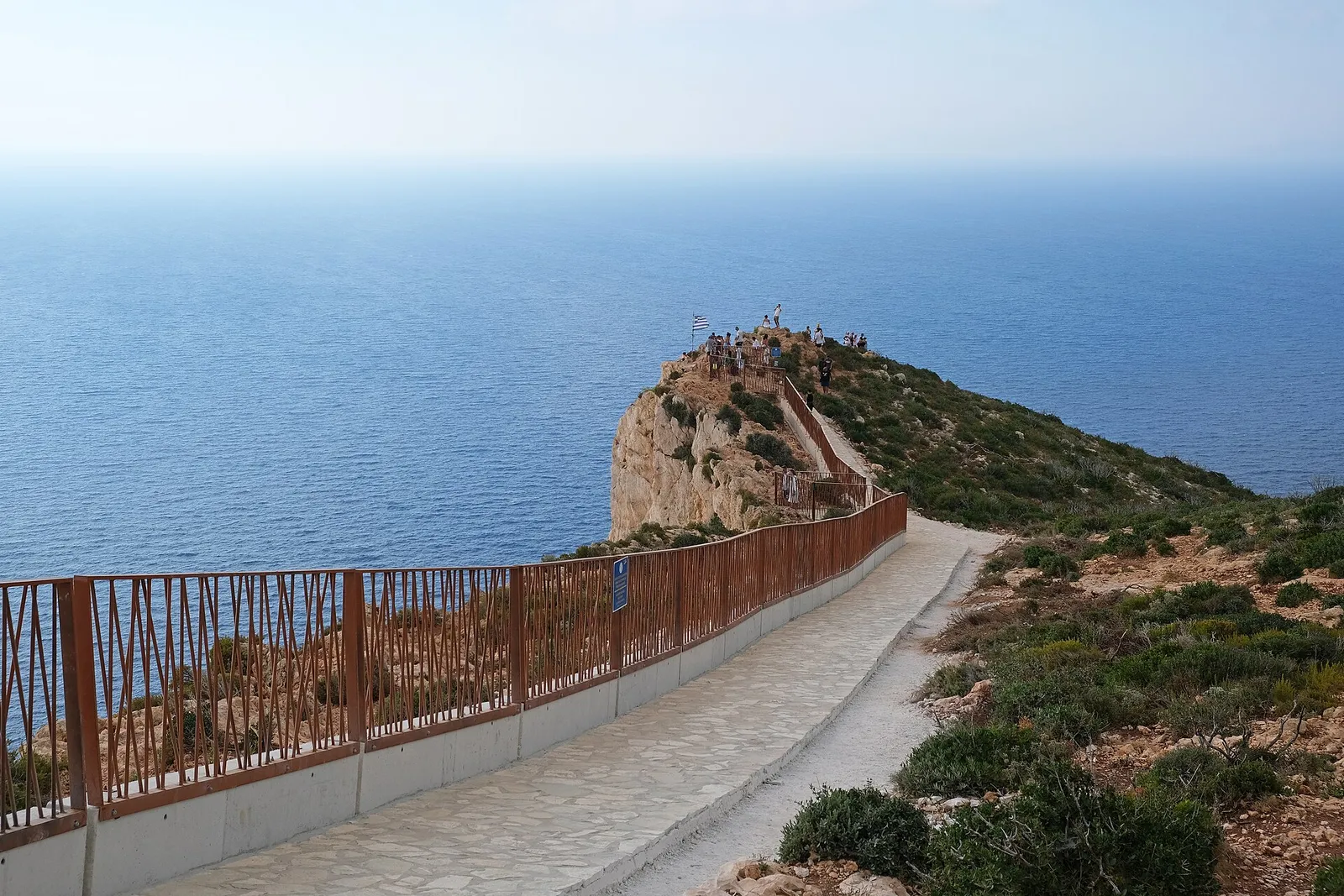
The famous photograph is taken from above, from the cliffs near the village of Anafonitria on the northwest of the island. It is reached by road followed by a short walk, and it is a genuine unfenced cliff edge in places, about 200 metres above the water. The platform built to make it safer has itself been closed at times.
Two practical notes. There is no way down from the viewpoint to the beach, so this is a separate trip rather than a stage of the same one. And the light matters: the cove sits in shadow for part of the day, and the water is at its most vivid when the sun is high, which is also when the coaches arrive. Early morning gives you the quiet version and worse colour.
The platform itself is small, and at busy times the rail can be several people deep. Arriving even an hour outside the main coach window matters more for elbow room than for the view.
Fitting it into a Zakynthos trip
Navagio is one stop on an island with a good deal else going on, including loggerhead turtle nesting in the south, the Blue Caves in the north, and a mountainous interior that most visitors never drive into. Our Zakynthos guide covers the wider picture, and the practical answer for most people is to treat the cove as a half day rather than the reason for the holiday.
The Blue Caves, near Cape Skinari on the northern tip of the island, pair naturally with the same day if the boat departs from the north. They are limestone sea caves where light reflecting off the rock and seabed turns the water a vivid blue, and because they do not depend on a beach landing or a clifftop platform, they are far less exposed to the access issues that can close Navagio.
It is also worth being honest about expectations. This is among the most photographed spots in the country, and the version in your head is a drone shot taken at the perfect hour with nobody in it. The real thing involves boats, crowds, a heat-reflecting white cove and possibly a closure notice. It is still worth seeing.
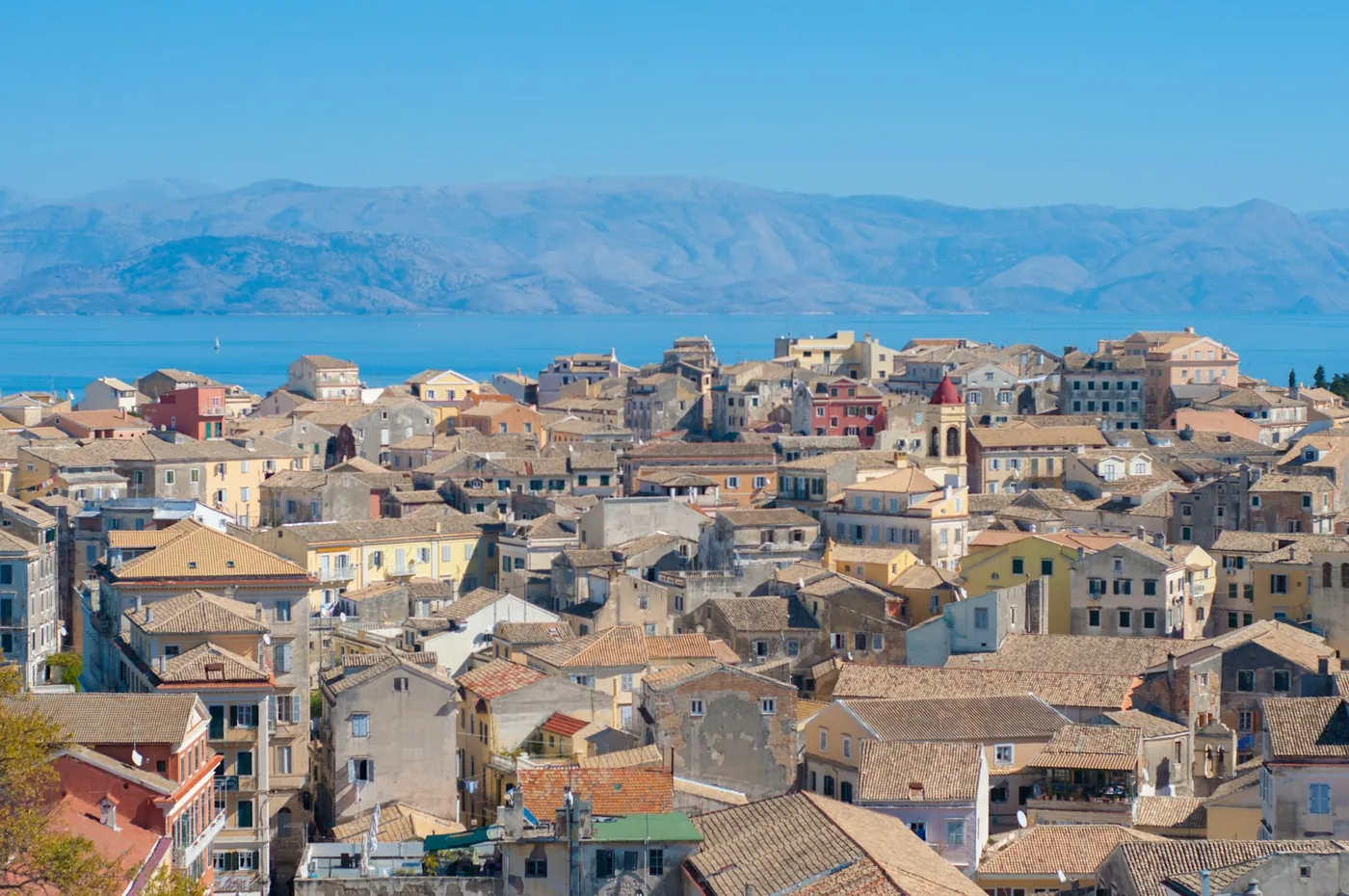
If the shipwreck is genuinely the main draw and the access situation is putting you off, the Ionian has other options with the same clear water and fewer complications, including the beaches and old town on Corfu. And if you have not settled on an island yet, our guide to choosing a Greek island is the better place to begin than a single famous photograph.