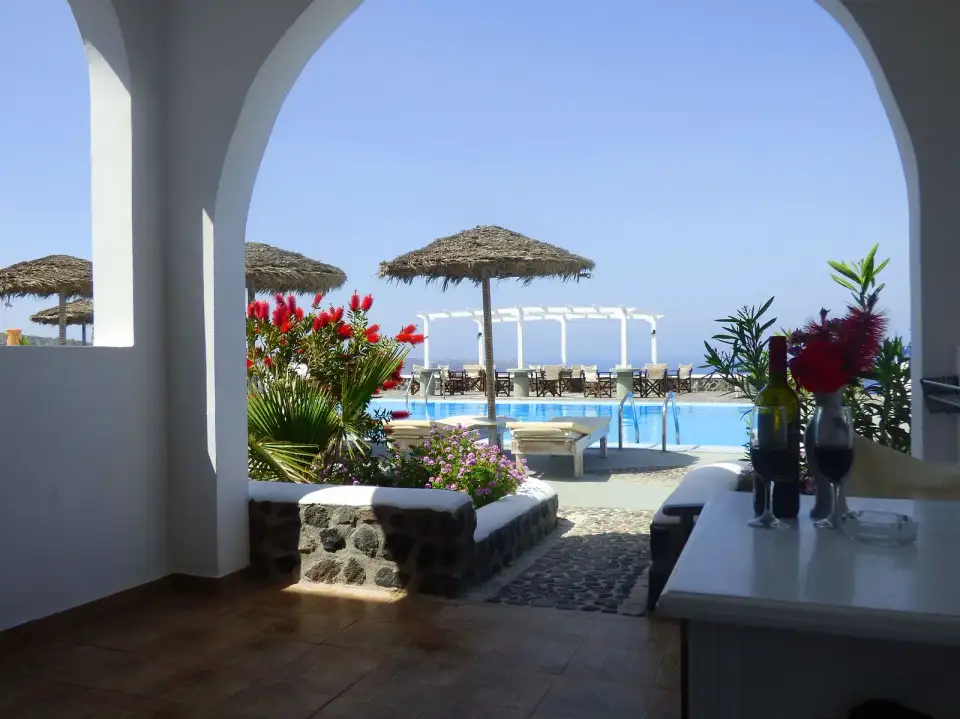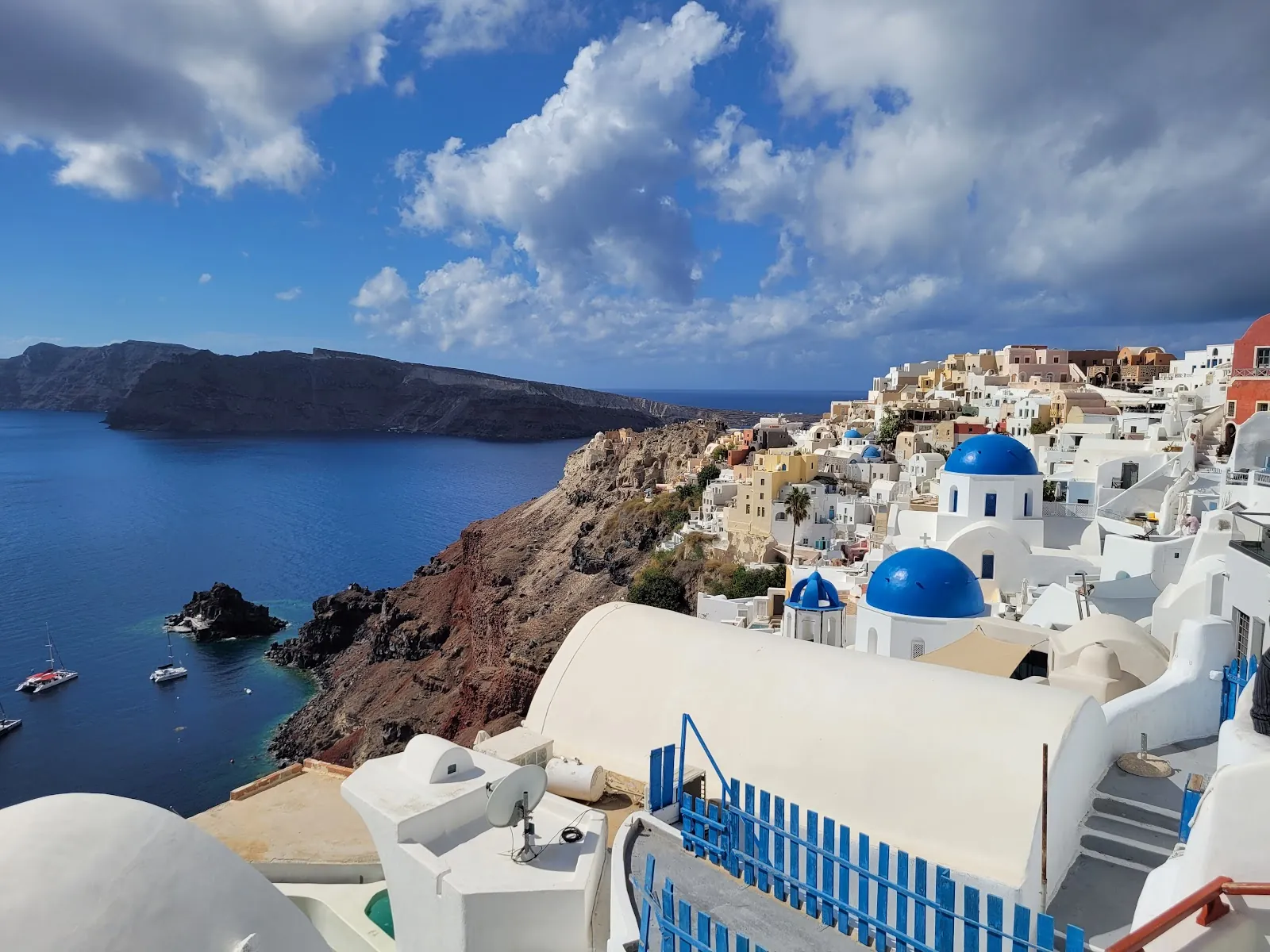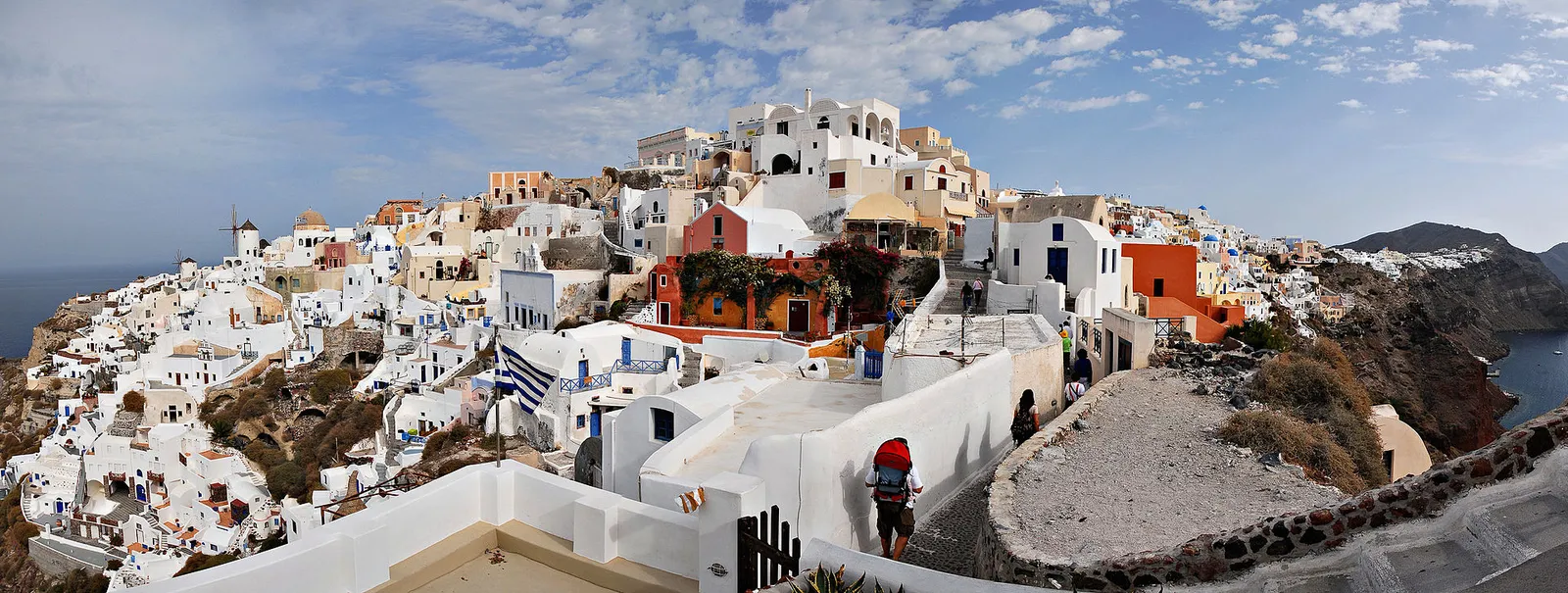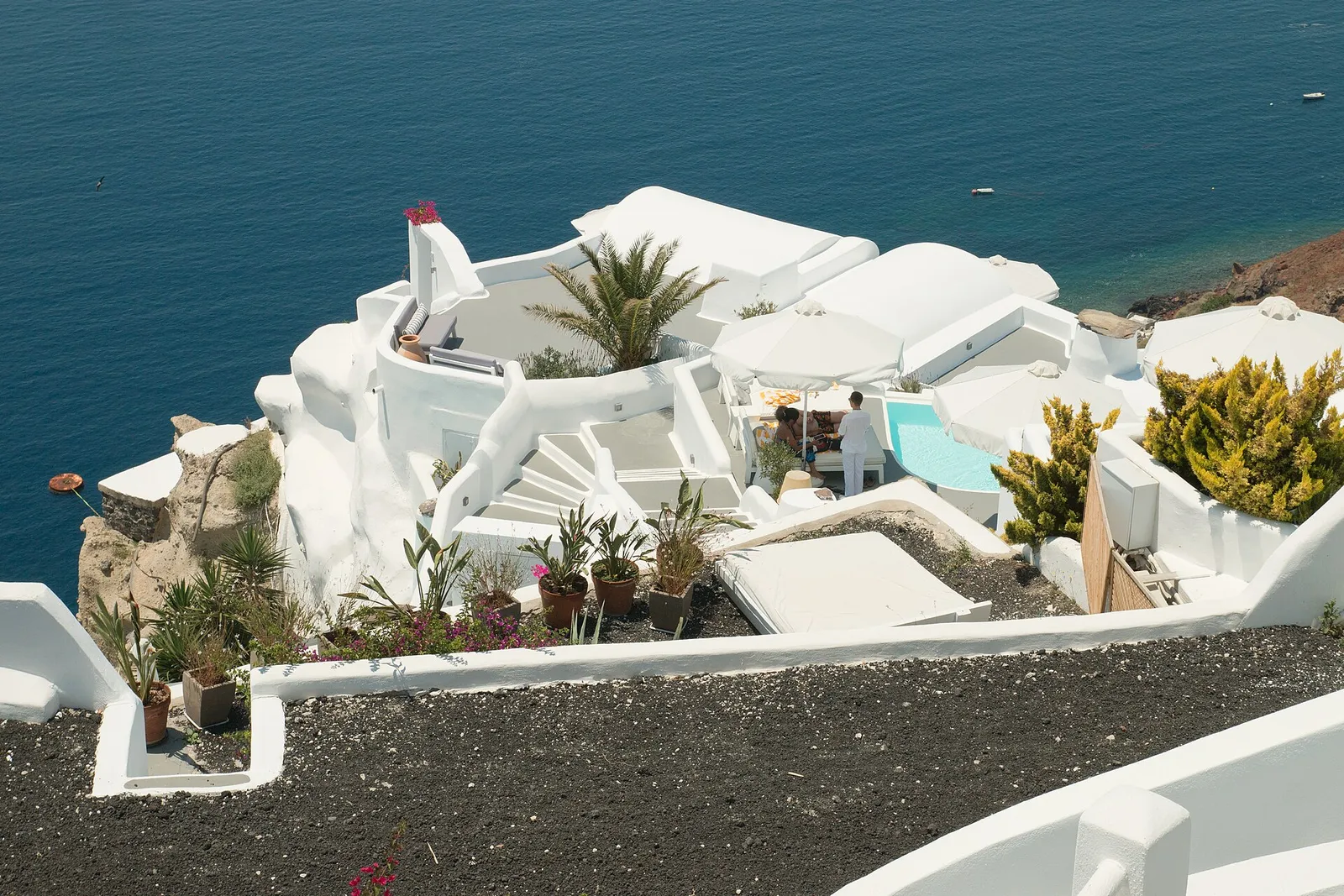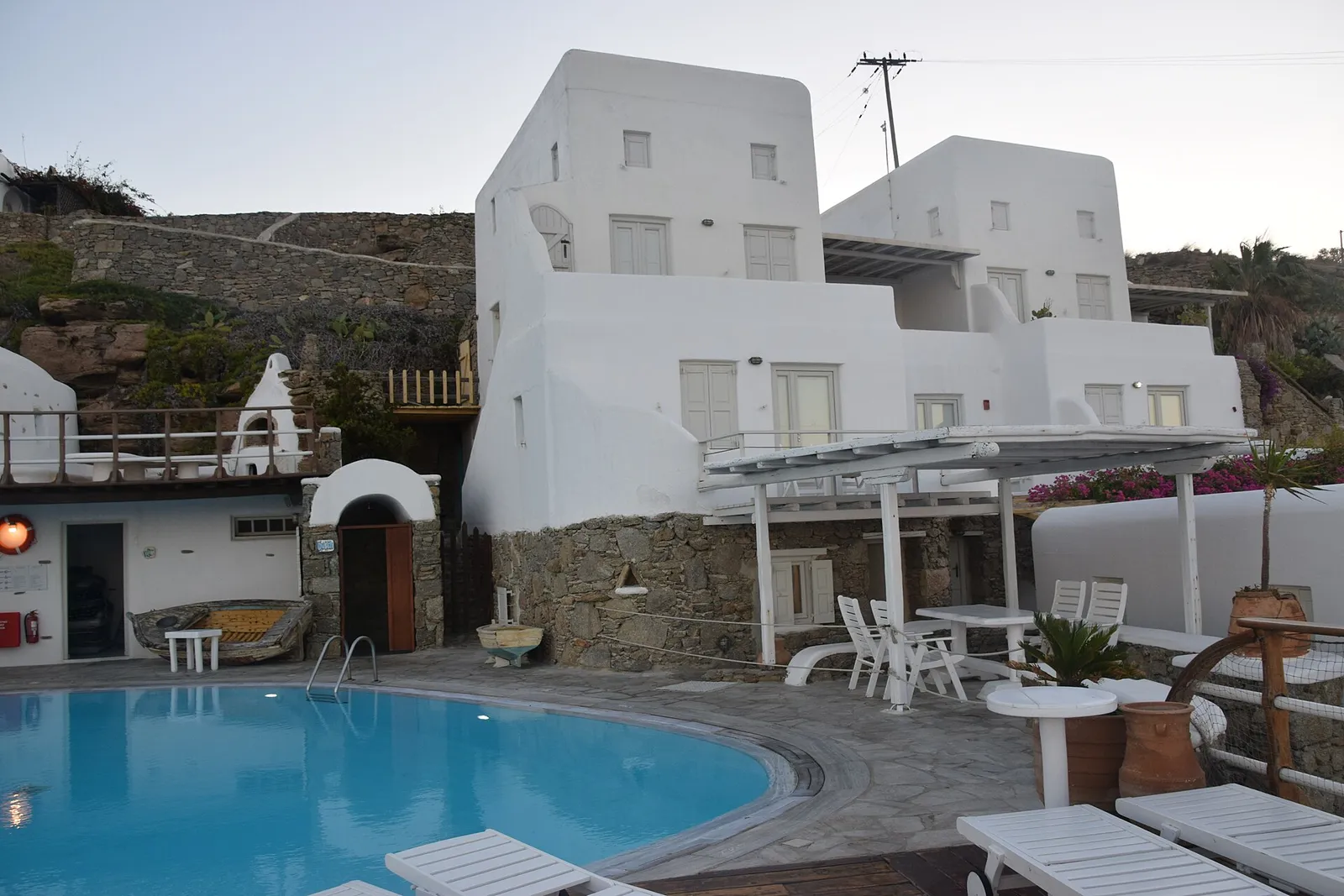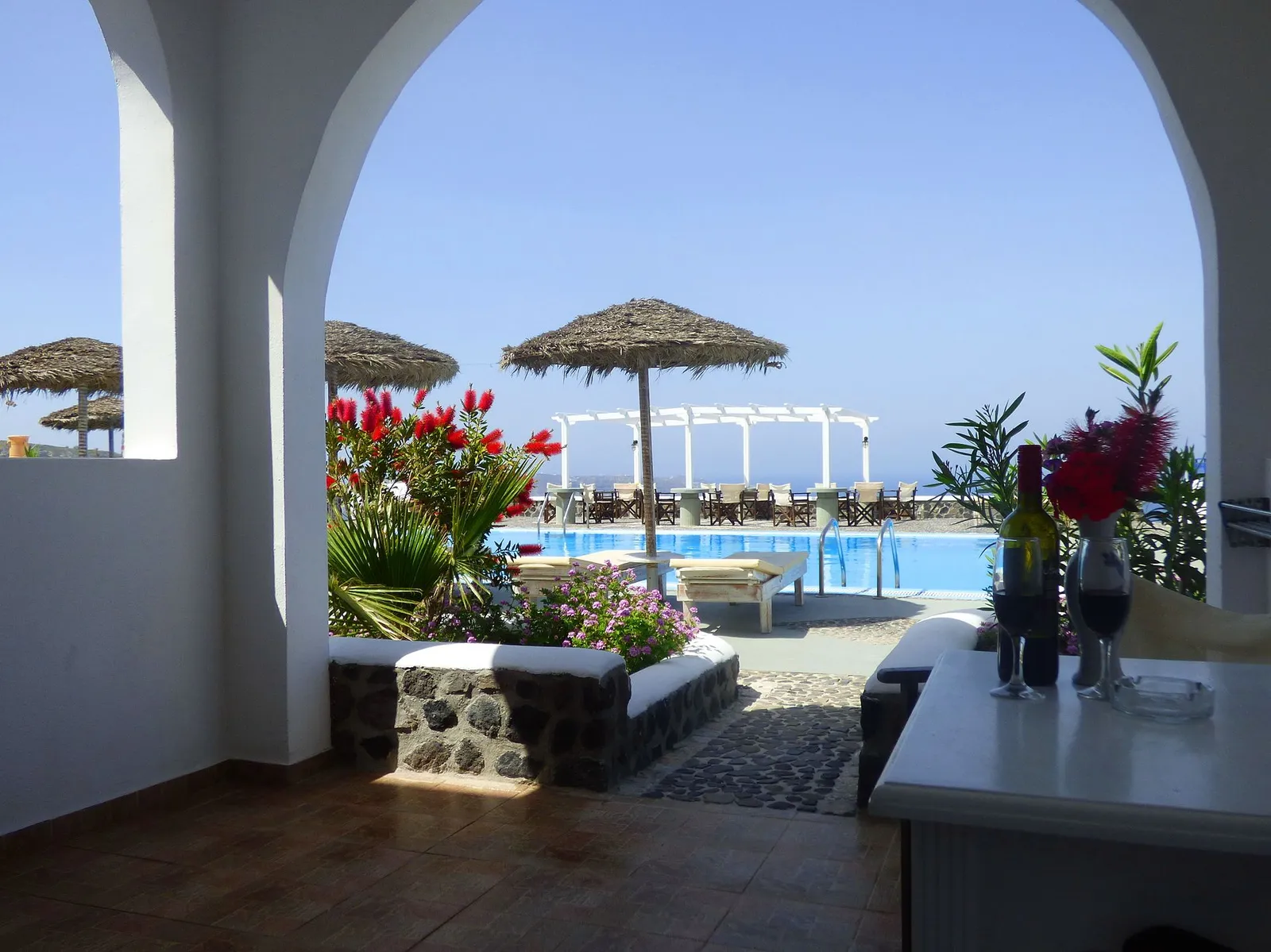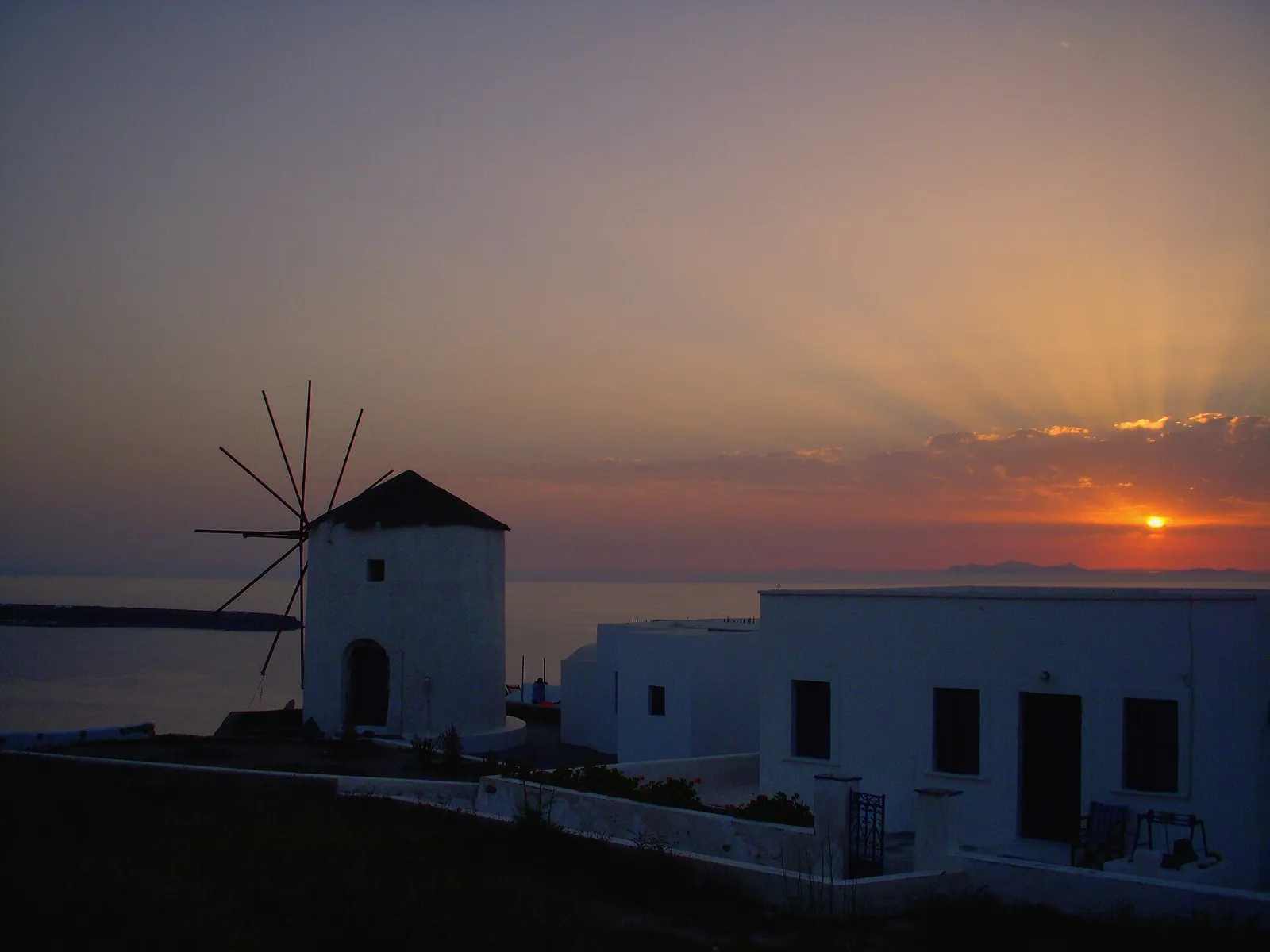
Santorini earns its honeymoon reputation image by image: white cube houses stacked down a cliff, blue domes, a caldera that glows at sunset. What the photographs do not show is that the best experience depends on choices most couples do not know they are making until they land. This guide covers those choices: which villages suit two people rather than everyone, what a caldera view actually costs, how to catch the famous sunset without a crowd, and where to eat well without a view surcharge on every plate. For the wider island orientation, our full Santorini guide covers the rest.
Which villages actually suit a honeymoon
Not every village on the caldera rim works the same way for two people.
Oia is the village nearly every photograph of Santorini is actually of: white cubes stacked down the cliff, blue-domed churches, and the famous sunset. It is the most romantic address on the island, the most expensive by a wide margin, and the furthest from everything else. For a short honeymoon stay, it earns the reputation.
Imerovigli and Firostefani, the quieter villages between Oia and the capital, give nearly the same drama with a fraction of the evening crowd. Imerovigli sits at the highest point of the rim with arguably the best view on the island; Firostefani is a short, quiet walk from the capital’s restaurants. For three nights or more, this stretch is often the better honeymoon decision, not the compromise.
Fira is convenient rather than romantic, and the beach towns on the flat southeast cost far less but trade away the caldera view, which is most of what brought you here.
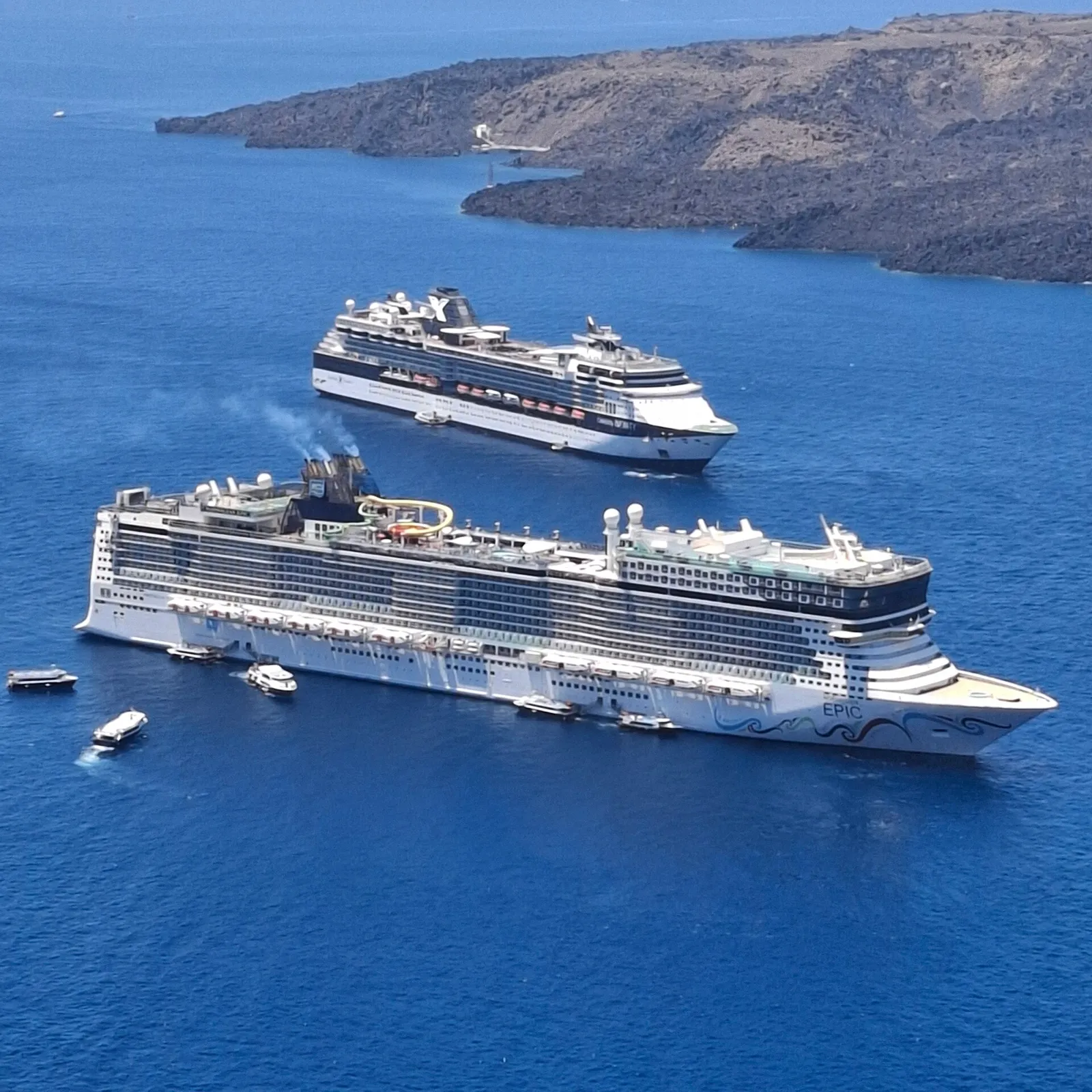
Our guide to where to stay in Santorini covers every village, transport and price in depth; for a honeymoon specifically, that is usually Imerovigli or Firostefani for calm, Oia for occasion.
What a caldera view actually costs, and whether it is worth it
The premium for a room that looks into the volcano is real, and larger than most first-time visitors expect. Caldera-facing rooms in high season generally run into several hundred euros a night, and the best cave suites with a private terrace and plunge pool can run several times that. These figures move constantly with the season and the property, so treat any number here as a rough shape, and check current rates before you commit to dates.
What you are paying for is narrower than it sounds: you will love the view at sunrise, sunset and for an hour with a drink, while the room sits empty most of the day.
The approach that works for most budgets is a split stay: two or three nights on the caldera for the experience, paired with a calmer or cheaper base, whether that is Fira, a beach town or a second island entirely.
Cave suites and private plunge pools
The rooms that fill Santorini’s honeymoon photographs are usually cave suites: carved into or built against the volcanic rock, with thick walls, a curved ceiling and a private terrace facing the caldera. Two details are worth knowing before you book one.
First, a plunge pool is not a swimming pool. Many cave suites advertise a private pool that is, in reality, a couple of metres across: deep enough to cool off in with a drink, not to swim laps. Fine once you know it, a letdown if you pictured something larger.
Second, the famous terrace is not always as private as the photographs suggest. Because the villages are built in tiers down the cliff, a terrace can be overlooked from the room above or shared with a neighbouring suite. Look for photographs actually taken from the terrace, showing what it looks out onto, rather than photographs of the terrace itself.
The Oia sunset problem, and how to avoid the crowd
The sunset at Oia is genuinely beautiful, and on most evenings from spring to autumn it is also a crowd. Hundreds of people gather along the walls near the old castle in the hour before sunset, closer to a public event than a private one.
There are three better ways to have it. Watch from your own terrace or pool, if you booked a west-facing room, with nobody in the frame but the two of you. Time a caldera-view dinner to the sunset itself, so you watch it over a glass of Assyrtiko rather than a stranger’s shoulder; tables with a sunset view go early in high season, so book as soon as your dates are set. Or walk it off: roughly three hundred stone steps zigzag down from Oia to Ammoudi, a tiny working harbour with seafood tavernas that catches the same light from sea level, with none of the crowd above. Donkeys have traditionally carried tourists and luggage down this path, and the practice has drawn sustained criticism from animal-welfare campaigners over the animals’ workload; local rules have since tightened, including limits in extreme heat.
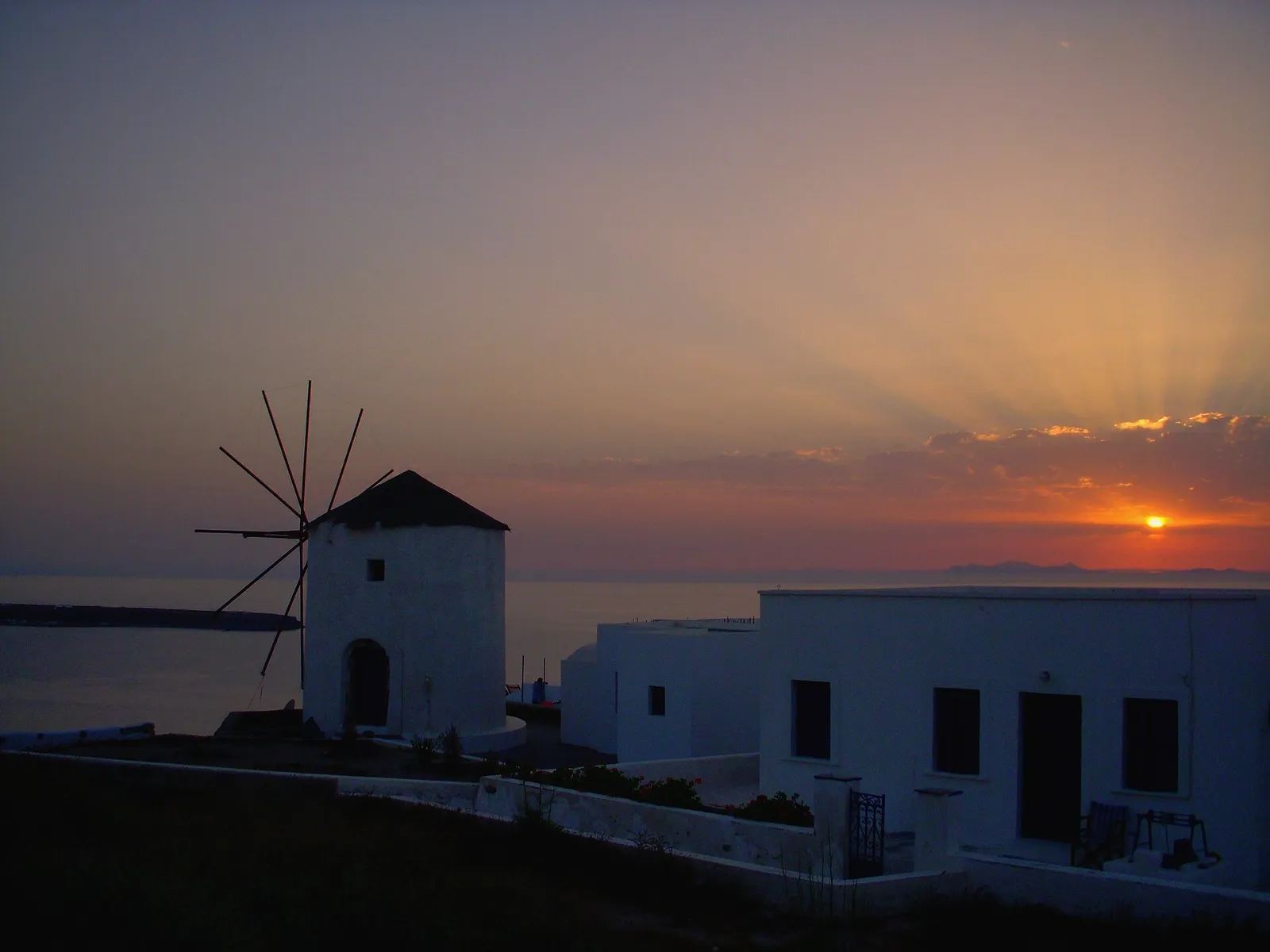
The same sunset, watched from a quieter stretch of the rim like Imerovigli, needs no crowd control at all.
A romantic dinner without the tourist markup
Restaurants with a direct caldera view charge for the view as much as for the food, and in season the best sunset tables go early, so reserve as soon as possible if a particular evening matters to you.
That splurge is worth doing once. For the rest of the trip, walk a street or two back from the rim for much of the same cooking at a fraction of the price, since many caldera-view restaurants share suppliers, and sometimes kitchens, with quieter places behind them. Order fava, the island’s yellow split-pea puree, wherever you see it; it is Santorini’s signature dish and rarely disappoints. A slow evening over two or three small plates beats one long menu with a view surcharge.
Wineries, and the honest case for a second island
Santorini makes wine unlike anywhere else in Greece. Its signature grape, Assyrtiko, is trained low to the ground in coiled basket shapes rather than on trellises, to suit the island’s constant wind and scarce rainfall. Several wineries along the caldera rim pour tastings with the same view you are paying for at dinner, and a half day of touring, by car or with a driver, is one of the better ways to spend an unplanned afternoon here.
It is also worth being honest about how much Santorini a couple needs. Three or four nights cover the villages, the sunset, a boat trip and a wine afternoon comfortably; beyond that, the island can feel smaller than its reputation, since the whole experience runs along one strip of cliff. Pairing Santorini with a quieter island rather than staying put for a full week tends to make for a better honeymoon, not a smaller one. Our guide to planning a honeymoon in Greece covers how to build that route and which island pairs well with this one.
Get the village and the room right, and the rest of a Santorini honeymoon takes care of itself.