Santorini is the one Greek island where where you sleep is not a logistics decision but the main event. The island’s fame rests on a view, that view is available from a strip of cliff a few kilometres long, and everything about your trip, including what it costs, follows from whether you are on that strip or not. Here is what each village is actually like, what the view is worth, and the practical realities that photographs never show.
The geography that explains the prices
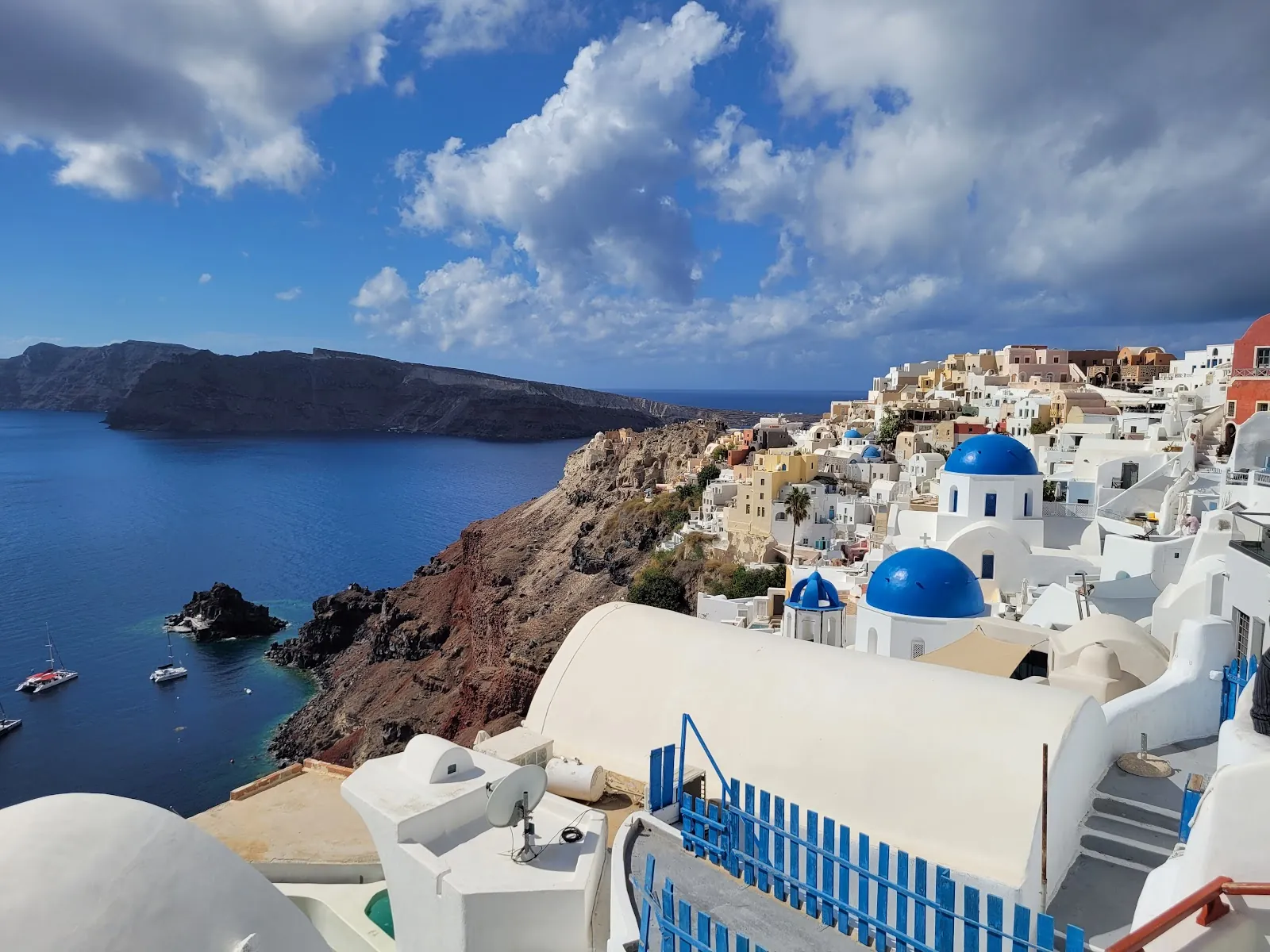
Santorini is the rim of a drowned volcano. The caldera is the flooded crater, and the villages that made the island famous cling to the inner cliff looking down into it.
That means the island has two completely different halves.
The caldera rim, on the west, is where Oia, Imerovigli, Firostefani and Fira sit. It has the view, the sunsets, the cave hotels and almost all of the money.
The flat southeast, where Kamari and Perissa sit, has the beaches, the space, the value and no caldera view at all.
Almost every question about where to stay is really a question about which side you want, and there is no wrong answer, only a mismatch between what you booked and what you came for.
Oia: the postcard, at postcard prices
Best for: couples, short stays, the honeymoon version of Santorini.
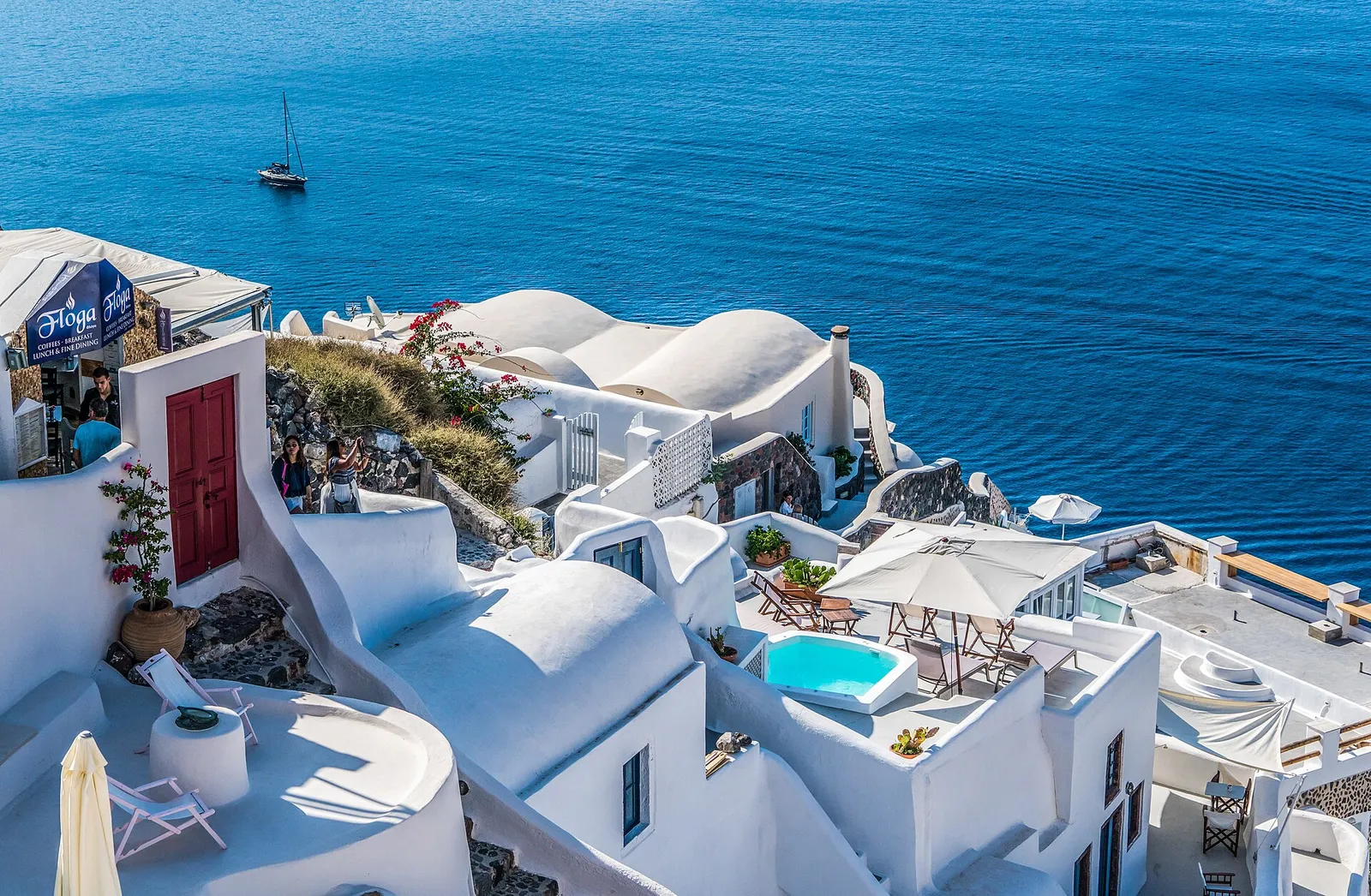
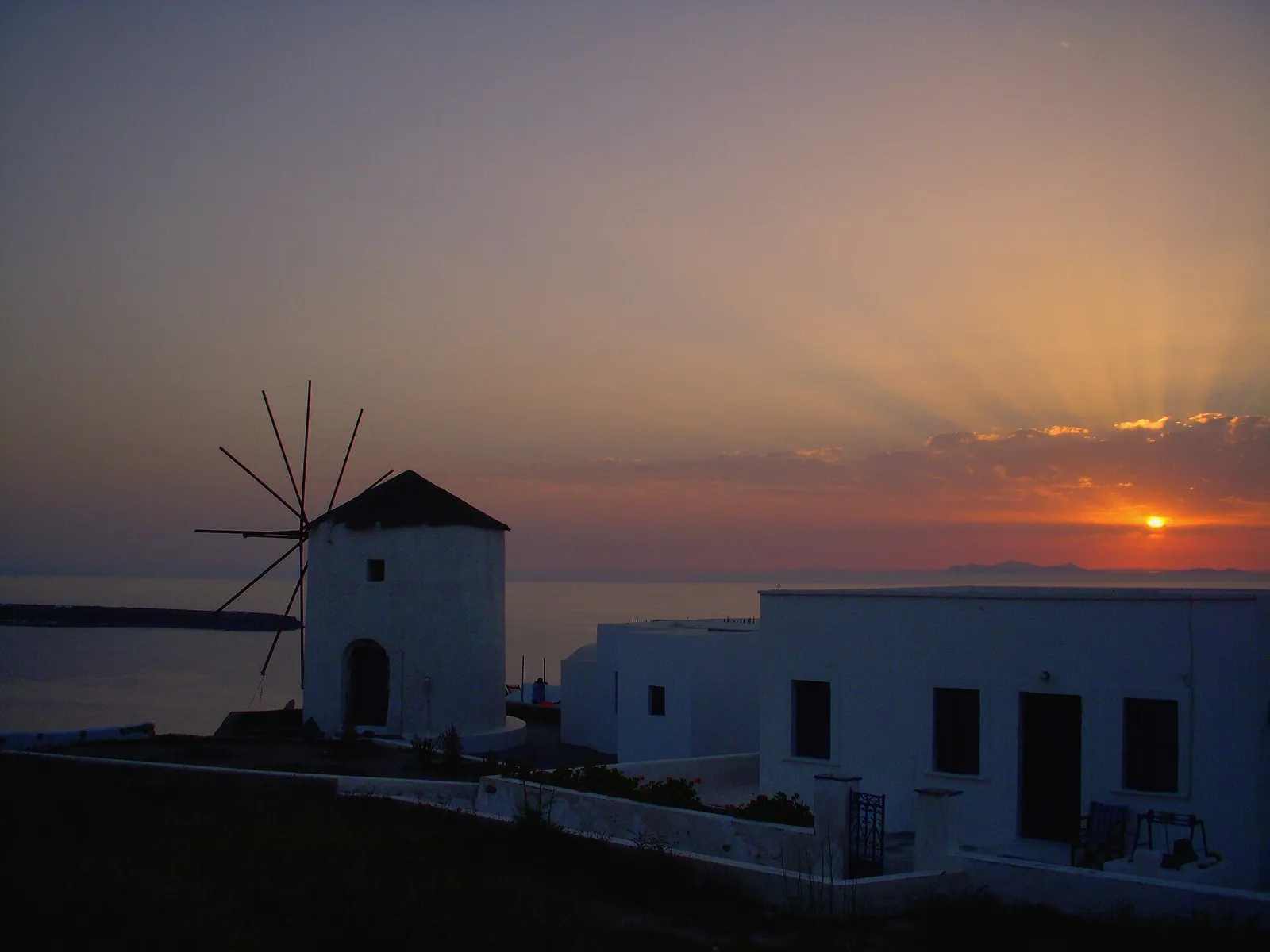
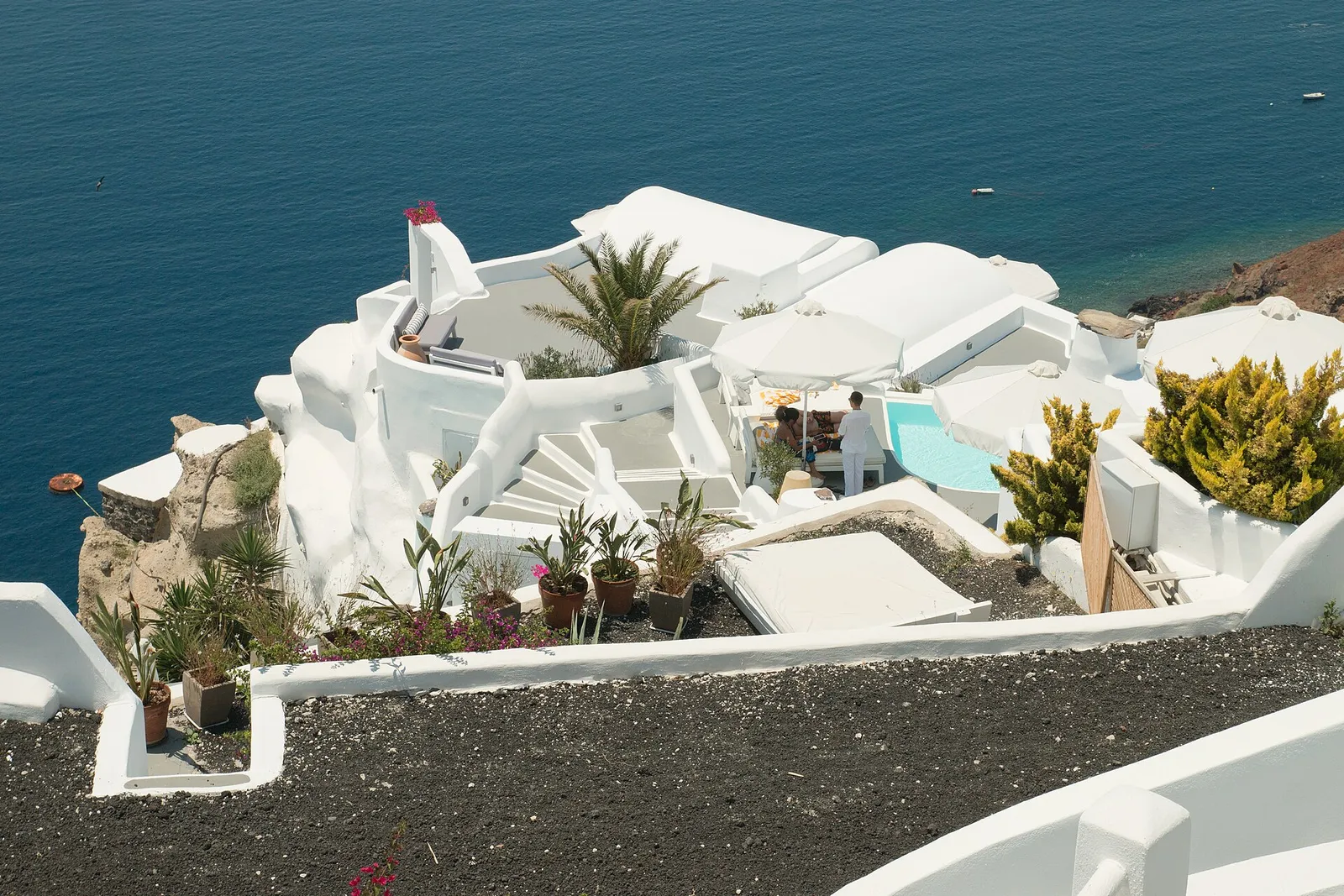
Oia is the village on every image of Greece: white cubes stacked down the cliff, blue domes, windmills, and the sunset that draws a crowd every evening of the summer.
It is genuinely beautiful and it is the most expensive place to sleep on the island by a wide margin. It is also the furthest from everything else, at the northern tip, which means a bus or a drive to the beaches and to the capital.
Two realities worth knowing. The sunset crowd is substantial, and the village fills in the two hours around it with day-trippers and cruise passengers who then leave, which makes late evening in Oia lovely and mid-evening chaotic. And the stairs are real: many of the best properties are a long way down the cliff with no vehicle access.
Fira: the practical caldera choice
Best for: first visits, longer stays, anyone who wants to walk to dinner.
Fira is the island capital and the transport hub, with the bus station that connects to every village and beach, the widest choice of restaurants and bars, shops, and a cable car down to the old port.
It is busier and less immediately photogenic than Oia, and it has a caldera view of its own that is only slightly less spectacular. For most first-time visitors it is the sensible base: you can walk to dinner, reach the beaches easily, and still wake up looking into a volcano.
The trade-off is noise, since Fira has the island’s nightlife, and a room on the main square is a different night from one on the cliff path.
Imerovigli and Firostefani: the quiet middle
Best for: the view without the crowd, couples who want to sleep.
These two villages sit on the cliff between Fira and Oia, and they are the answer for a great many visitors who did not know they existed.
Firostefani is a ten-minute walk from Fira along the cliff path, quieter, with the same view and slightly lower prices.
Imerovigli is higher and quieter still, sitting at the highest point of the caldera rim with arguably the best view on the island, and it is where a lot of the more serious hotels are.
Both give you the caldera and the sunset without the evening crowds, at the cost of walking or busing to the busier villages for a night out. For a stay of more than two or three nights, this middle stretch is frequently the best decision on the island.
Kamari and Perissa: the beach and the value
Best for: families, longer stays, swimming, and budgets.
On the flat southeastern side, these two resort towns sit behind long stretches of dark volcanic sand, with tavernas and bars along the front and hotels at a fraction of caldera prices.
The swimming is straightforward, the ground is flat, and there is space, which makes this the practical side for families and anyone staying a week. Between them rises the ancient site on the headland, and both towns are connected to the rest of the island by frequent buses in season.
What you give up is the view, and it is the view that makes Santorini famous. Plenty of visitors stay here and take a bus or a taxi to the caldera for two sunsets, which is a genuinely sensible way to do the island on a normal budget.
What the view actually costs, and how to handle it
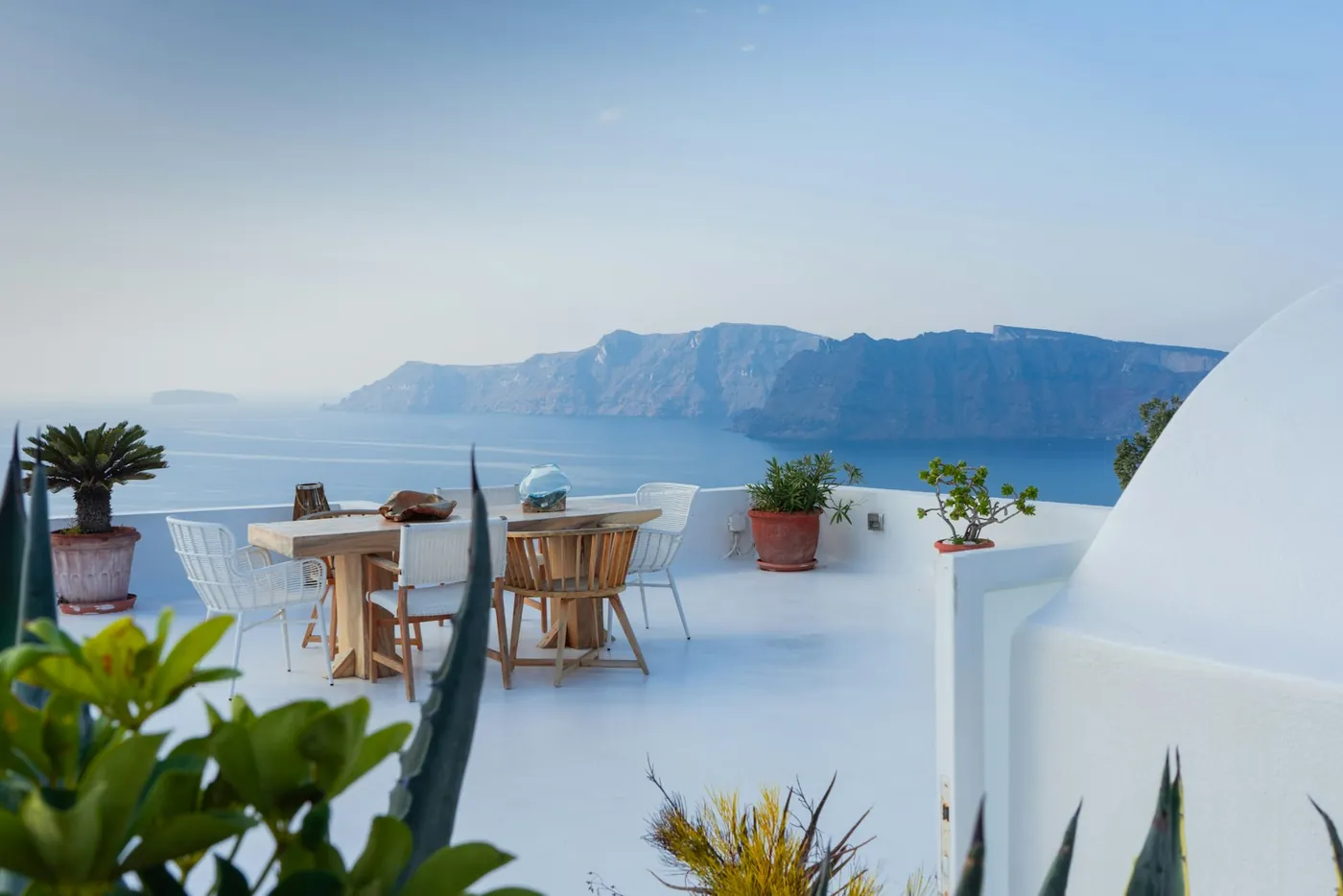
A caldera-facing room with a private terrace is one of the great hotel experiences anywhere, and it is priced accordingly. Two honest observations.
The premium is enormous and the usage is limited. You will love it at sunrise, at sunset and for an hour with a drink. For the middle of the day you will mostly be somewhere else.
Partial views are sold as views. Listings distinguish between direct caldera views, partial or side views and no view at all, and the wording is optimistic. Photographs taken from the terrace are the ones to look for, not photographs of the terrace.
The strategy that works for most budgets is a split stay: two nights on the cliff for the experience, the rest in the beach towns or the quieter middle villages. You get the postcard without paying for it every night.
Getting around from wherever you land
Buses connect Fira with Oia, the beach towns and the ports frequently in season and thin out sharply outside it. Everything routes through the Fira station, which is why staying there simplifies life.
Cars and ATVs are widely hired and genuinely useful on the flat side, and genuinely difficult in the caldera villages where parking is scarce and streets are pedestrian. Hiring for one or two days rather than the whole stay is common.
Taxis are limited in number on the island and can be hard to find at peak times, which surprises visitors used to mainland availability. Book ahead for early ferries and flights.
Walking the cliff path between Firostefani, Imerovigli and Oia is one of the best things to do on Santorini, and it is a real walk rather than a stroll.
Booking, and what to check before you pay
Santorini has less accommodation inventory than its fame suggests, particularly on the cliff, and it sells in order of price rather than in order of quality.
Book early for summer. Months ahead is normal, and the caldera rooms at fair prices are the first to go. Shoulder-season dates are far easier and materially cheaper.
Read the view wording carefully. Direct caldera view, partial view, side view and sea view are four different products and only one of them is what you are imagining.
Check the access, in steps and in whether a vehicle can reach the door. This is the complaint that dominates reviews.
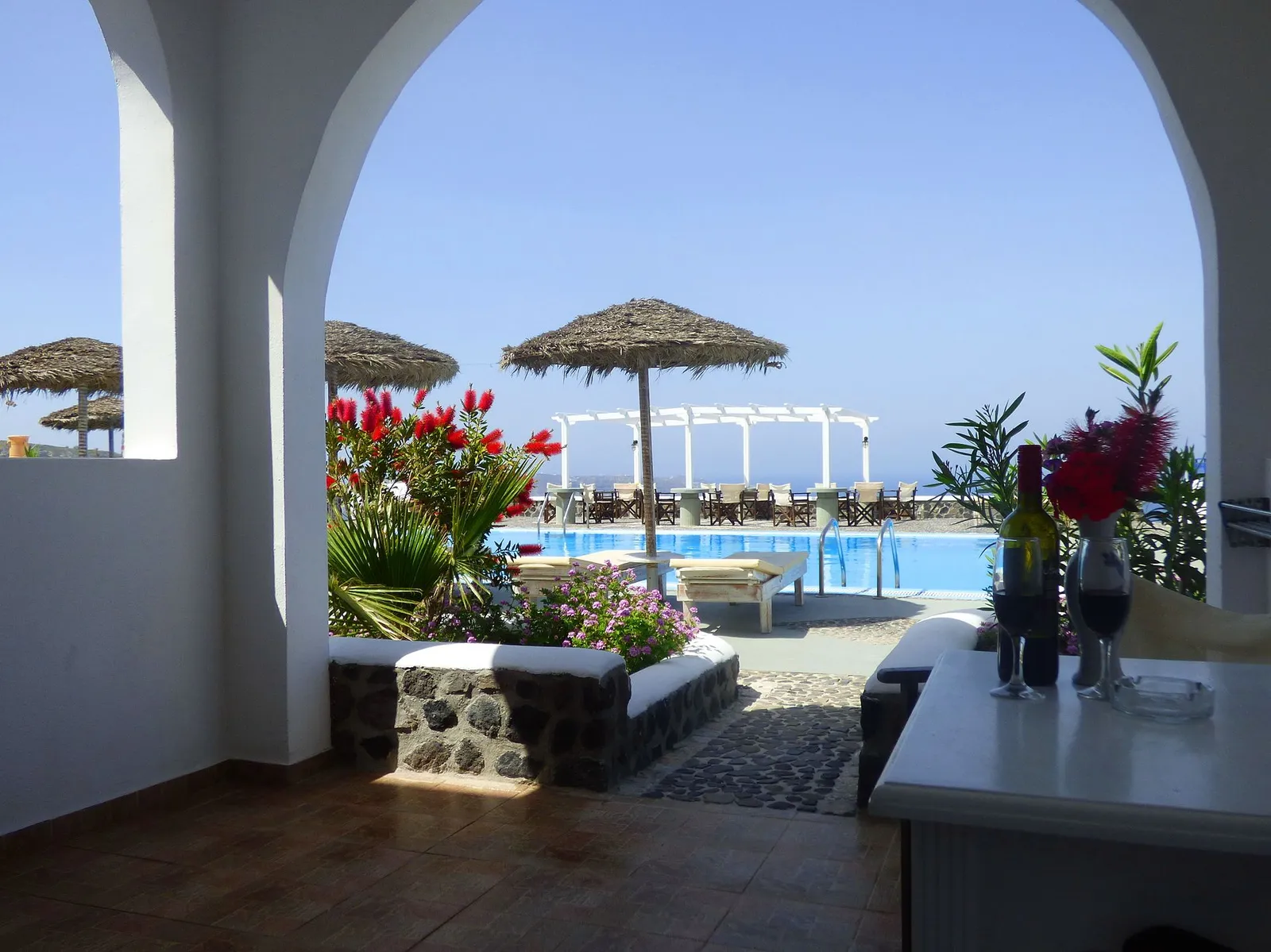
Check what the terrace actually is. On the cliff, terraces are frequently shared, overlooked from above, or the roof of the room below, which is a normal feature of this architecture and a surprise if you expected privacy.
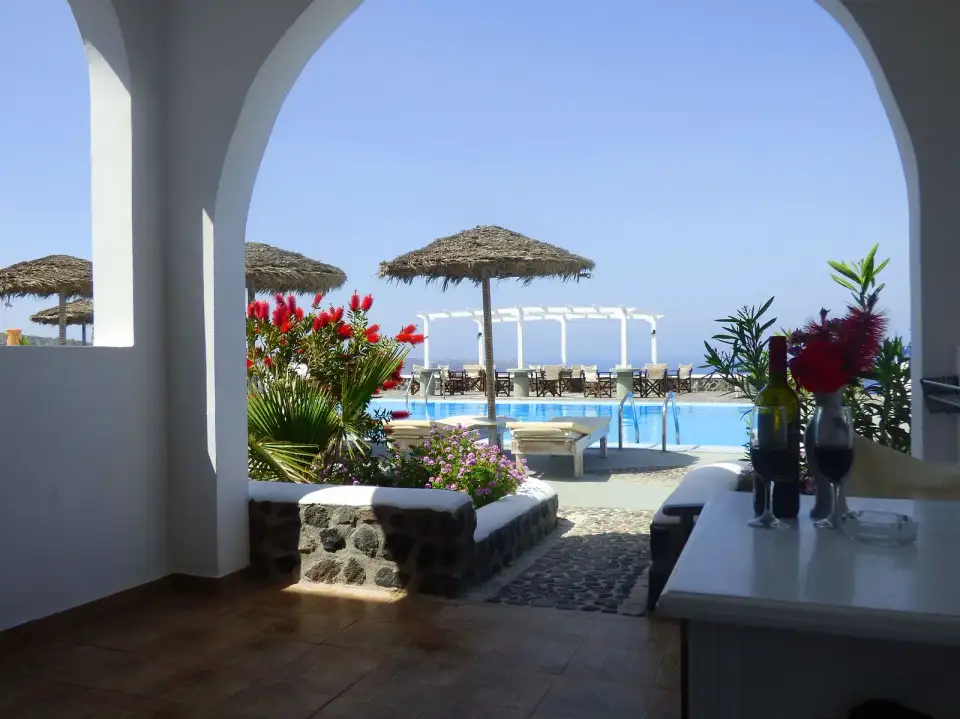
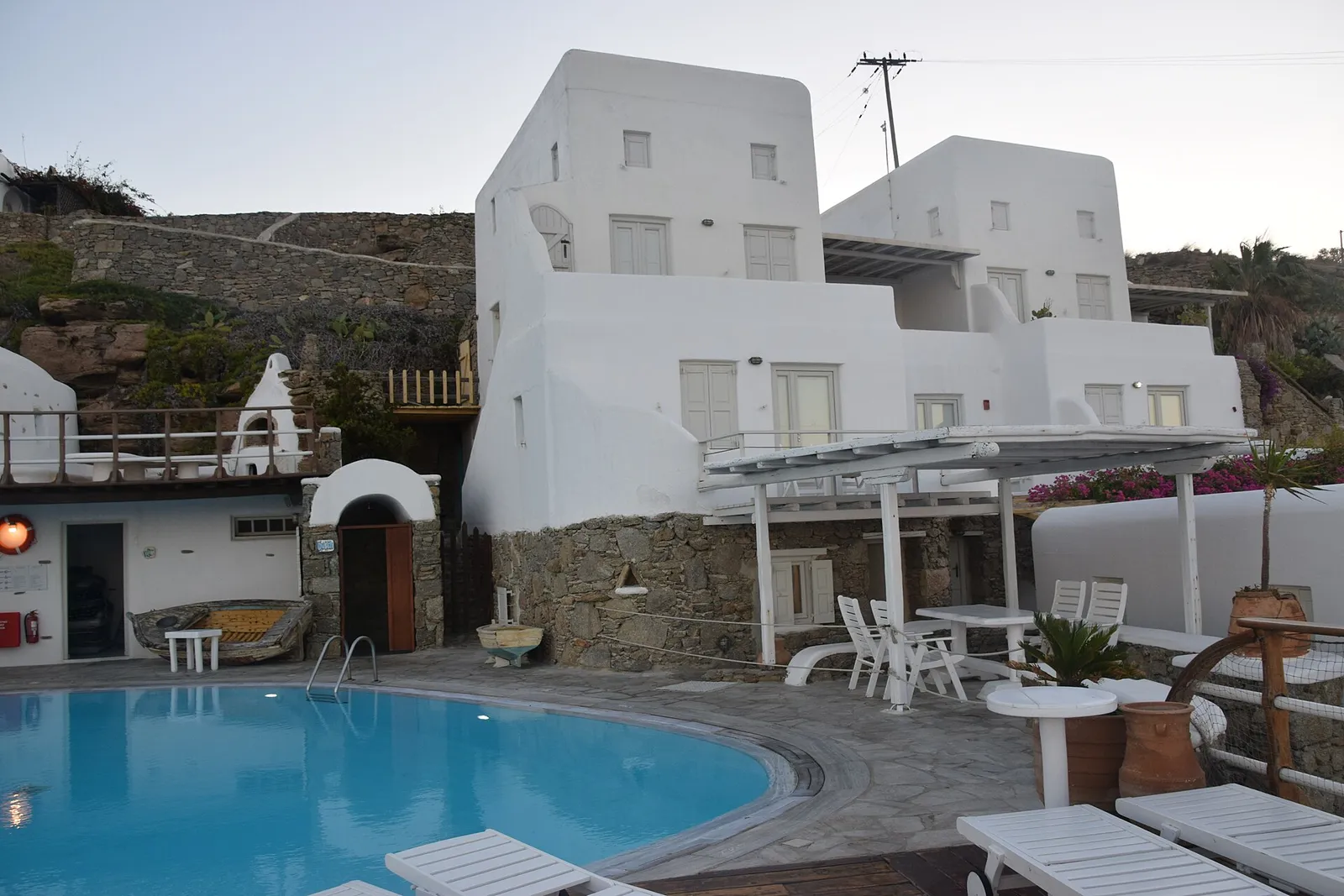
Check the pool. Many cave hotels have small plunge pools rather than swimming pools, which is fine when you know and disappointing when you do not.
Confirm transfers. Some cliff properties arrange porters and buggies from the nearest road, and knowing that before arrival with two suitcases is worth the email.
Timing, and the other island question
Two decisions sit alongside the village choice.
When you come changes the price and the crowd more here than almost anywhere in Greece, and the shoulder months deliver the same view for far less; our guide to the best time to visit Greece sets out what each season delivers, including why September has the warmest sea.
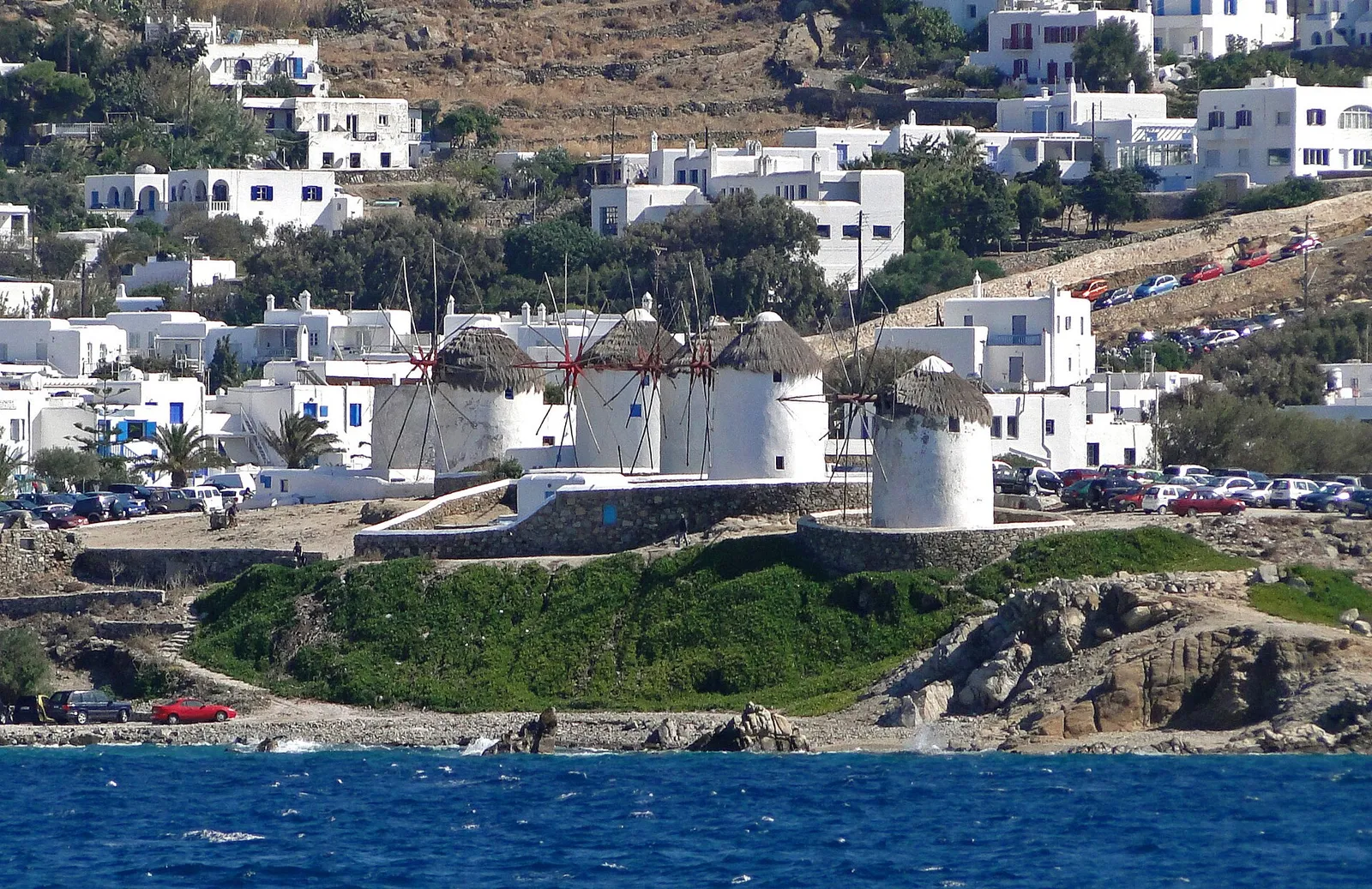
Whether Santorini is the right island at all is worth asking honestly, because its neighbour in fame is a very different holiday and the two are frequently confused. Our comparison of Mykonos and Santorini sets them side by side on beaches, nightlife, cost and who each actually suits.
And if this is a honeymoon or a milestone trip, the calculation changes again, because the caldera splurge is exactly what that kind of trip is for; our Greece honeymoon guide covers how to build the rest of the itinerary around it.
The short version
Decide which side of the island you want before you compare hotels. Oia is the most beautiful and the most expensive, Fira is the practical caldera base with buses and restaurants, Imerovigli and Firostefani give you the same view in peace, and Kamari and Perissa give you a beach and a fraction of the price. Book months ahead for summer, ask how many steps there are before you commit, and consider two nights on the cliff rather than seven.