Santorini spent part of 2026 in the news, and the coverage was considerably more dramatic than the situation on the ground. The island is open, busy and working normally. What exists is a set of precise civil protection measures covering a handful of places at the foot of the cliffs, put in place as a precaution after scientists flagged volcanic activity. This page sets out exactly what they cover, because the useful information got lost somewhere between the headlines and the booking pages.
What changed, and what did not
The measures were announced in late April 2026 and run until at least 31 March 2027. They are aimed at reducing how many people are standing in a few specific low-lying spots at the base of the caldera cliffs, and at keeping the island’s critical infrastructure from clogging up, rather than at discouraging visits.
The scope is narrow. Interventions cover the Old Port of Fira, Ammoudi below Oia, and port and cliff-base areas including Athinios and Armeni, plus Korfos on neighbouring Thirassia. What they do not touch is essentially everything a visitor comes for: the cliff-top villages, the caldera views, the sunset, the beaches on the far coast, the wineries, and the archaeological site at Akrotiri. Seismic activity has since subsided, and occupancy for 2026 has been running above 2025.
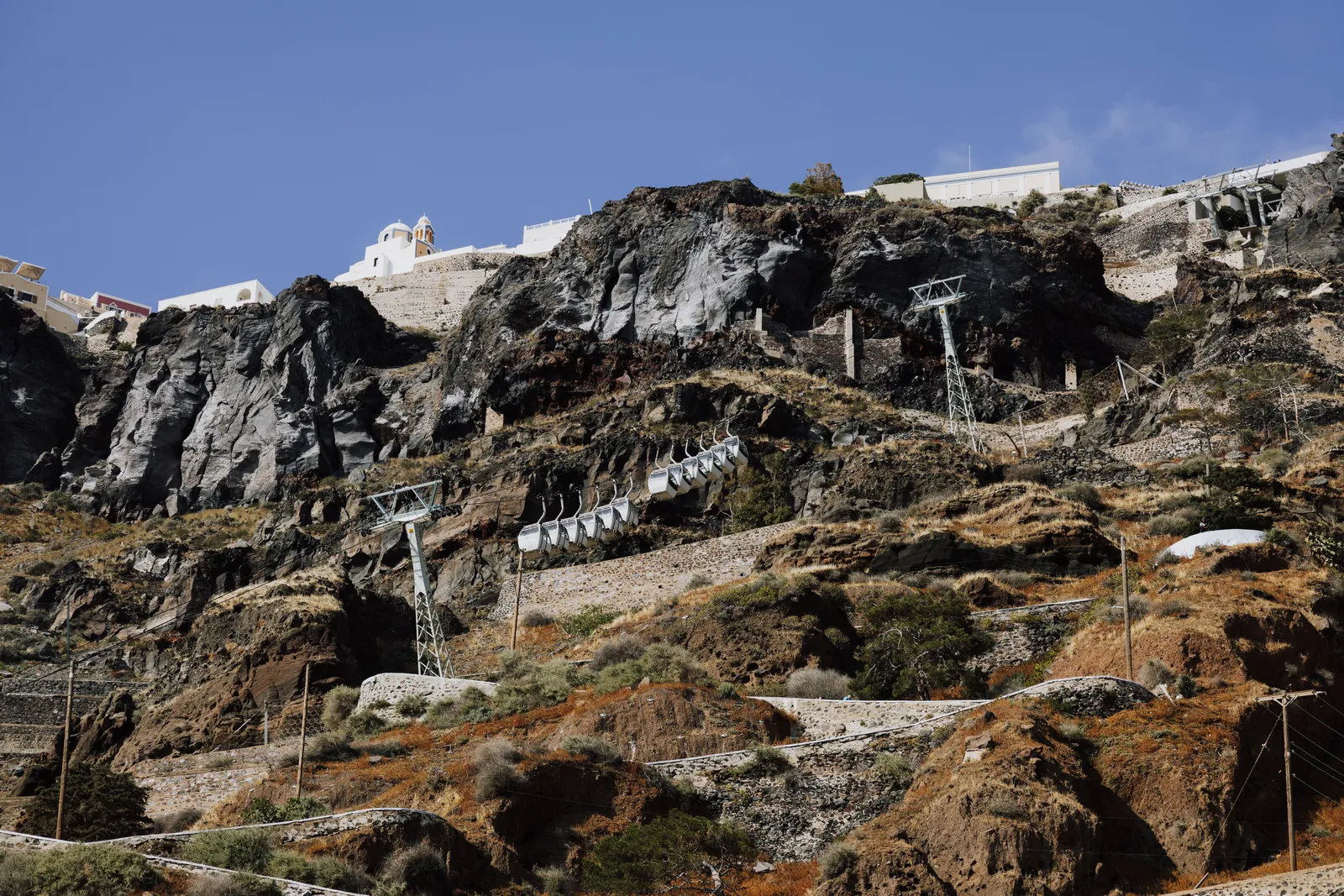
The Old Port of Fira, and the cable car
A restricted zone applies at the Old Port of Fira and the slopes above it, so the area at the bottom of the cliff below the capital is not somewhere to go wandering.
The important detail, and the one most often reported wrongly, is what is not restricted. The cable car is not covered by the measures, and neither is the walking path between Fira and the Old Port. Both continue to operate. That matters because the cable car is the main means of getting up and down that cliff for anyone arriving by tender, and losing it would have changed a cruise day on Santorini completely.
The practical version: you can still ride down and back up, and you should expect limits on where you can go once you are at the bottom rather than free run of the port area. As ever on that cliff, the donkeys that work the stepped path remain a welfare concern and the cable car or your own legs are the kinder option.
Ammoudi: a vehicle ban and one closed trail
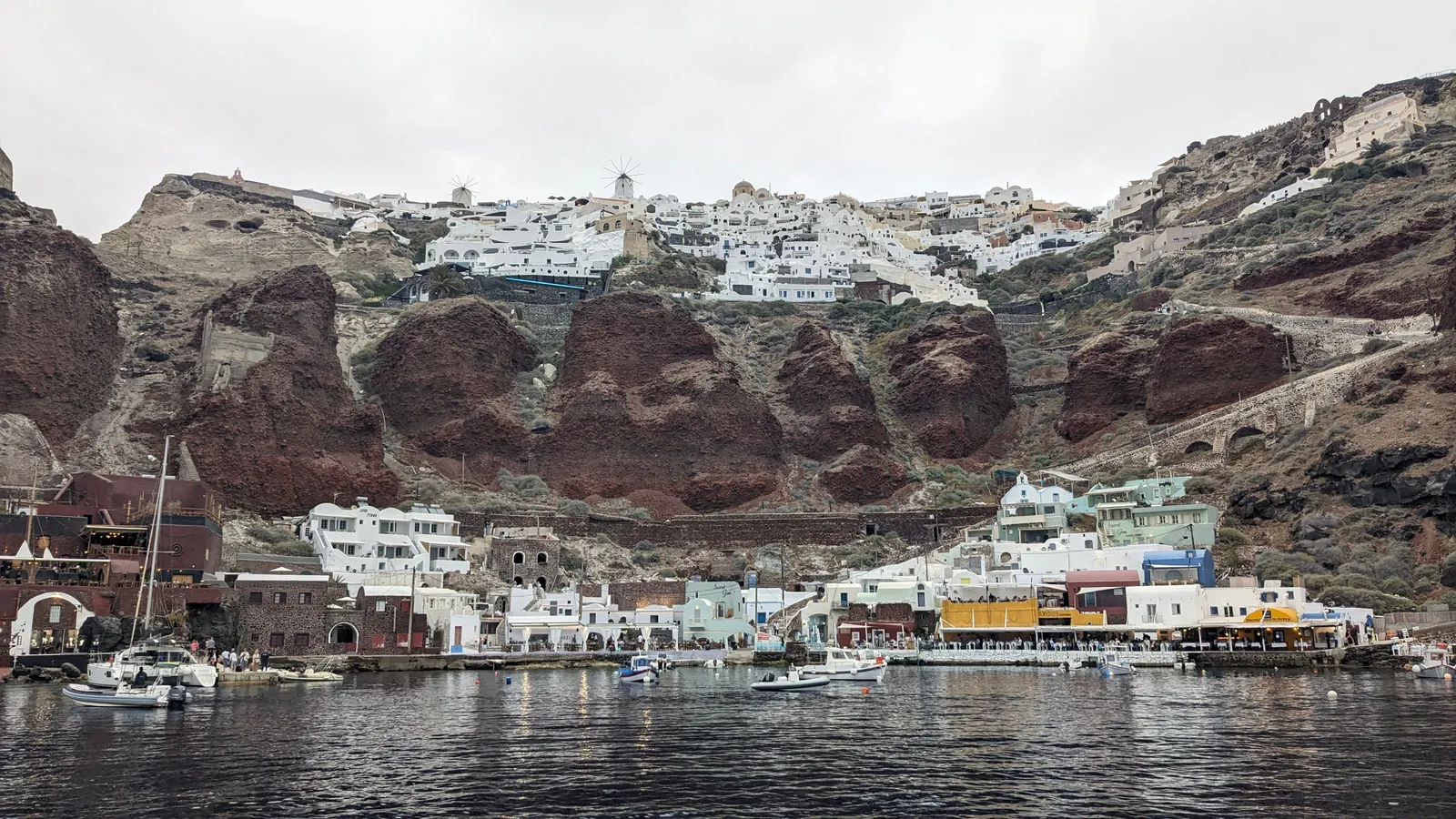
Below Oia, Ammoudi is the small red-rock harbour with the fish tavernas at the water’s edge, reached by a long flight of steps down from the village. Two things have changed there and one has not.
The path from Ammoudi up to Oia stays open, so the steps most people use are unaffected and dinner at the harbour remains entirely possible on foot. The separate trail from Ammoudi to Agios Nikolaos is closed. And there is now a ban on vehicle traffic on the municipal road down to Ammoudi from the Oia ring road junction, with an exception for a limited number of passenger vehicles operated by the municipality to carry visitors.
In practice, that means you should not plan on driving yourself down or being dropped at the harbour by an ordinary taxi. Walk down, and either walk back up or use the municipality transport. If you are booking a table below, our guide to eating in Santorini covers how the Ammoudi tavernas work and why the late afternoon is the time to go down.
Sort the airport and port transfer in advanceWith vehicle access restricted in places and the ferry port busy, a pre-booked transfer removes the part of a Santorini arrival that most often goes wrongVolcano boat trips to Nea Kameni
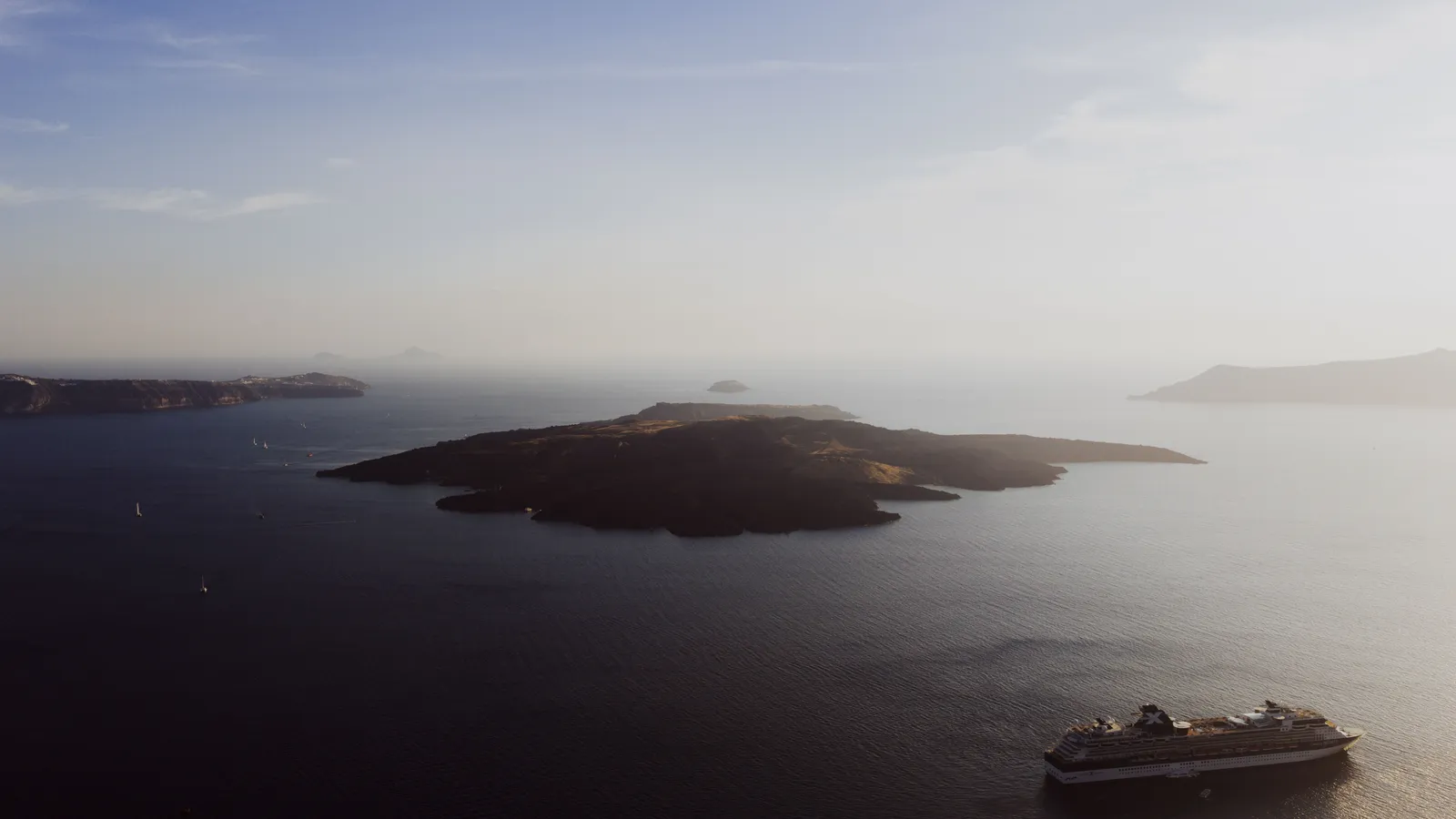
This is the one genuinely unresolved question, and we would rather say so than guess. Boat trips out to the crater islet of Nea Kameni, usually combined with the hot springs and sometimes Thirassia, are a fixture of a Santorini itinerary.
Availability has varied, and the reporting on it has been inconsistent. Some operators have continued to list and sell the trip; other accounts have described it as affected by the measures. We are not going to state that these tours are running, and we are not going to state that they are not, because neither claim is supported well enough to act on.
What to do instead is simple. Confirm directly with the operator before you pay, ask specifically whether the landing on Nea Kameni itself is included or whether the boat is cruising past, and check the refund position if the trip does not sail. Do not anchor a day of your itinerary to it until you have that in writing. Sea conditions have always cancelled these trips anyway, so the habit is a good one regardless.
Is it safe, and is it busy
Those turn out to be the two questions people actually mean. On the first, the measures are precautionary and geographically narrow, the seismic activity that prompted them has subsided, and the authorities have not restricted travel to the island. On the second, Santorini in 2026 has been busier than in 2025, so anyone hoping the news would deliver an empty island will be disappointed.
The crowding rather than the geology is what will shape your trip. Cruise arrivals concentrate into the middle of the day, Oia at sunset remains the most congested hour on the island, and the sensible responses are the same as they have always been: sleep on the island rather than visiting for a day, see the villages early or late, and book restaurants ahead in season. Our Santorini guide covers the timing in detail.
Planning around it
Treat this as a short checklist rather than a reason to rethink the trip. Drop the Ammoudi to Agios Nikolaos trail from any walking plans. Assume you cannot drive down to Ammoudi and plan to walk or use the municipality transport. Expect the Old Port area at the bottom of the Fira cliff to be restricted, while the cable car and the Fira path continue to run. Confirm any volcano boat trip with the operator before paying.
Everything else stands. Where you sleep still matters far more than any of this to how the trip feels, and our guide to where to stay in Santorini sets out how the villages differ.