Sitting down for a long taverna lunch is one version of eating in Greece, and it is the one our food guide spends most of its time on. The other version happens standing up, costs a fraction as much, and is what most Greeks actually eat on an ordinary weekday. Here is what to order, what the confusing names really mean, and where each thing belongs in the day.
Gyros, souvlaki and the naming problem
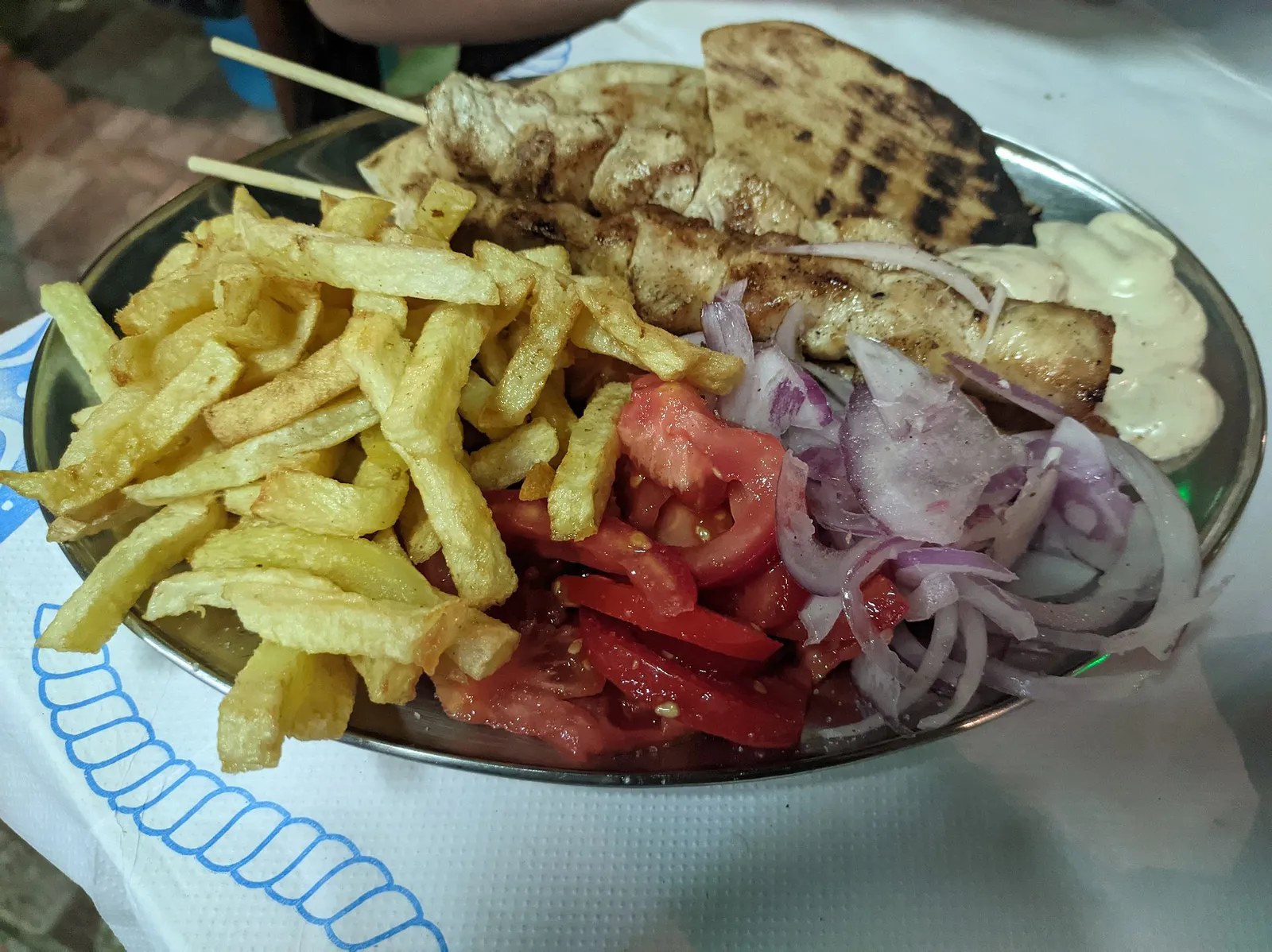
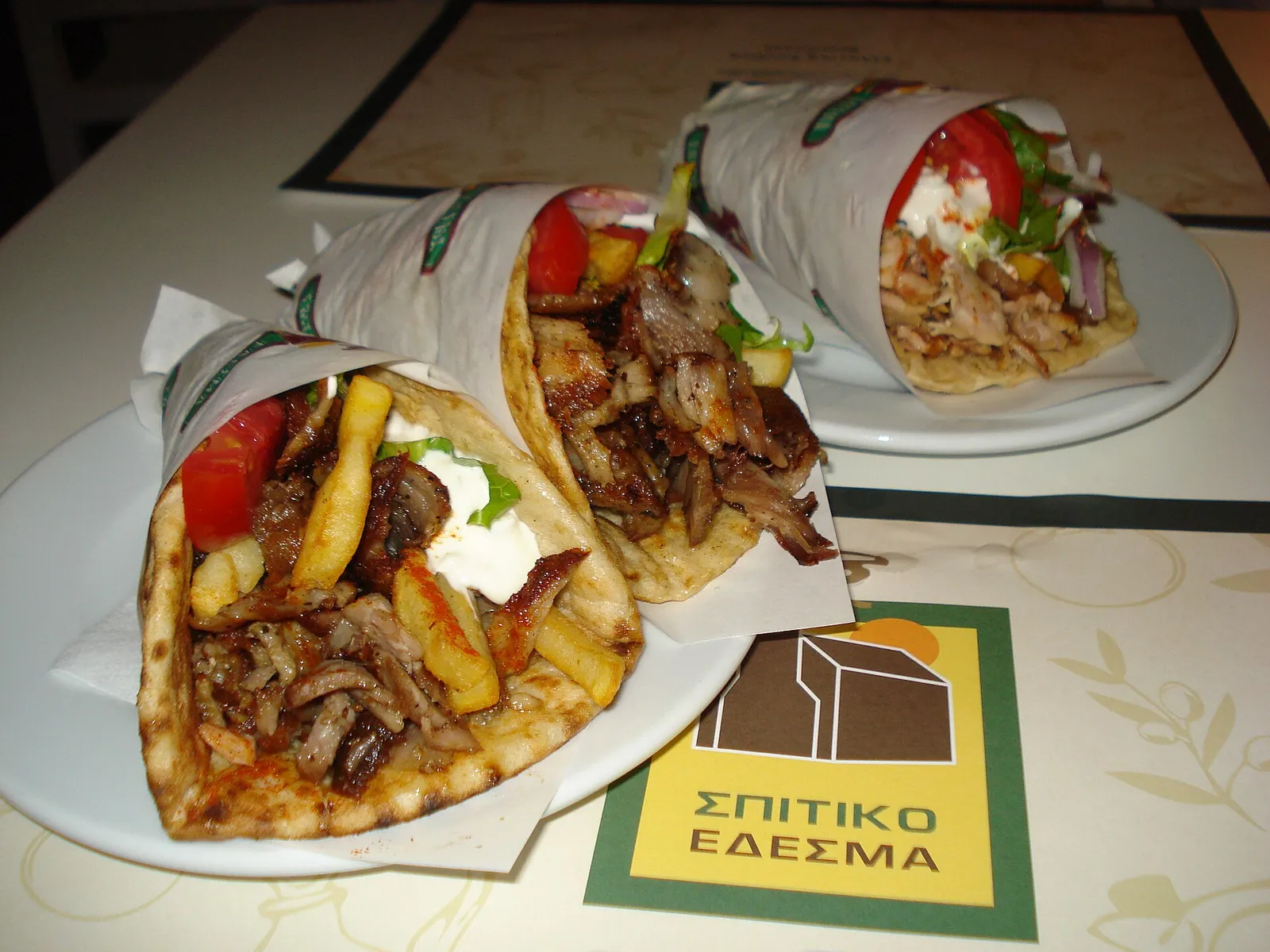
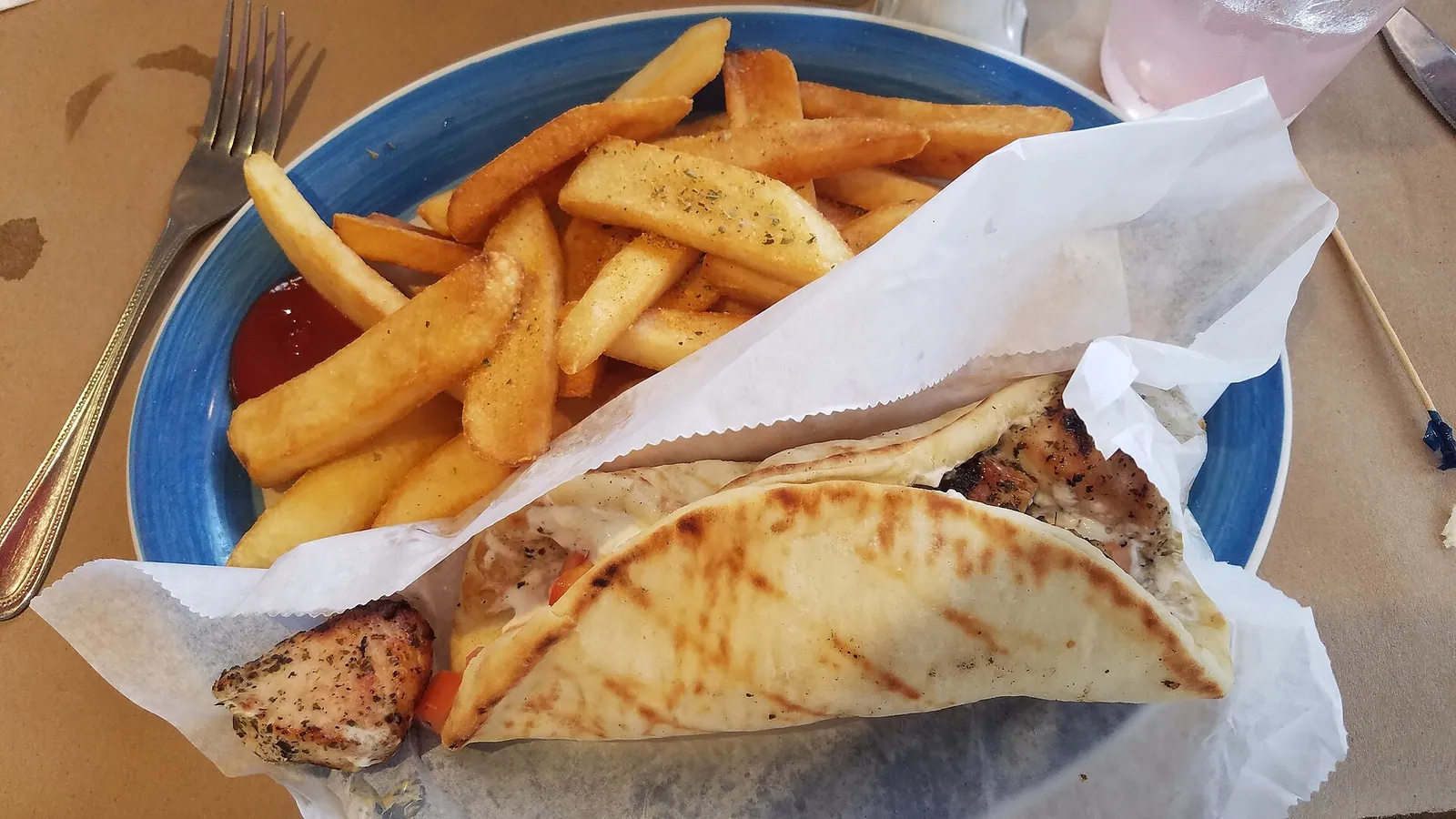
The single most useful thing to understand is that souvlaki and gyros describe two different cooking methods, and that everyday speech blurs them. Souvlaki properly means meat grilled on a small skewer. Gyros means meat packed onto a vertical spit, cooked as it turns, and shaved off in thin strips. Both end up in the same pita bread with the same accompaniments, which is where the confusion starts.
Regional habit makes it worse. In Athens, a bare skewer is usually called a kalamaki, and if you ask for souvlaki you will often be handed a wrapped pita. In parts of the north the words land differently again. The practical fix is to skip the argument entirely and specify two things: the meat you want, and whether you want it on the skewer or in the pita. Say that and you will get what you pictured.
The standard wrap comes with tomato, onion, tzatziki and, in most of the country, chips inside the pita rather than on the side. Pork and chicken are the everyday meats. If you want it without the chips or without the onion, say so when you order rather than after it is wrapped.
Breakfast on the street
The Greek weekday breakfast is not the hotel buffet. It is a koulouri, a ring of bread crusted in sesame seeds, sold from carts and kiosks from very early in the morning and eaten plain in the hand. It is cheap, dry in a pleasant way, and designed to be eaten while walking.
The other standard is a pie from a bakery. Tiropita is the cheese one and spanakopita the spinach one, both wrapped in filo and sold warm by the piece. Every neighbourhood has a bakery doing them, and the queue at eight in the morning tells you which one to use. This is the everyday version of the food the tavernas serve in a more elaborate form in the evening, and it is worth building a morning around at least once.
The northern speciality: bougatsa
Travel north and the pastry changes. Bougatsa is filo filled with a warm semolina custard, cut into squares with a blade in front of you and finished with icing sugar and cinnamon. There are savoury versions with cheese or minced meat, but the sweet one is the one to try first.
It belongs to Thessaloniki and to the town of Serres in particular, where dedicated shops open early and do little else. You will find bougatsa on menus around the country, but in the north it is treated as a local institution rather than a pastry among others, and the difference in quality shows.
Someone who knows which counter to queue atA guided food walk through Athens or Thessaloniki covers the bakeries and grill shops locals actually use, in a couple of hoursPies, wraps and the rest of the savoury range
Beyond the two famous pies, bakeries carry a rotating range worth investigating: kreatopita with meat, hortopita with wild greens, and various regional versions that change as you move around the country. Island bakeries in particular tend to have one thing they are known for that you will not see on the mainland.
Vegetarians do well here. Cheese and greens are the default fillings rather than an accommodation, and the traditional fasting periods have left the country with a deep repertoire of dishes cooked without animal products. Vegans should still ask about butter in the pastry, since the same pie is made both ways depending on the baker.
The sweet end: loukoumades and the rest
Loukoumades are balls of yeasted dough fried to order, served hot, and traditionally drowned in honey syrup with cinnamon and crushed walnuts. They are the oldest recorded sweet in the country by some accounts, and they are still best in the plain honey version despite the chocolate and ice cream variations that modern shops pile on.
Alongside them you will find galaktoboureko, a custard filo pastry soaked in syrup, and in summer the ice cream shops that stay open until very late. Sweet things in Greece are an evening activity as much as an afternoon one, and a walk for loukoumades after dinner is a normal way to end a night out, which fits neatly into the later hours our Athens nightlife guide describes.
How to spot the good ones
Three signals are more reliable than reviews. The first is turnover: a spit that is being shaved constantly is serving fresh meat, while one standing untouched is not. The second is who is queueing, since a line of people who are clearly on their way to work is a better recommendation than a line of visitors. The third is distance from the main square, which is the crudest and most dependable of the three.
The same rule applies in reverse when you do want to sit down. A grill shop with three plastic tables is not trying to be a restaurant, and the places worth booking for an evening meal are a separate category covered in our guide to where to eat in Athens. Street food is the cheap, fast, everyday half of Greek eating, and it is genuinely good rather than merely convenient.