You can travel to Greece for the islands and the ruins and end up going back for the food. Greek cooking is simple, generous and built on superb raw ingredients: sun-ripe tomatoes, good olive oil, fresh fish, herbs, and a table meant for sharing. Understand a few basics and you will order like you have been coming here for years, from your very first lunch. Come hungry, and come ready to slow down.
The street-food heroes: souvlaki and gyros
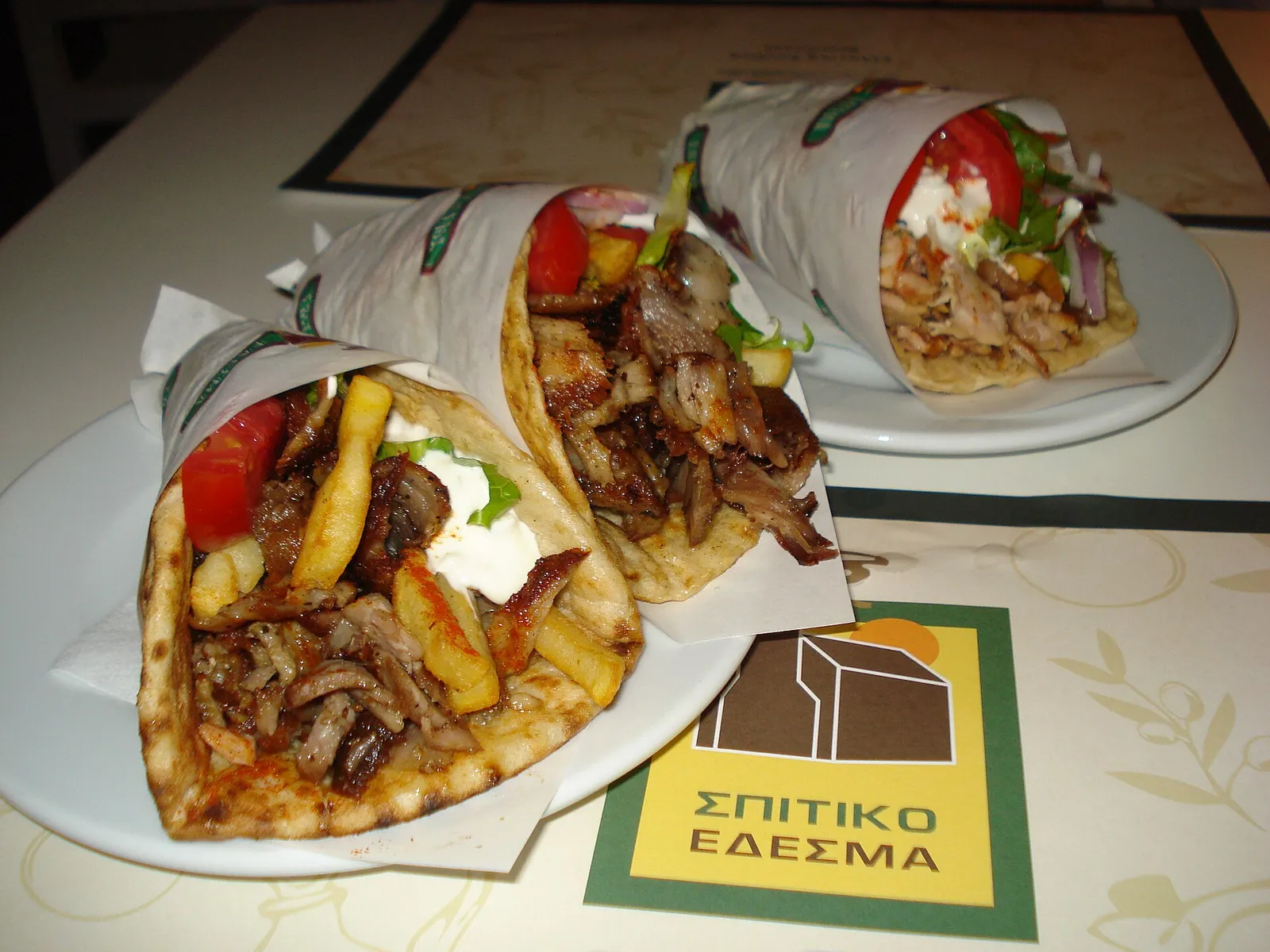
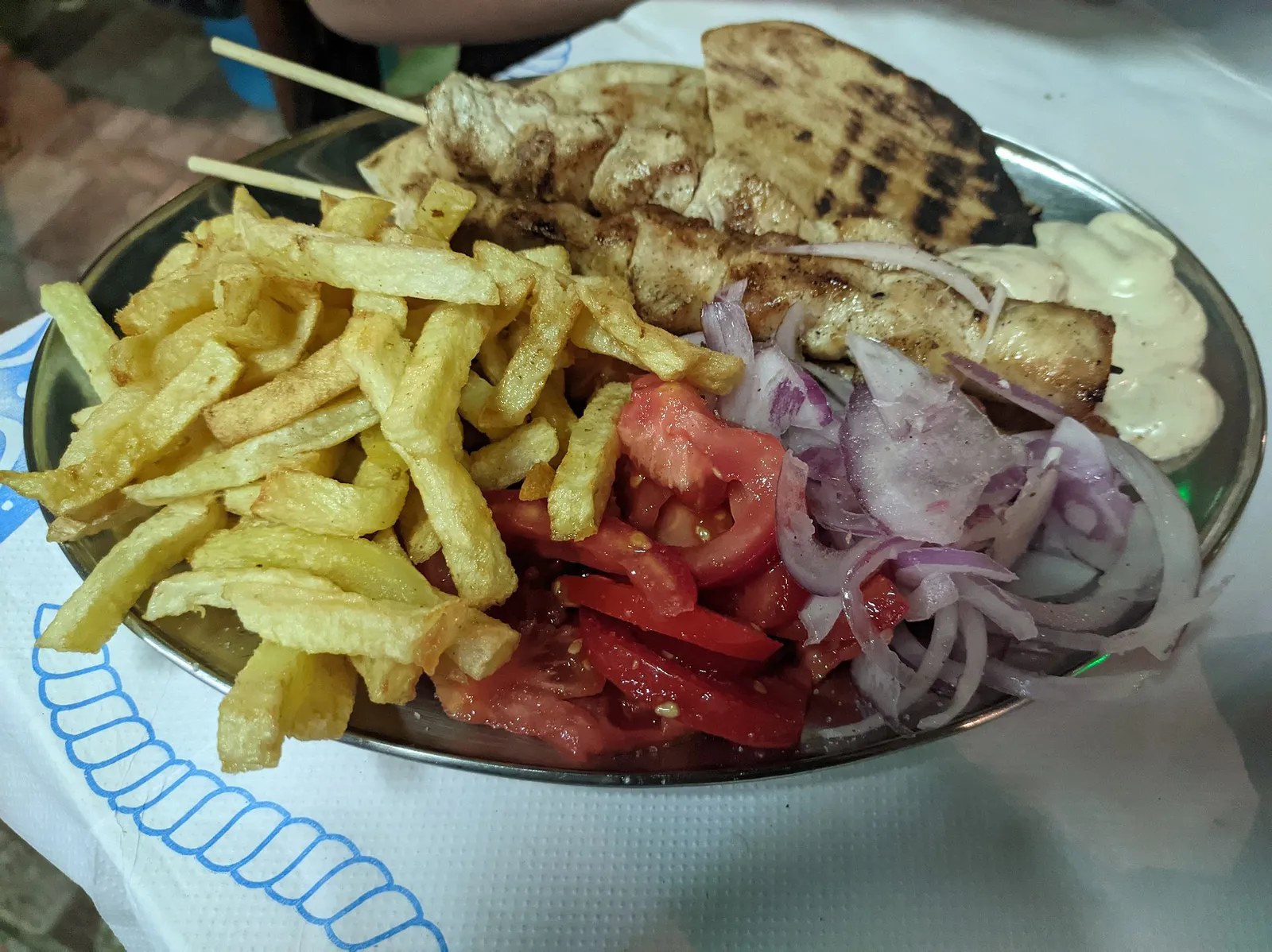
Start where every trip should, at a souvlaki shop. Souvlaki properly means small skewers of grilled meat, while gyros is the meat carved from the vertical spit, both wrapped in warm pita with tomato, onion, a handful of chips and a swipe of tzatziki. It is fast, filling, ridiculously cheap and genuinely delicious, the perfect lunch between sights or a late-night bite after the bars.
Order it “me apo ola” (with everything) and eat it standing up on a street corner. This is Greek fast food at its finest, and it never gets old.
The vocabulary shifts as you travel, which confuses visitors and matters not at all. In Athens the little skewer is a kalamaki and souvlaki is the general idea; further north the same skewer is simply a souvlaki. Point, say “me apo ola”, and you will get what you wanted. While you are at the counter, look for a koulouri, the sesame-crusted bread ring sold from street carts in the morning, which is what Greeks actually eat on the way to work.
The meze table: how a Greek meal really works
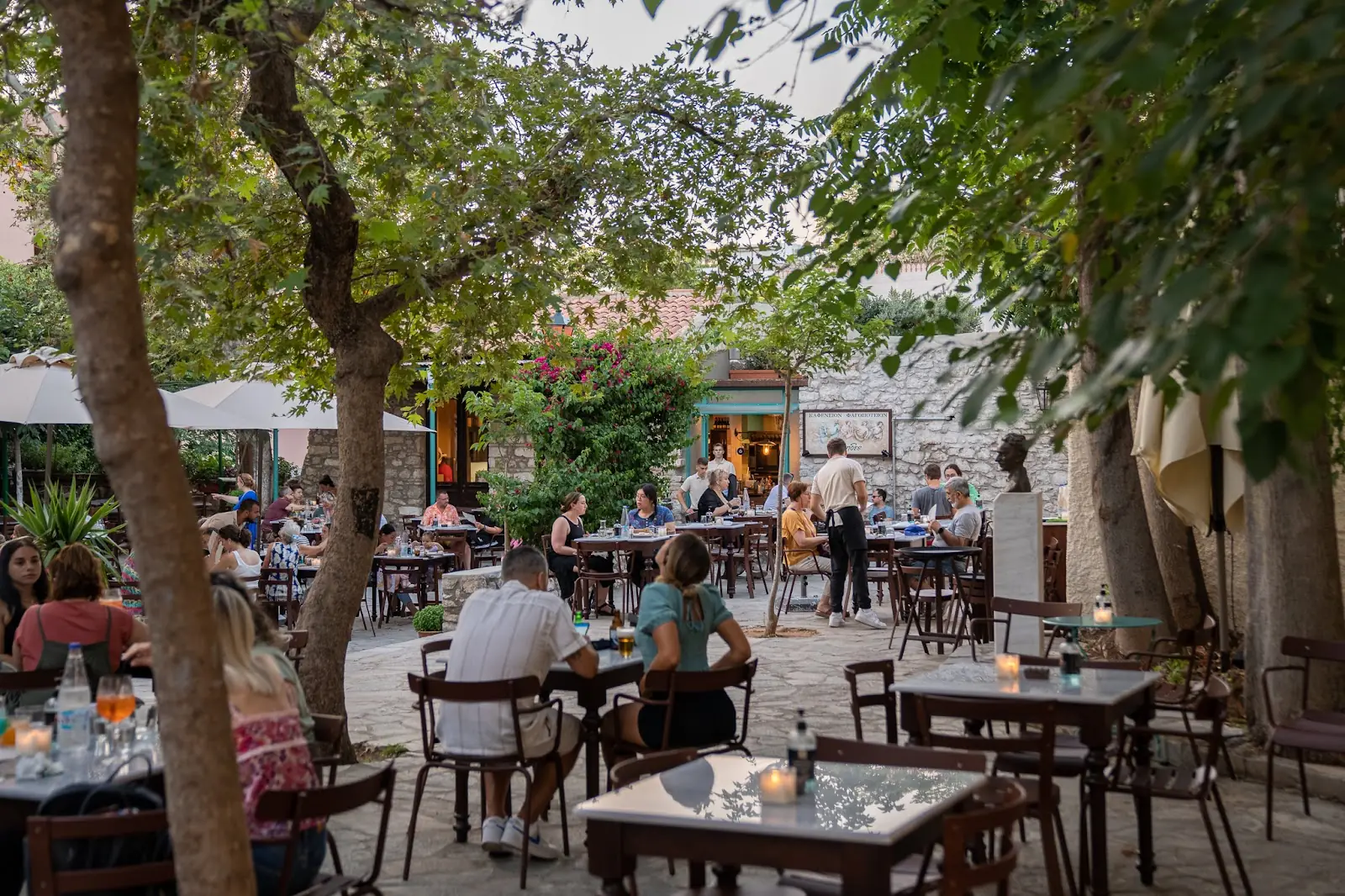
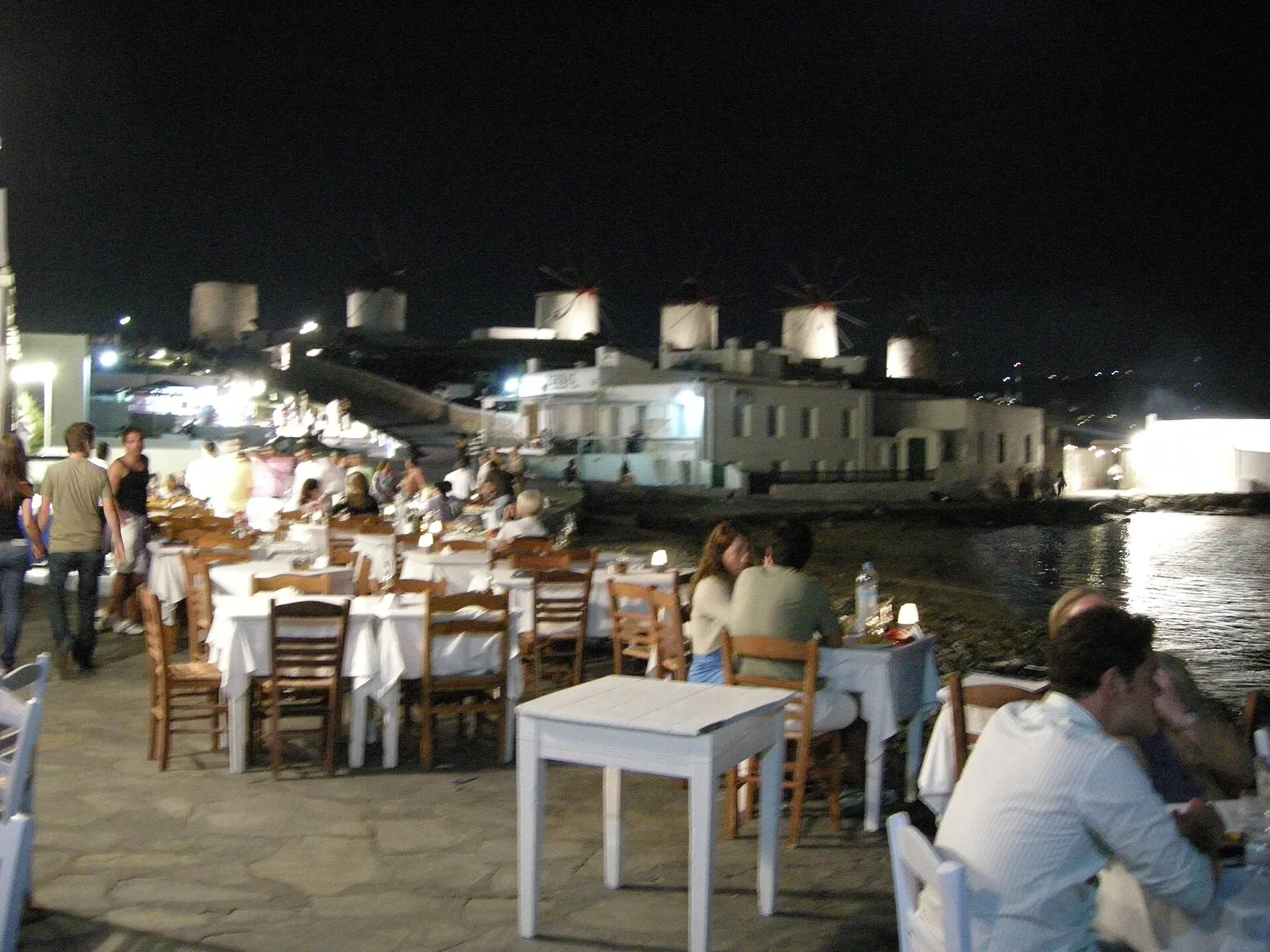
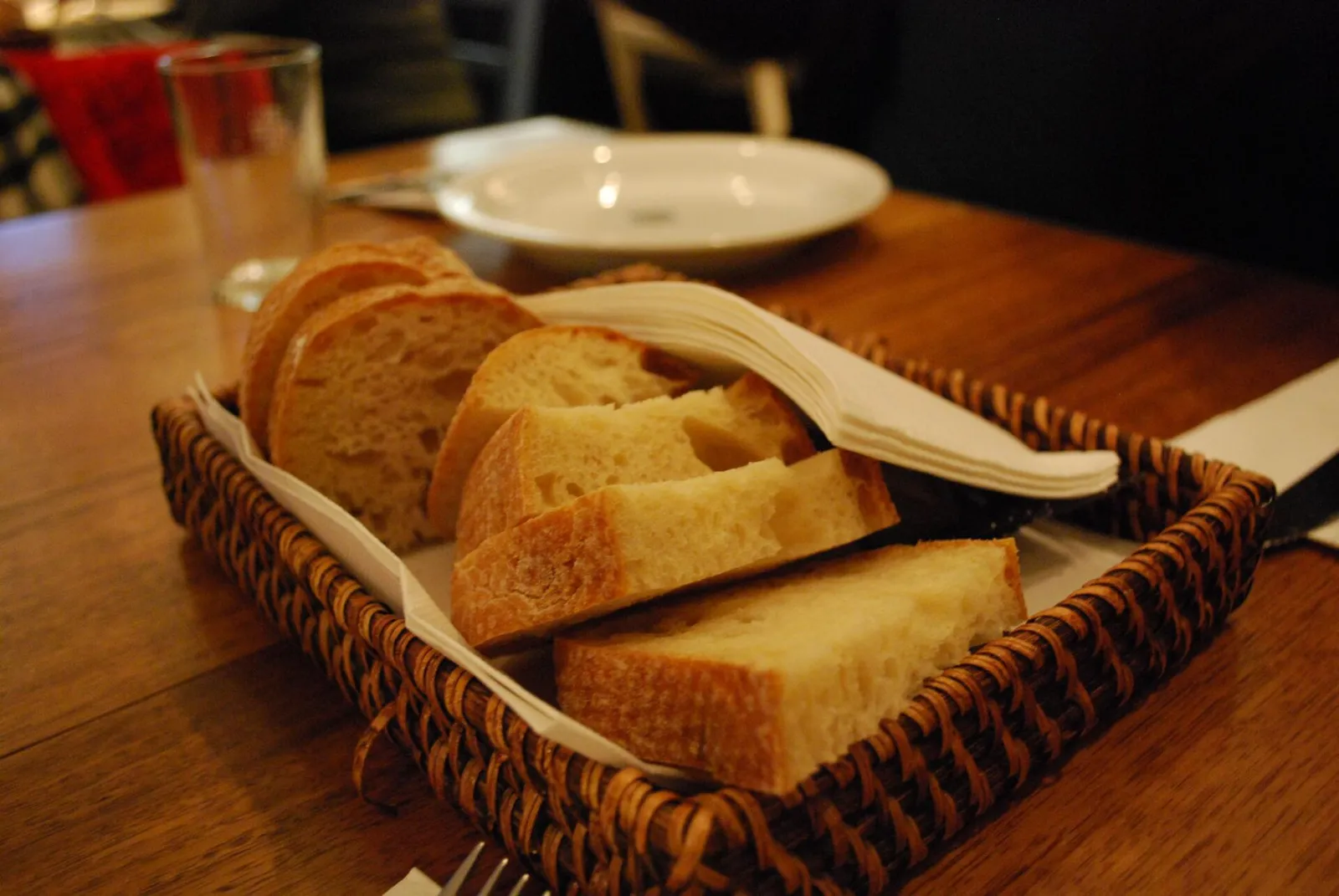
The soul of Greek dining is the meze, a spread of small shared plates rather than a single dish each. Sit down at a taverna, order a stack of little plates for the middle of the table, and let everyone dig in. Expect cool dips like tzatziki, fava and spicy tirokafteri; dolmades (stuffed vine leaves); crisp fried saganaki cheese; grilled octopus; tiny fried fish; and always a Greek salad (horiatiki) crowned with a slab of feta.
The rhythm is relaxed. Order a first round, drink some wine, talk, and add more if you are still hungry. Nobody is rushing you, and the food keeps coming as long as you keep ordering.
A small correction that improves every salad you order: a horiatiki has no lettuce in it. It is tomato, cucumber, onion, pepper, olives and a slab of feta with oil and oregano, and if you are served a bowl of leaves you are in a restaurant that has adjusted itself for visitors.
The big plates: moussaka and the classics
When you want something heartier, the oven dishes deliver. Moussaka is the icon: layered aubergine, spiced minced meat and a golden béchamel top, rich and comforting. Look also for pastitsio (a baked pasta bake), gemista (vegetables stuffed with rice and herbs), kleftiko (slow-cooked lamb), and whatever the taverna has simmering that day in its trays of magirefta, the home-style cooked dishes.
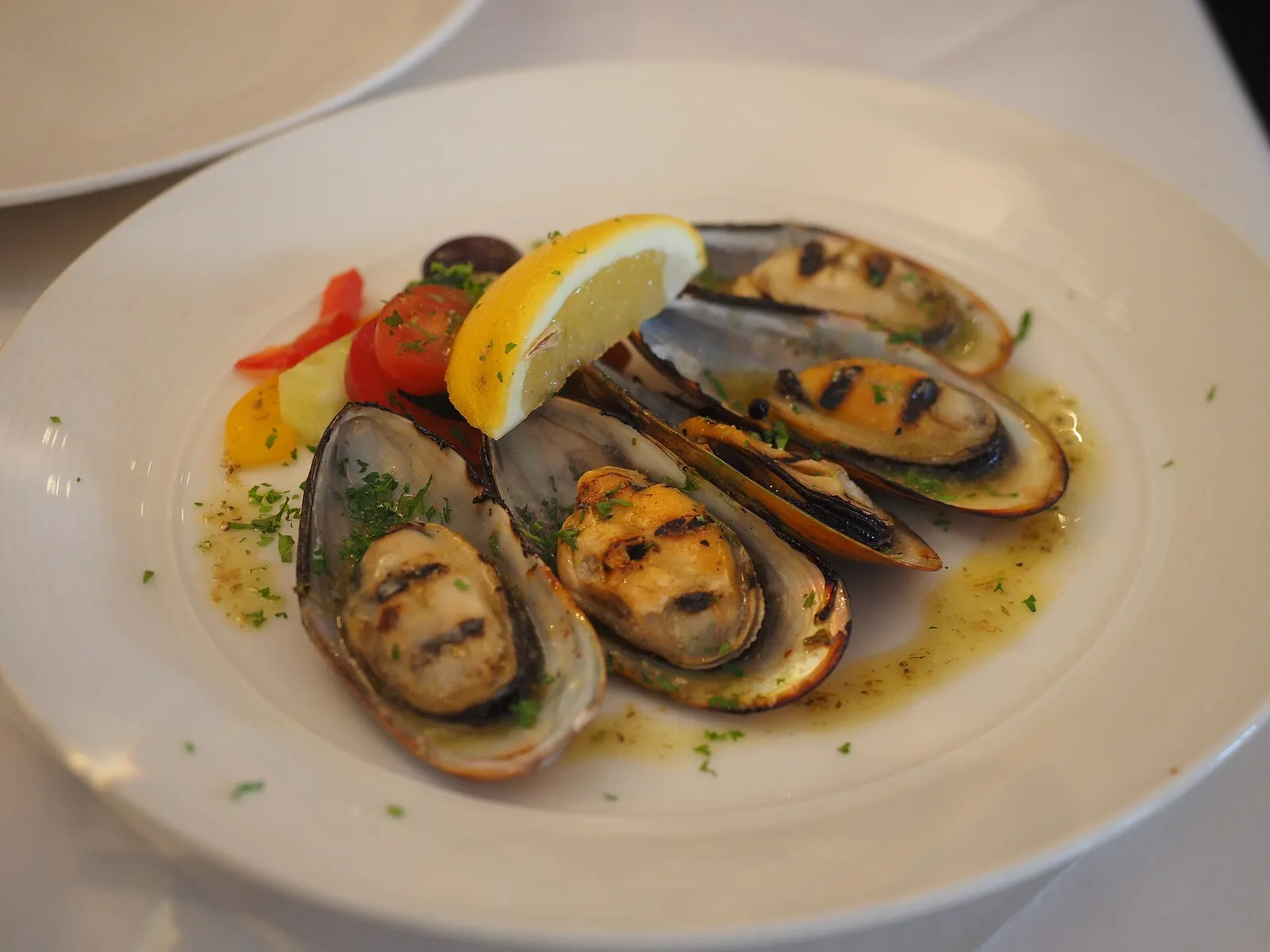
On the islands and coast, go for the fresh fish and seafood, usually sold by weight and grilled simply with lemon and oil. Ask what came in that morning, and do not be shy about walking into the kitchen to point at what you want, it is completely normal here.
The food changes as you travel
Greece is not one kitchen, and moving around it is half the pleasure.
| Where | The character | Order this |
|---|---|---|
| Athens and the mainland | The full classic repertoire | Souvlaki, magirefta, meze |
| Crete | Its own cuisine: herbs, greens, olive oil | Dakos, wild greens, tsikoudia |
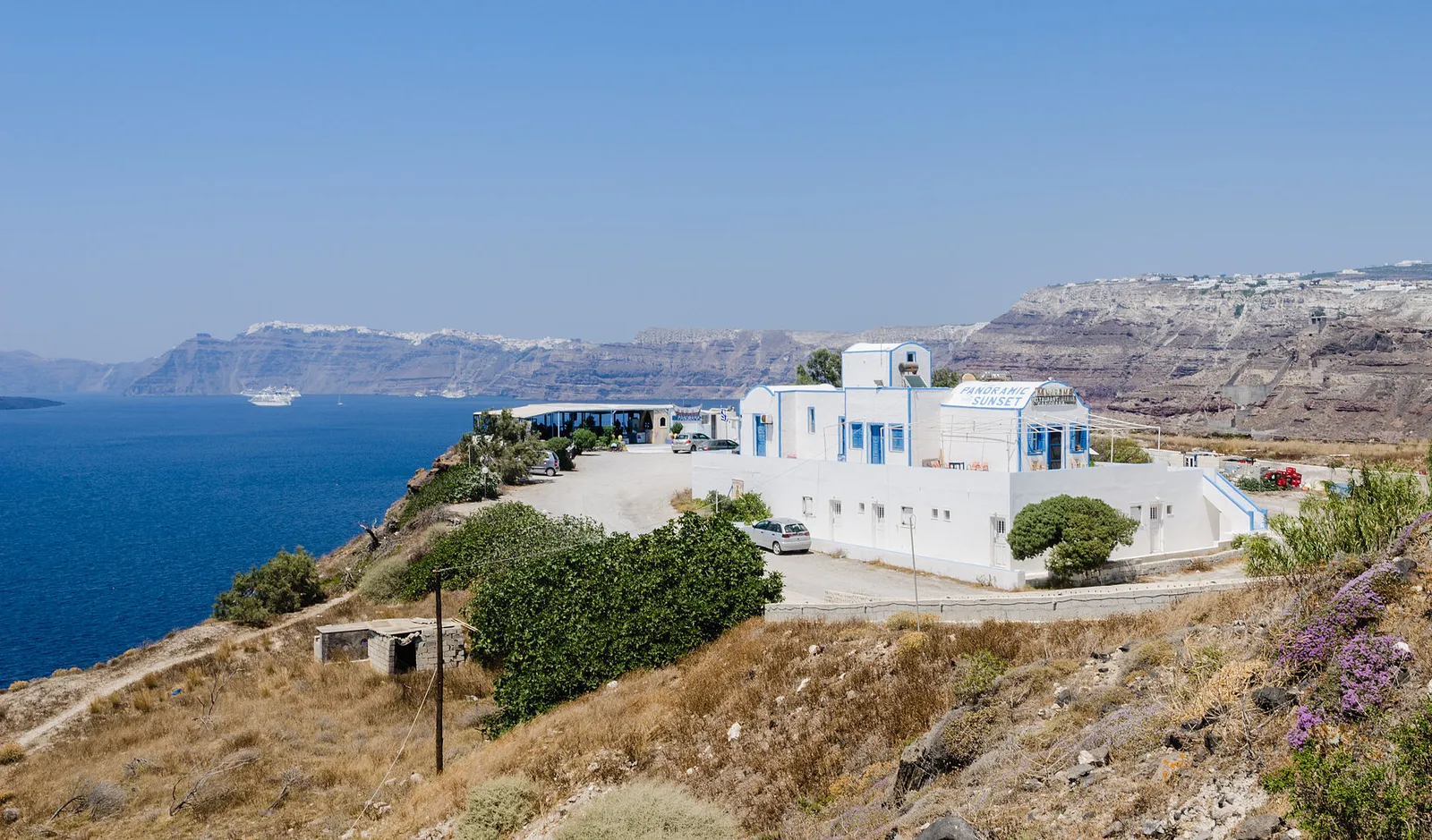
| The Cyclades | Simple, sea-facing, tomato and caper | Grilled fish, fava, tomato fritters |
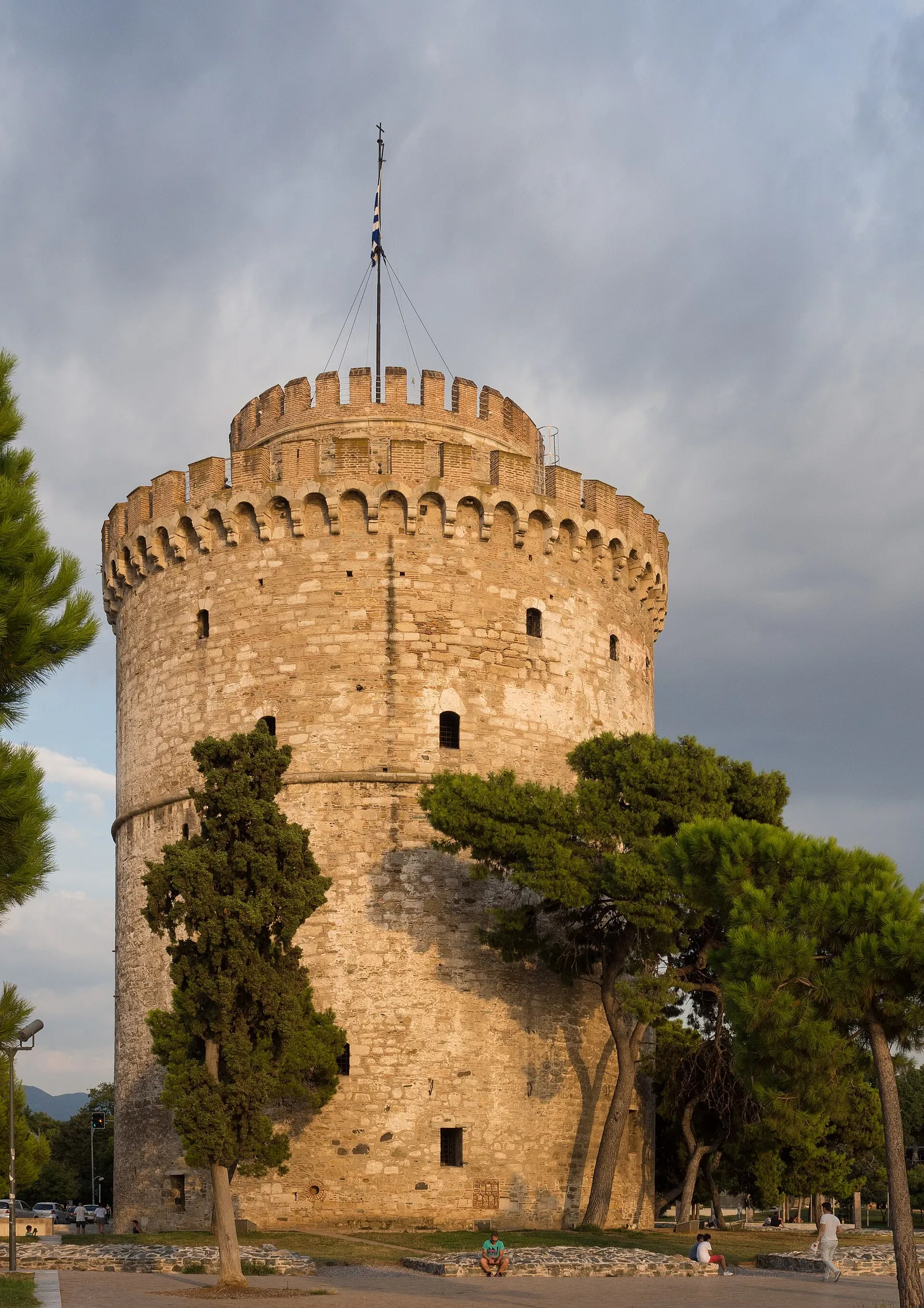
| The north and Thessaloniki | Spiced, Ottoman-influenced, superb pastry | Bougatsa, peppers, mussels |
Crete genuinely stands apart, with a distinct cuisine built on wild greens, exceptional olive oil, barley rusk and its own spirit. Thessaloniki in the north is widely considered the country’s best eating city, with a spice and pastry tradition brought by refugees from Asia Minor a century ago. And Athens has quietly become excellent, moving well beyond taverna standards: our guide to eating in Athens covers where to go and which neighbourhoods reward wandering.
How to spot a good taverna
The signals are the same everywhere and they are reliable. Look for a short menu rather than a laminated encyclopedia in six languages, a room with Greek voices in it, and a display of the day’s magirefta in trays that you are welcome to look at. Being invited into the kitchen to point at what you want is a very good sign rather than an odd one.
The warnings are equally consistent: a tout at the door, photographs of the food, a menu that offers every regional speciality in Greece at once, and a prime position on the most photographed square in town. As everywhere in the Mediterranean, walking one street back changes both the price and the cooking.
Learn to cook the classics yourselfA hands-on cooking class means you can make the moussaka and tzatziki back homeBakeries, sweets and the mid-morning stop
Greek baking deserves a section of its own and gets skipped by most visitors. The bougatsa, a flaky pastry filled with semolina custard or cheese, is a Thessaloniki institution and a breakfast worth crossing a city for. Loukoumades, small doughnuts drenched in honey and cinnamon, are the classic street sweet. Galaktoboureko is custard baked in filo and soaked in syrup, and baklava needs no introduction.
The place to buy all of it is the zacharoplasteio, the pastry shop, rather than a restaurant dessert menu. Greeks buy sweets by weight in a box to take to somebody’s house, which is also the correct thing to do if you are invited anywhere.
Taverna etiquette and small courtesies
A few things make you a happy guest. Meals run late: lunch drifts into the afternoon and dinner rarely starts before nine in summer. Bread and a small extra, sometimes fruit or a shot of something, often arrive unasked at the end, part of the hospitality. Tipping is modest and optional, so round up or leave a euro or two for good service.
Take your time. A Greek meal is an event, not a pit stop, and lingering over the last of the wine is the whole idea.
Two details on the bill. Bread and cover is usually a small per-person charge and is normal rather than a trick. And the complimentary dessert or shot at the end is genuine hospitality, not an upsell, so accept it: refusing reads as a rebuff.
What to drink
Greek wine is one of the country’s best-kept secrets and often a bargain. Try the crisp, mineral Assyrtiko whites from Santorini, easy-drinking local reds, and the cheap-and-cheerful house wine by the carafe, which is usually just fine. The classic spirits are ouzo and tsipouro, anise and grape spirits sipped slowly with meze and a splash of water that turns them cloudy.
For a coffee, the strong little Greek coffee is the traditional one, drunk slowly rather than on the move. The cold coffee you will see in every other hand is a freddo espresso or freddo cappuccino, which has largely taken over from the older ice-cold whipped frappé as the national summer drink. All of them are habits worth adopting for the length of your trip.
Going one level deeper
Four grape names are worth remembering. Assyrtiko is the great white, taut and saline. Moschofilero from the Peloponnese is floral and light. Agiorgitiko from Nemea makes soft, approachable reds, and Xinomavro from Naoussa makes serious, structured ones that age. Ordering by grape rather than by price is the fastest way to drink well here.
Retsina deserves rehabilitation: the resinated white with a bad reputation from decades ago is now made carefully by good producers and is genuinely excellent with fried food. And the spirits vary by region, with ouzo most associated with the islands, tsipouro with the northern mainland and tsikoudia, also called raki, with Crete, where it arrives free at the end of every meal whether you asked or not.
Eating with dietary requirements
Greece is easier than most Mediterranean countries, and the reason is religious rather than culinary. The Orthodox calendar includes long fasting periods when animal products are set aside, so the cuisine has a fully developed plant-based repertoire called nistisima. Ask for nistisima dishes and any taverna will know exactly what you mean, which is far more effective than describing a diet.
That gives vegetarians and vegans bean soups, stuffed vegetables, wild greens, dips, and the whole ladera family of vegetables slow-cooked in olive oil. Two things to check: whether a dip contains yoghurt, and whether the rice in the dolmades was made with meat. Gluten-free is harder, since bread and filo are everywhere, though grilled meat and fish with salad is a reliable fallback. As always, asking the waiter works better than reading the menu.
Eating on the road
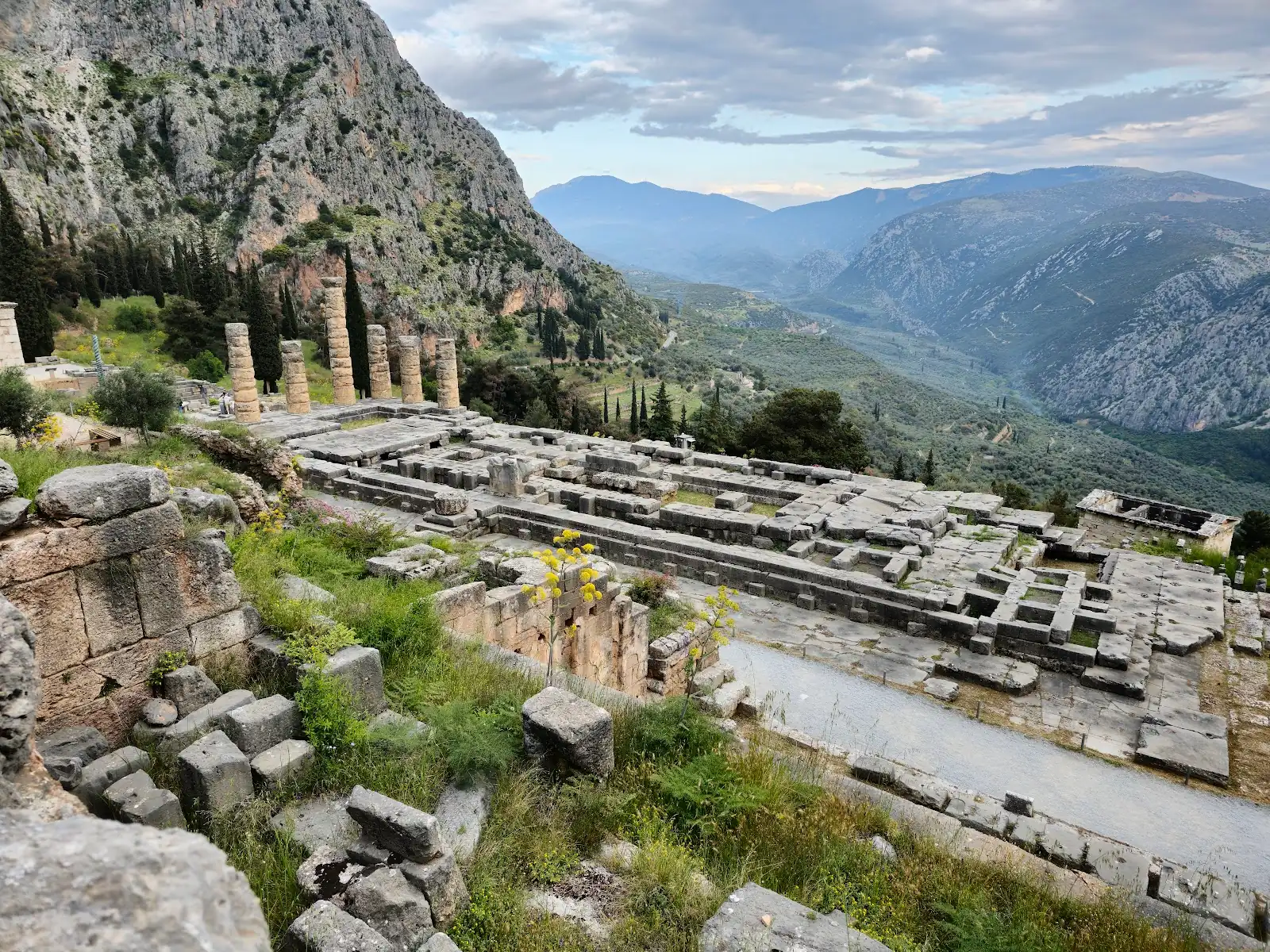
Two situations catch visitors out. On a day trip to the ancient sites, the restaurants immediately outside the entrance are built for coach parties and priced accordingly, while the village a few minutes further on usually has a proper taverna. Our guide to visiting Delphi is a good example of a day where planning the lunch stop is worth five minutes of thought.
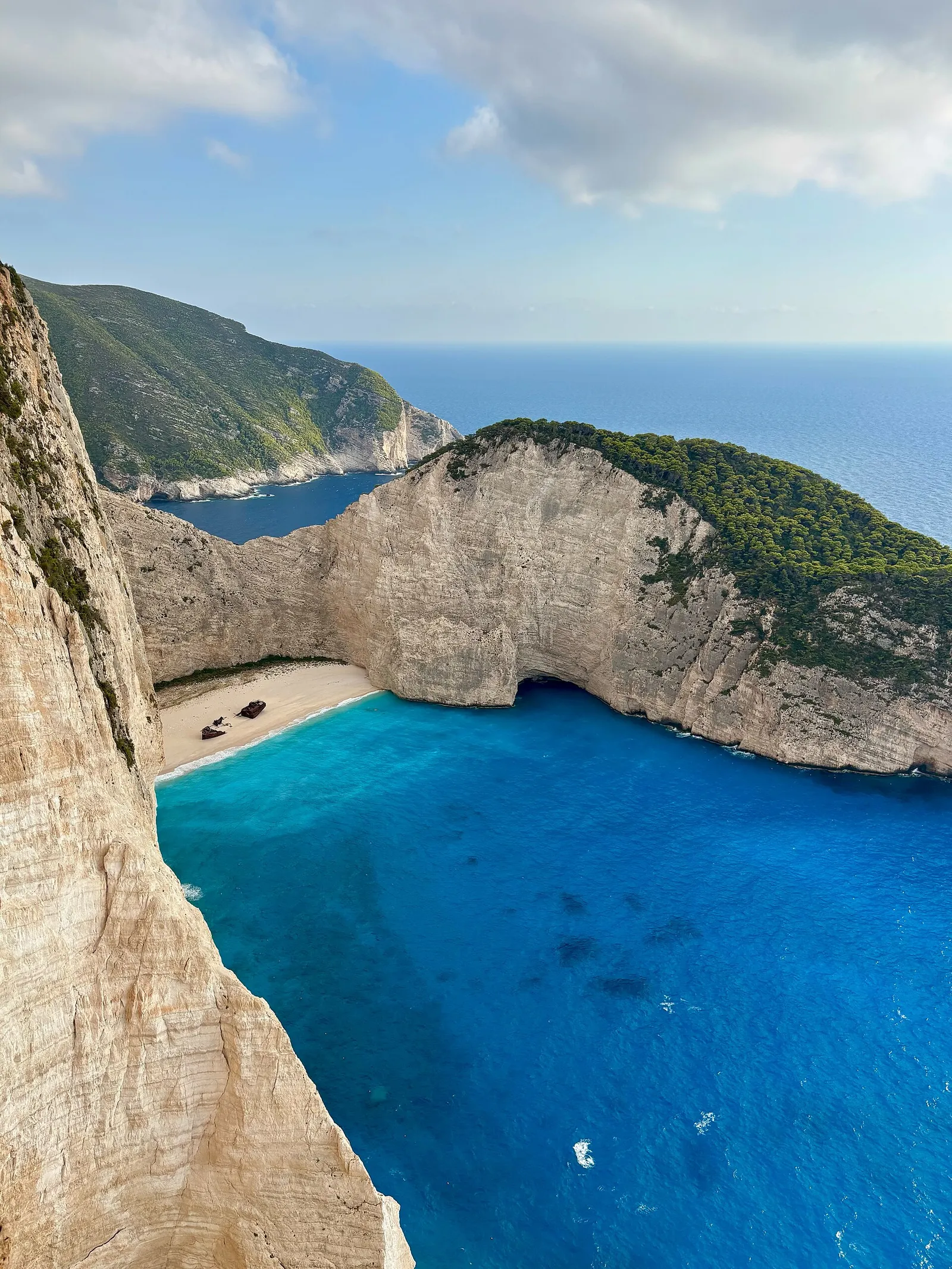
On the islands and the coast, the harbourfront restaurants have the view and the mark-up, and the good eating is a street or two behind them or in the next village along. That is also where the fish is priced more honestly. If a beach day is the plan, our guide to the best beaches in Greece covers which stretches have a genuine taverna nearby and which need a packed lunch.
The short version
Eat a souvlaki on day one, build your dinners around shared meze, try one big oven dish and the fresh grilled fish, and wash it all down with local wine or ouzo. Ask the weight before the fish is cooked, order by grape rather than by price, ask for nistisima if you are avoiding meat, buy your sweets by weight from a pastry shop, and walk one street back from the harbour. Order slowly, tip modestly, and never rush the table. Do that, and the food will quietly become one of the best reasons you booked the trip in the first place.
What are you ordering first, the souvlaki or the whole meze table?
The eating that happens standing up deserves its own list. Our guide to Greek street food goes past the gyros to what the queues at midnight are actually for.