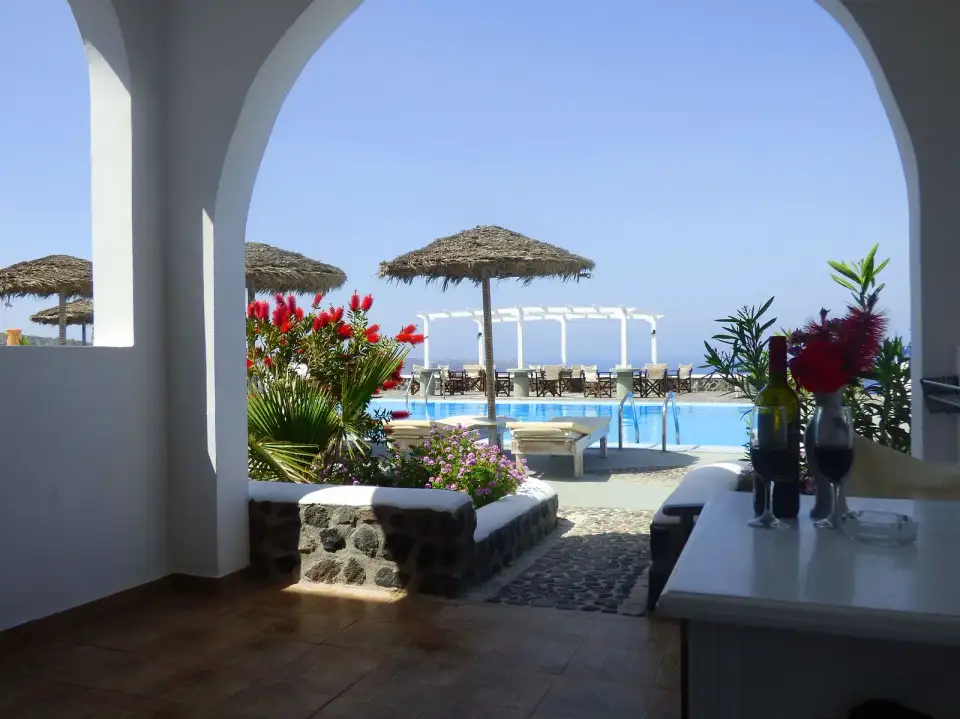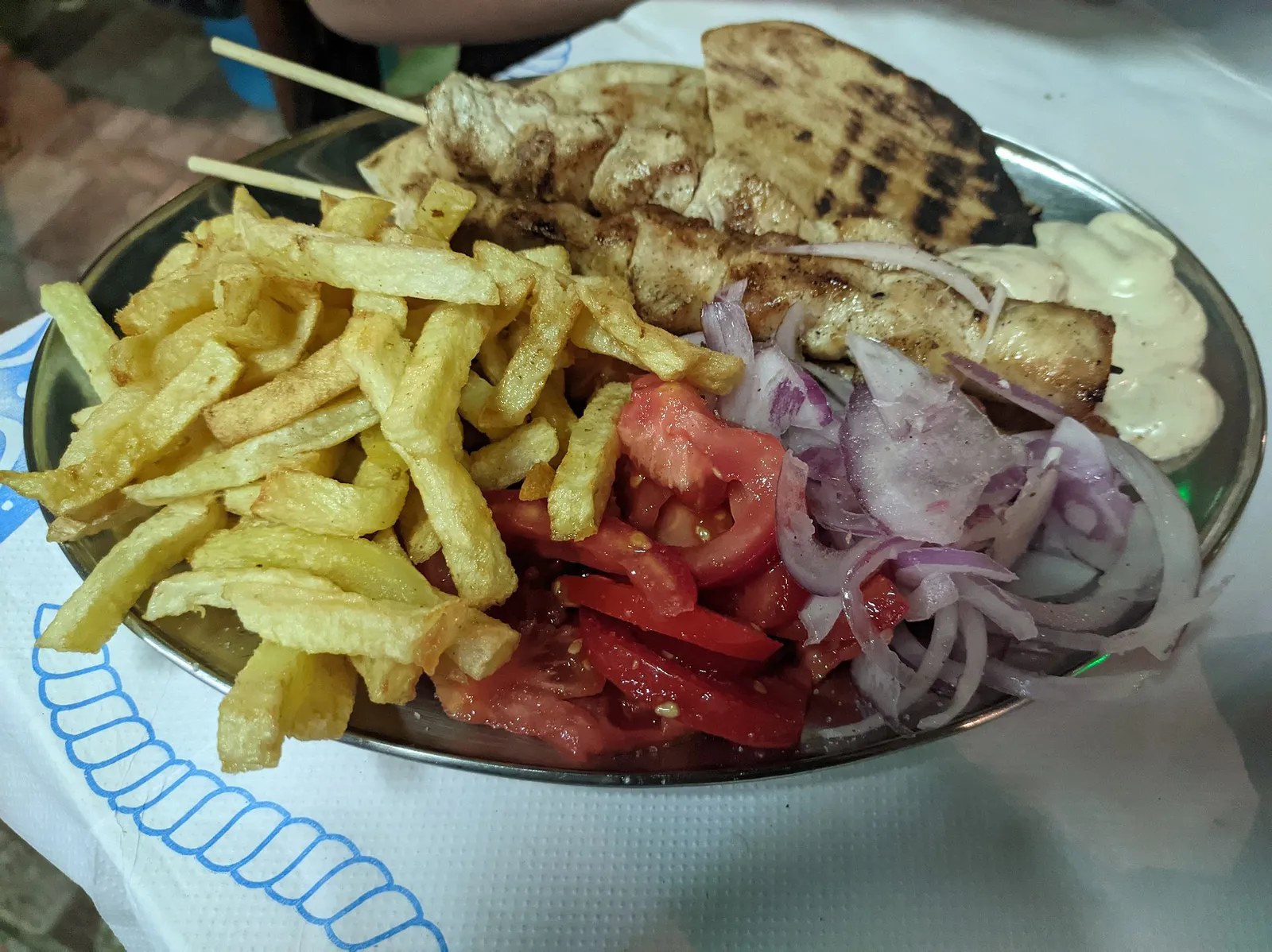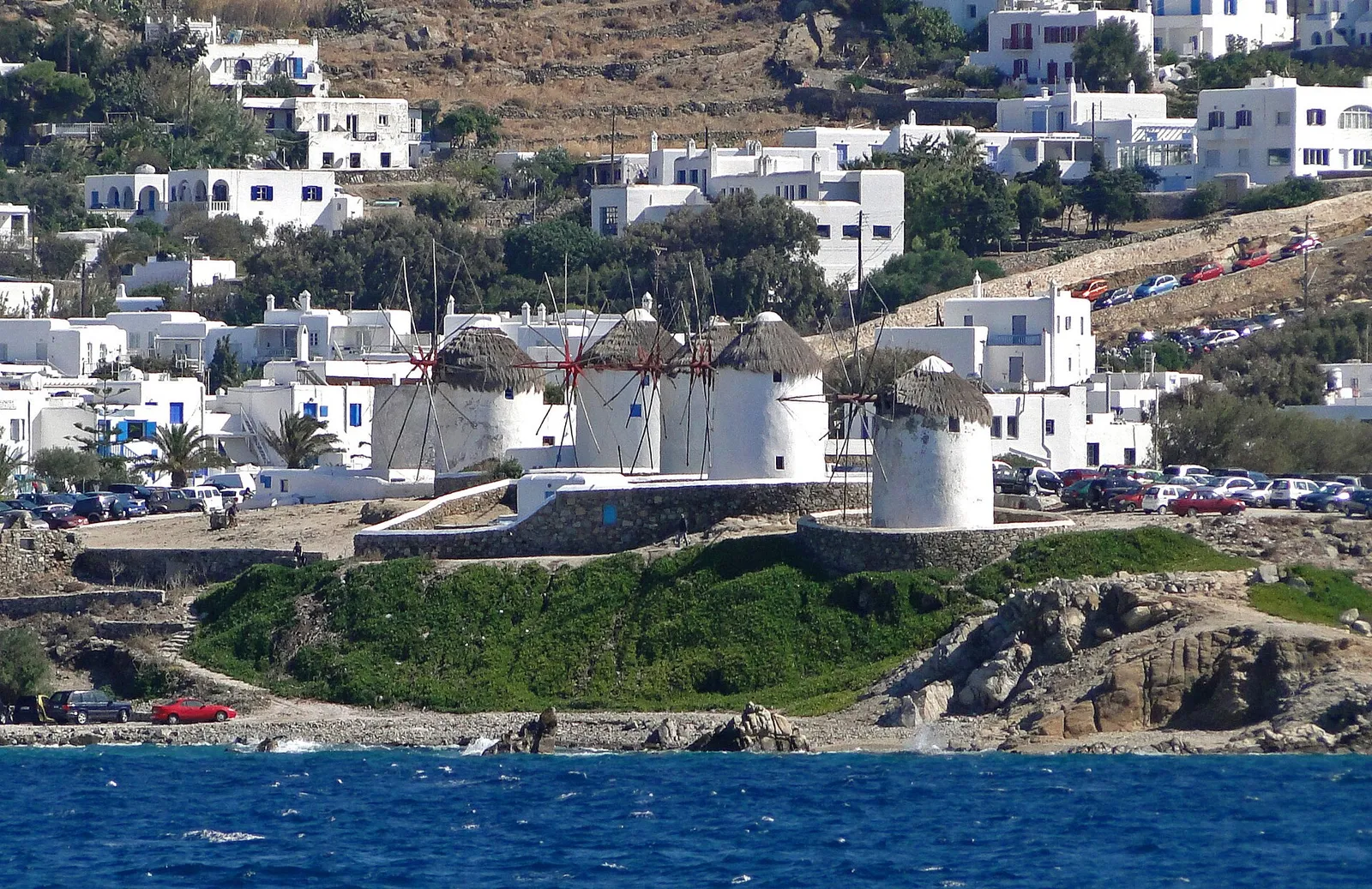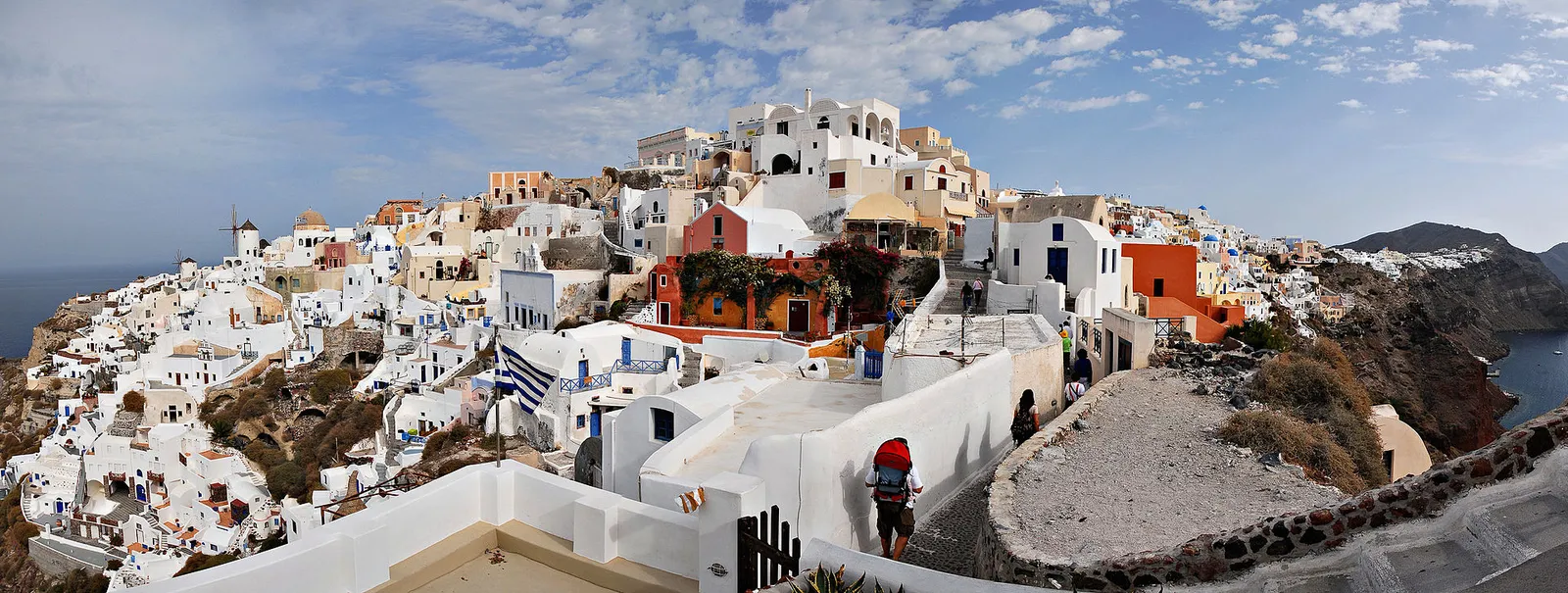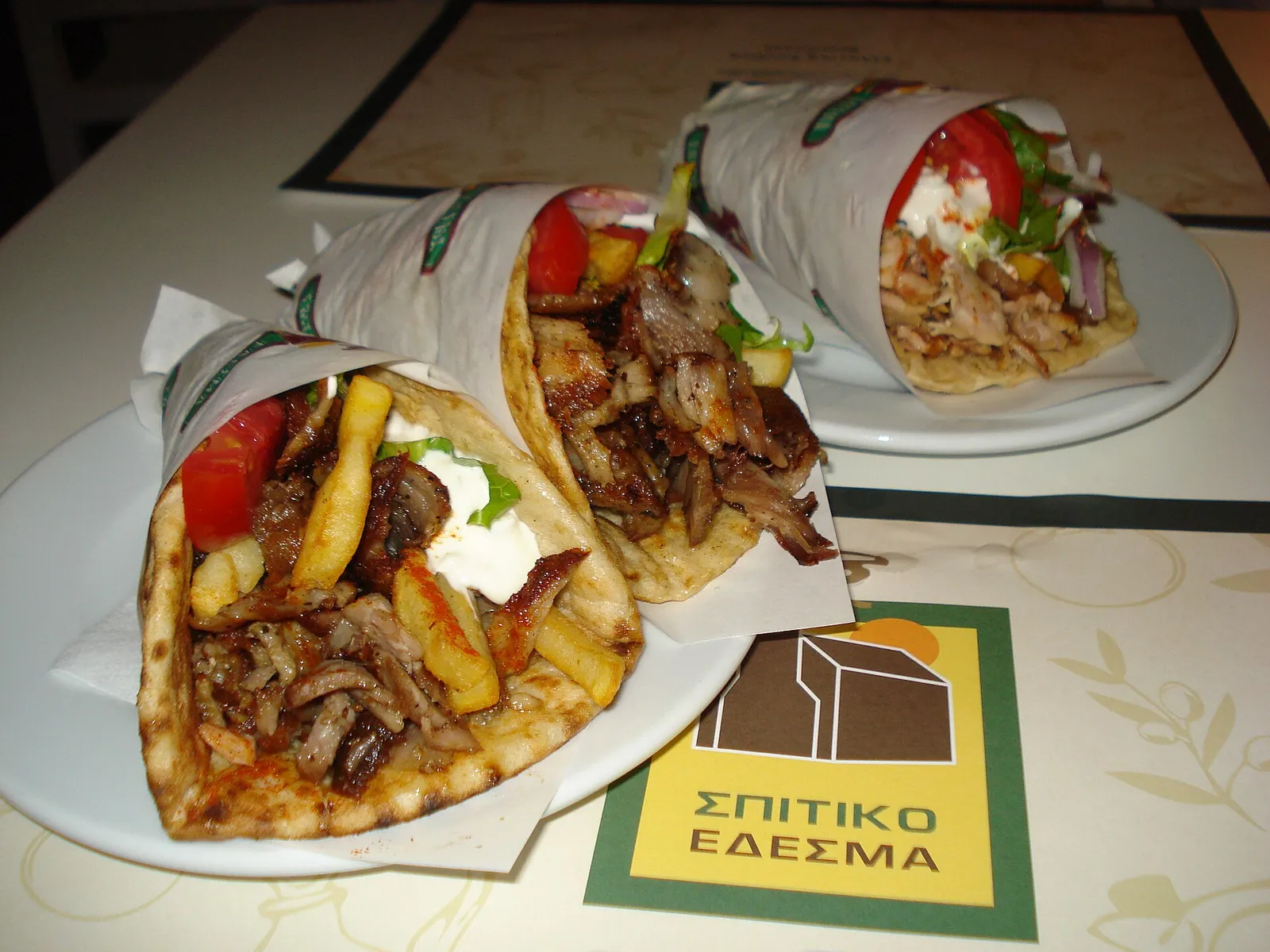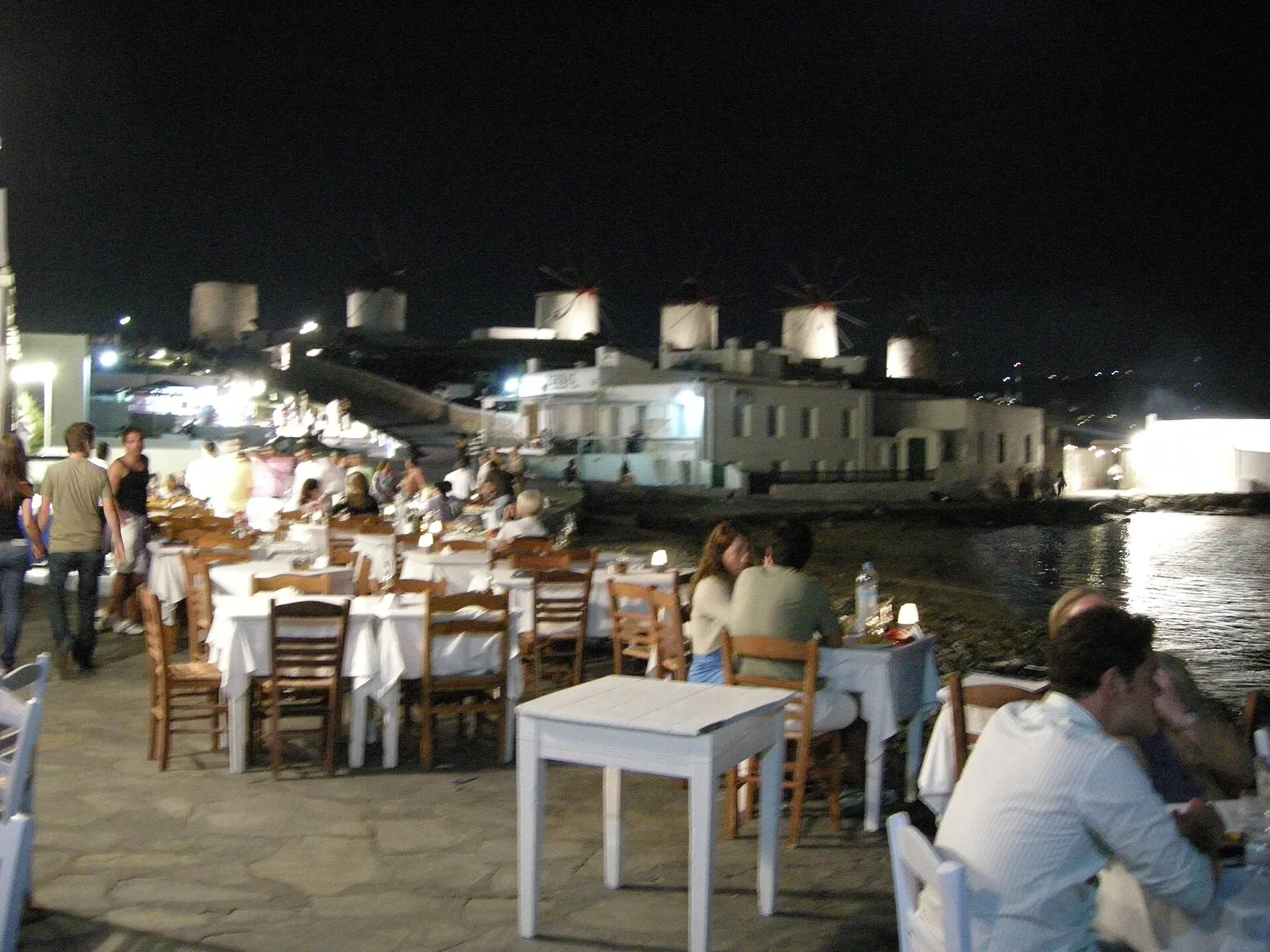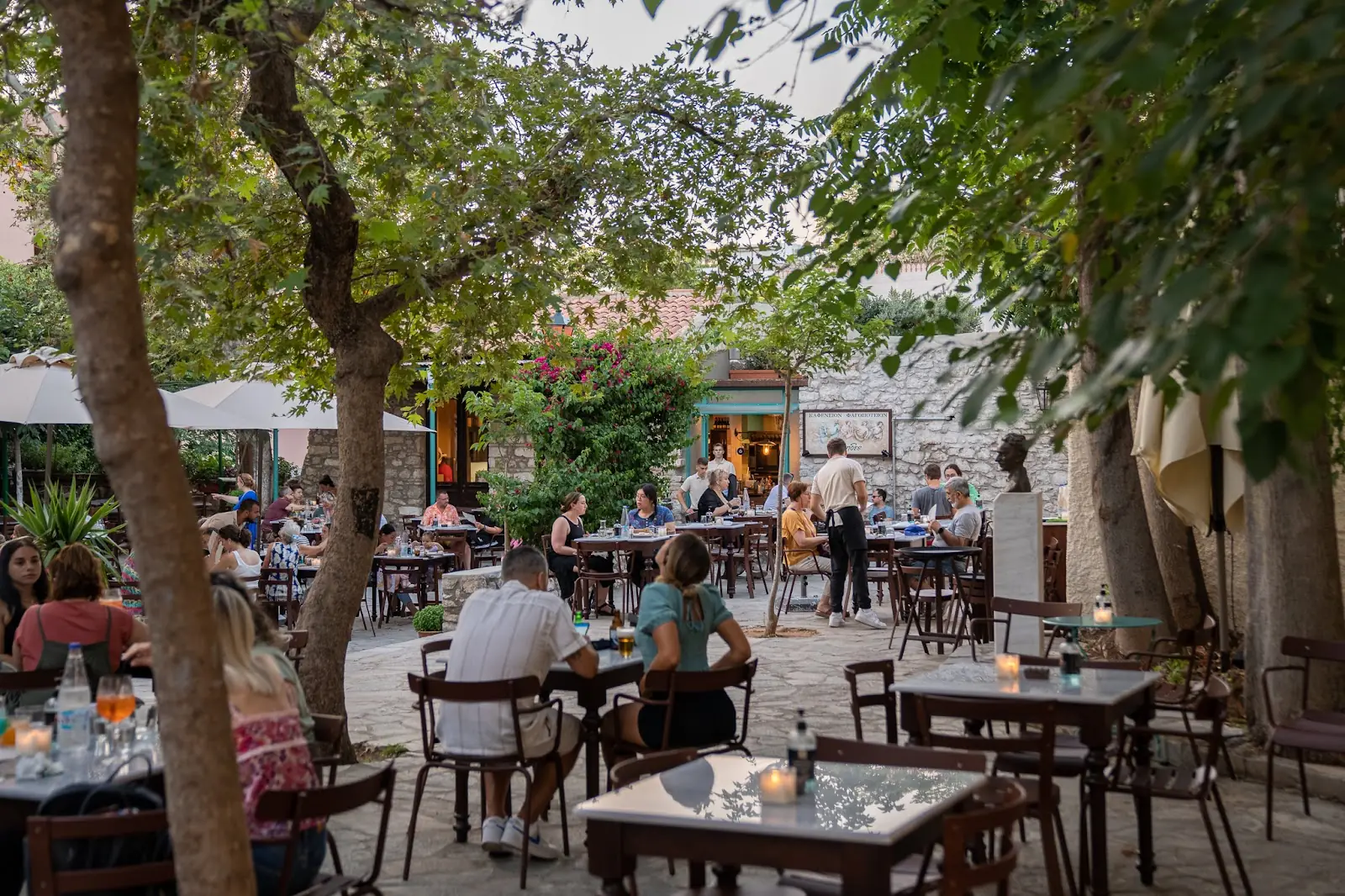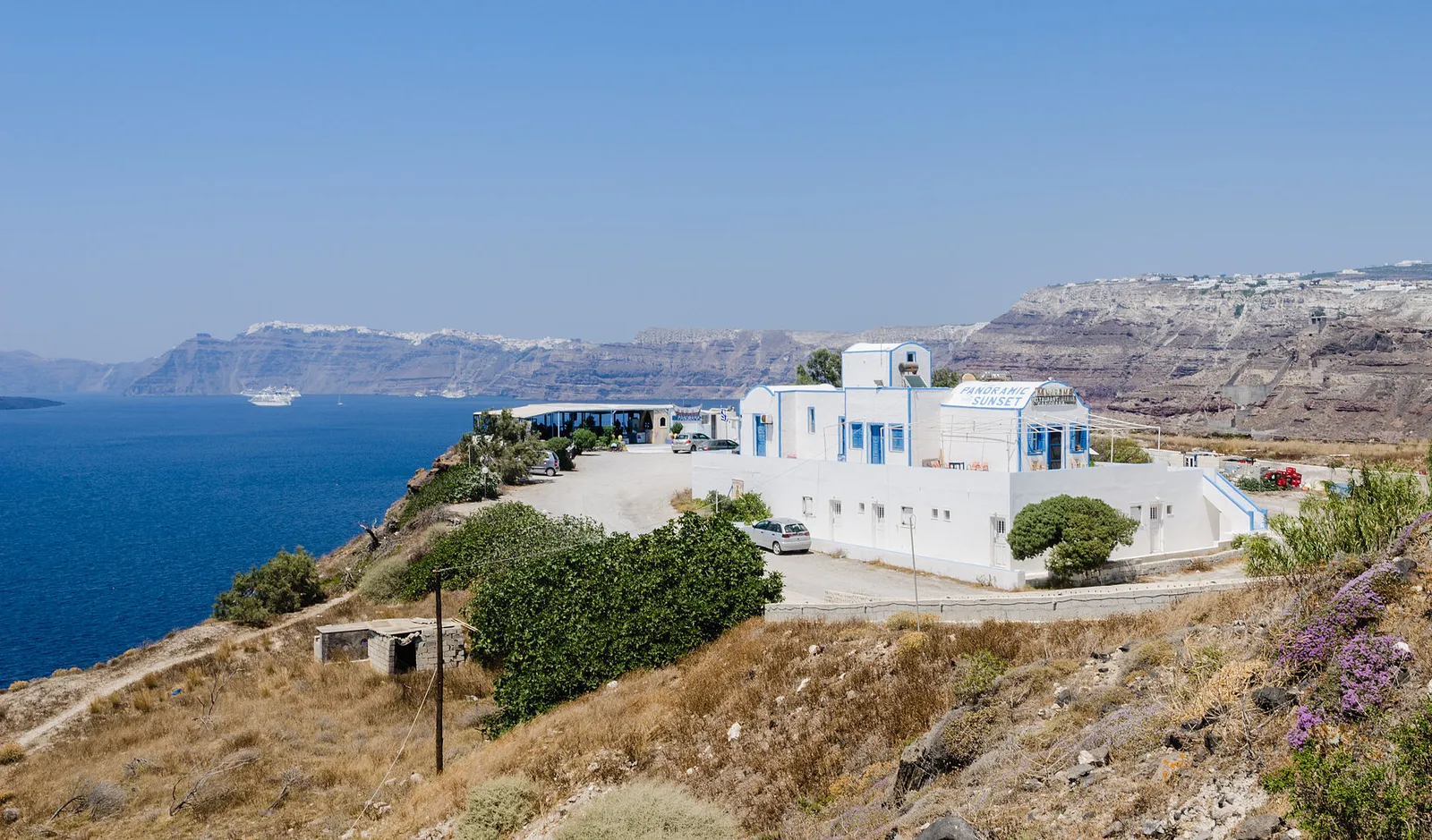
In Santorini you pay for two things at every meal: the food, and the view. Sit on a terrace as the sun drops into the caldera and the sea turns copper, and the bill makes sense. Santorini is not the cheapest island in Greece; our comparison of Mykonos or Santorini breaks down where the money on each island goes. This guide is about eating well here without doing it badly every night: where the view restaurants earn their keep, and which dishes are worth ordering twice.
The golden rule: one view meal, not every meal
The most common mistake visitors make is eating every meal at an expensive view restaurant in Oia. It drains the wallet fast, and it gets dull too, since the food there is usually decent rather than outstanding; you are mostly paying for the spot. Choose one special sunset meal, put your budget into that, and eat the rest of your meals in the inland villages.
Santorini’s inland villages are the secret most visitors never find. In places like Megalochori, Pyrgos, Akrotiri and the quieter lanes of Firostefani, family-run tavernas serve honest home cooking: no caldera view, but good food, fair prices and a genuinely Greek atmosphere. This is where the locals eat.
The dishes only Santorini makes
Santorini has its own local kitchen, shaped by dry volcanic soil and strong sun. These dishes turn up here and rarely anywhere else in Greece:
- Tomatokeftedes, fried fritters made from the island’s small, sweet cherry tomatoes, herbs and onion
- Fava, a velvety puree of a local split pea, served with raw onion and olive oil
- White aubergine, a sweet, mild local variety, good grilled or in a salad
- Htipiti, a spicy whipped cheese dip, made for scooping up with bread
- Fresh fish, sold by weight and grilled simply
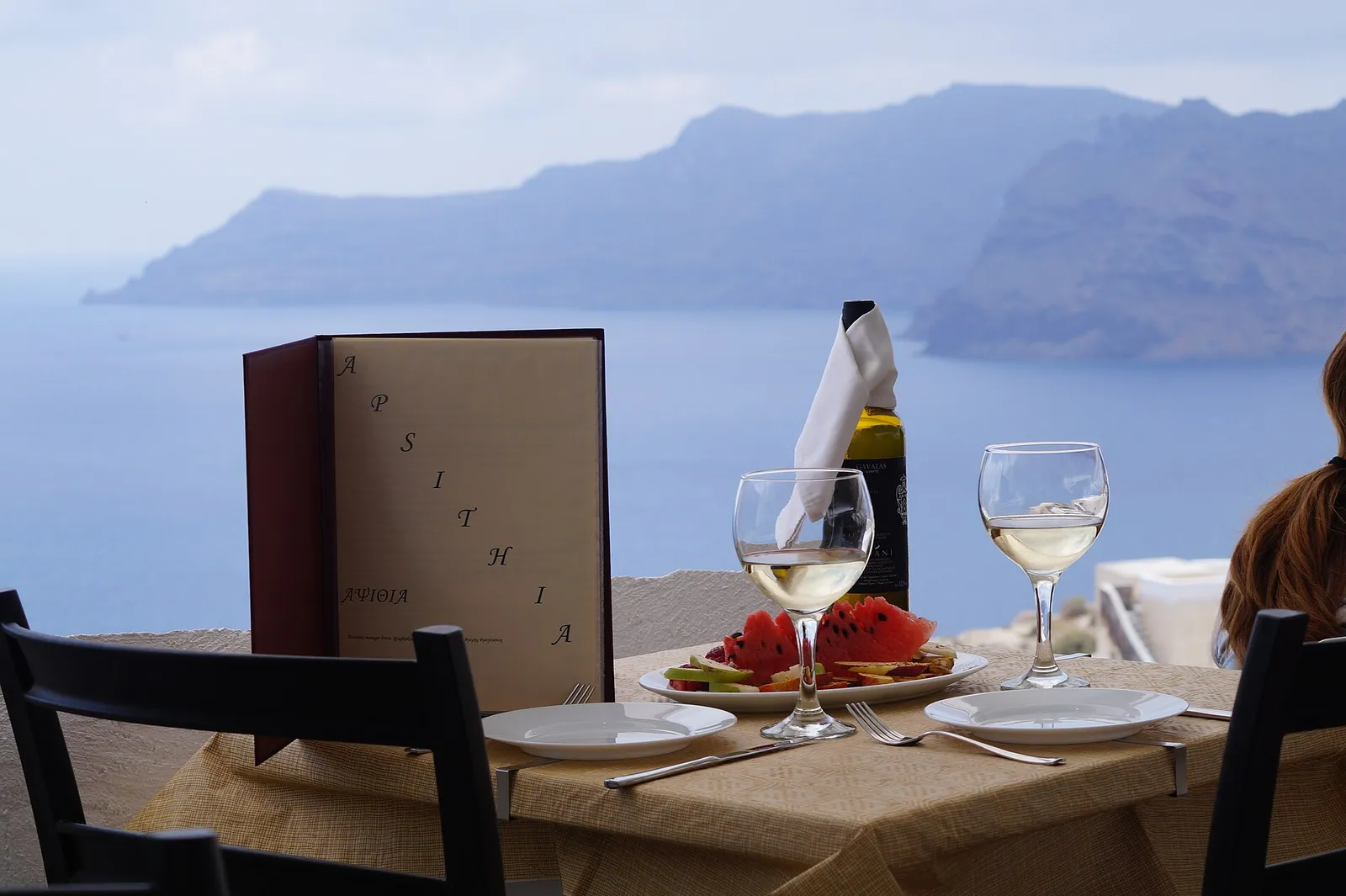
- Assyrtiko, the local white wine, mineral and crisp, built for fish
A tip from locals: ask to taste Assyrtiko from a small producer rather than a supermarket label. Santorini’s vines are grown low, coiled into baskets that shelter them from the wind, and the wine that comes off them is considered among the best in Greece. A winery tasting is a fine afternoon out, and for the wider picture of Greek cooking, our Greek food guide covers the classics you will meet elsewhere in the country.
How to read a Santorini menu
The bill in Santorini has more moving parts than the menu prices suggest. Here is what to look for.
- Fish priced by the kilo. Fresh fish is usually sold by weight, a good sign of freshness. Ask for it to be weighed in front of you and the price confirmed before it goes on the grill.
- Minimum spend at sunset tables. A front-row table by the rail at sunset in Oia can come with a minimum spend or a fixed menu, often waived at a later hour or an inland table.
- Bread and cover charge. Many tavernas add a small charge for bread and dips, which is standard practice, not an overcharge.
- Service charge. Some tourist-facing restaurants add a service percentage to the bill; if it is already added, there is no need to tip again.
- Bottled wine versus house wine. This gap often inflates a bill more than any single dish, and house wine in Santorini is usually good, since it is made locally.
One distinction explains most of the price gap: the difference between a meal in Oia and one in an inland village is rarely about the ingredients, it is the location itself. That is a legitimate thing to pay for, once and with your eyes open, rather than every night.
Timing dinner around the sunset
Sunset is the clock the whole evening runs on in Santorini. The exact time shifts a great deal through the season, much earlier in September and October than in June and July, so there is no single hour worth memorising. Check the time for the day you are there and aim to arrive about an hour beforehand, so you settle in calmly rather than arrive exactly when everyone else does.
Booking works on two different tracks. A view restaurant in Oia in the warmer months needs a reservation days or weeks ahead, with an explicit request for a table with a view, not just a table. Without one, you will sit further back or wait a long time. A taverna inland, by contrast, can usually take you on the spot, even at the height of summer.
Two more practical points. A late lunch, after about half past one, is calmer than dinner at the same view restaurant, and noticeably cheaper for the same food. On days when a cruise ship is anchored offshore, Oia and Fira are busiest during the day, which is the ideal day for an inland lunch instead.
Where to eat, area by area
Each part of Santorini offers a different kind of meal, at a different price.
| Area | Food | Atmosphere | Price |
|---|---|---|---|
| Oia | View and chef-led restaurants | Romantic, sunset crowds | Very expensive |
| Fira | A wide mix, some with views | Lively, younger crowd | Moderate to expensive |
| Imerovigli | Quiet view restaurants | Calm, couples | Expensive |
| Inland villages | Family-run tavernas | Local, unhurried | Good value |
| Ammoudi Bay | Fresh fish at a tiny harbour | Seaside, picturesque | Moderate to expensive |
For anyone chasing both fish and a sea view, Ammoudi Bay below Oia is an excellent choice: a small harbour with a handful of fish restaurants where you pick your own fish. Go down in the late afternoon, eat, then climb or ride back up to Oia for the sunset.
Eating well without overspending
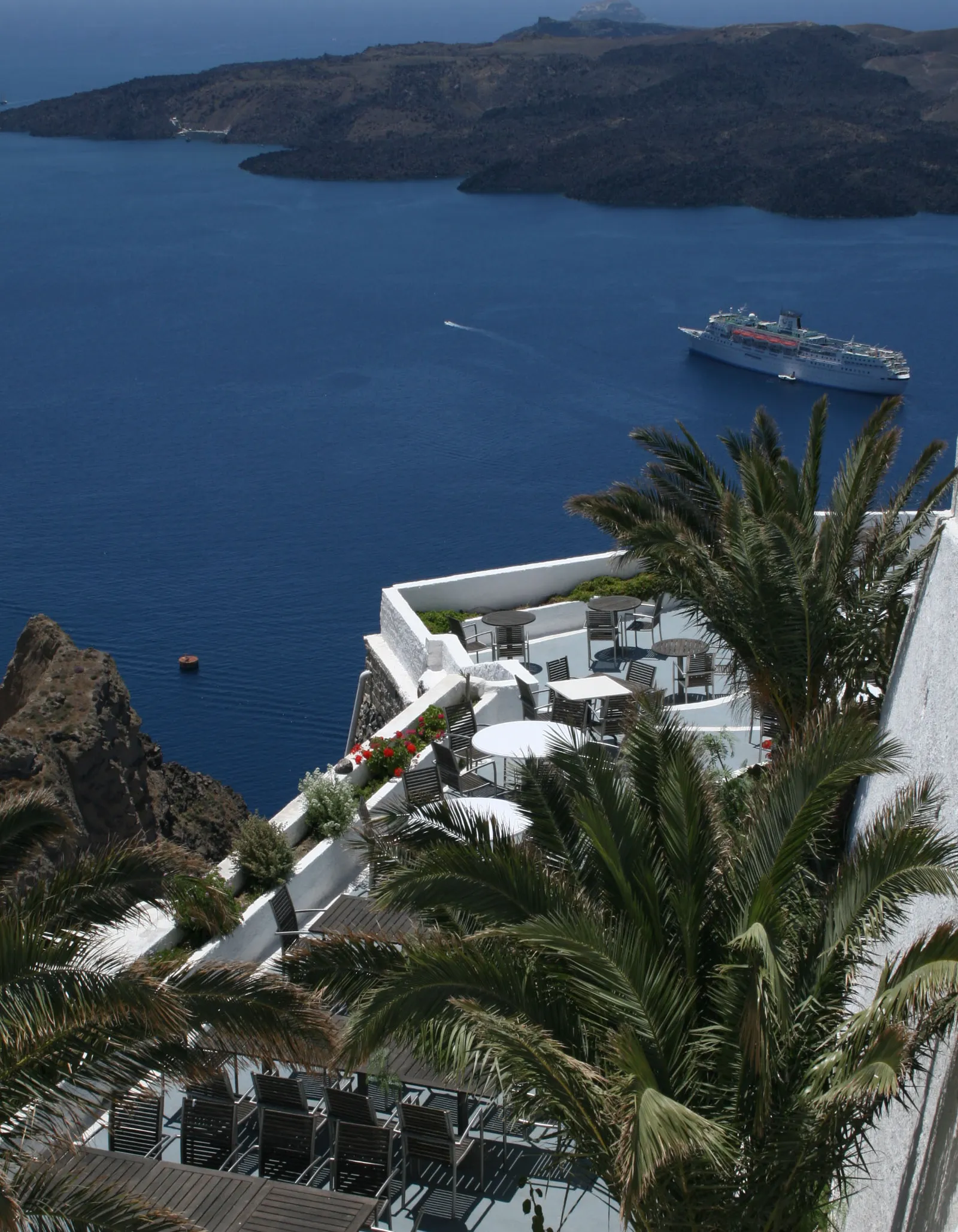
Santorini is expensive, but you can eat very well here without draining your budget. A few habits help.
Eat breakfast and lunch in the inland villages, and keep your budget for one indulgent dinner with a view. Order a spread of dishes to share rather than a starter and a main each; you taste more and spend less that way.
House wine usually beats bottled wine on price and taste, since it is made close by. A hired car helps you reach tavernas further from the caldera, where prices drop and the food is sometimes better for it. In the warmer months, book your sunset table days ahead, or you will end up somewhere without the view you came for.
Santorini’s food scene is a study in contrasts: a candlelit view restaurant in Oia against a family taverna inland, fresh fish in a tiny harbour against a glass of Assyrtiko on a cliffside terrace. The trick is not to eat expensively every meal, but to choose well: one unforgettable sunset dinner, and honest, fairly priced food the rest of the time. For the rest of the island, our Santorini guide has the full picture.