The first thing I noticed on Corfu was the green. I had flown in from the Cyclades, where the hills are bare and honey-coloured, and here the plane dropped over ridge after ridge of dark olive groves and cypress spikes, with the sea somewhere behind it all. My first evening I sat in a narrow lane in the old town, drinking a cold beer while swallows screamed overhead, and I understood I had come to a different Greece.
Corfu, the green Ionian island, does not feel much like the Aegean postcards. The light is softer, the food leans Italian, the architecture is Venetian rather than Ottoman, and the whole place looks like someone forgot to tell it that Greek islands are supposed to be dry. If you have only ever known the whitewashed cube-and-blue-dome look, this will surprise you, and I mean that in the best way.
Why is Corfu so green?
The short answer is rain. Corfu sits in the Ionian Sea off the northwest coast of Greece, close to the Albanian coast and to Italy, and it catches far more winter rainfall than the central Aegean. That water feeds an estimated several million olive trees, planted in large part under Venetian rule, and it keeps the hills lush well into summer.
The practical result for a traveller is a landscape of shade. You walk under olive canopies, past oleander and bougainvillea, and even in July the interior valleys feel cooler and greener than a bare island like Naxos or Ios. It also means Corfu can be genuinely wet in spring and autumn, so a light rain jacket earns its place in your bag between October and April.
Venetian, not Ottoman: a different Greek history
Most of Greece spent centuries under Ottoman rule. The Ionian islands did not. Corfu was held by Venice for around four hundred years, then briefly by the French and the British before joining Greece in 1864. You feel that layered history everywhere.
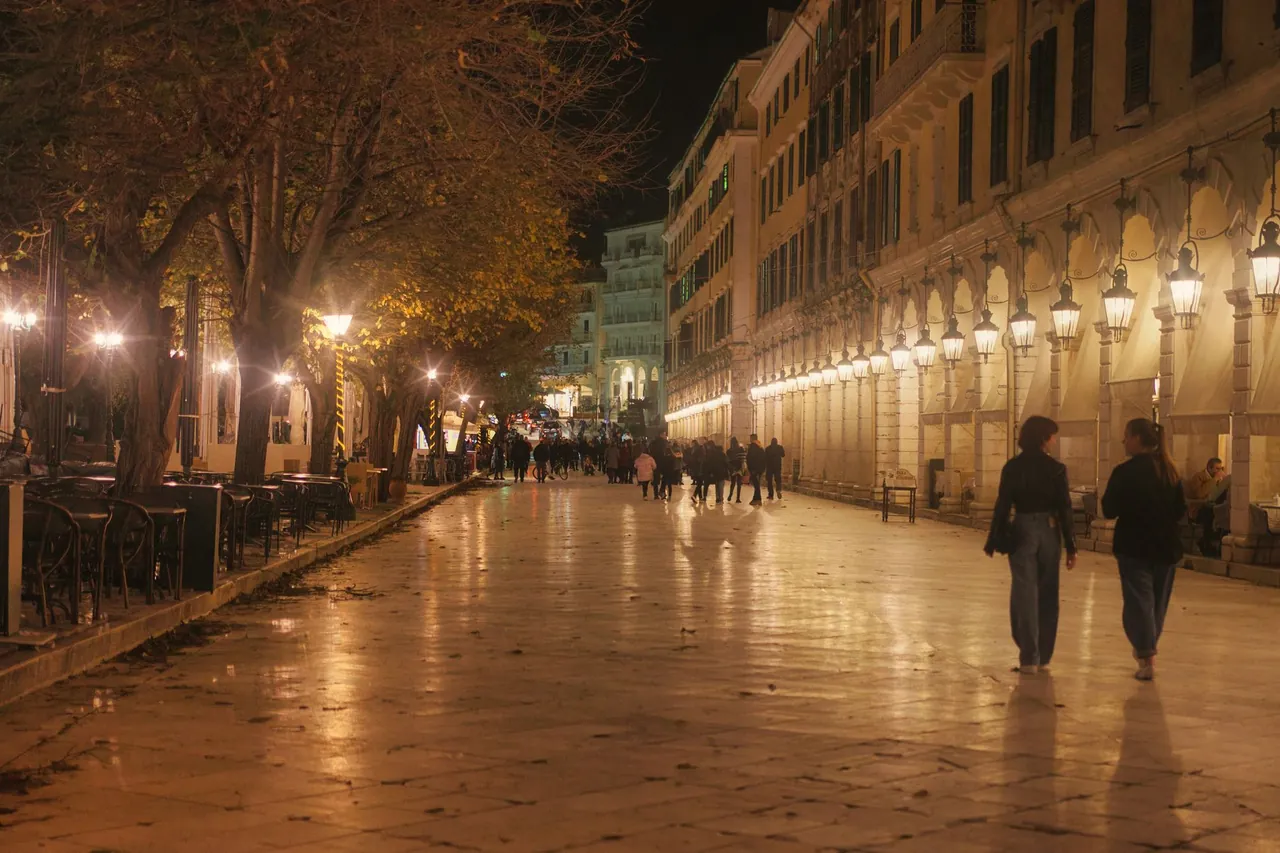
There are two Venetian fortresses guarding the town, tall pastel-washed buildings with shuttered windows, and an arcaded street called the Liston that the French laid out to echo the Rue de Rivoli in Paris. British rule left cricket, still played on the old parade ground, and ginger beer, sold locally as tsitsibira. It is one of the most genuinely cross-cultural corners of the country.
The UNESCO old town
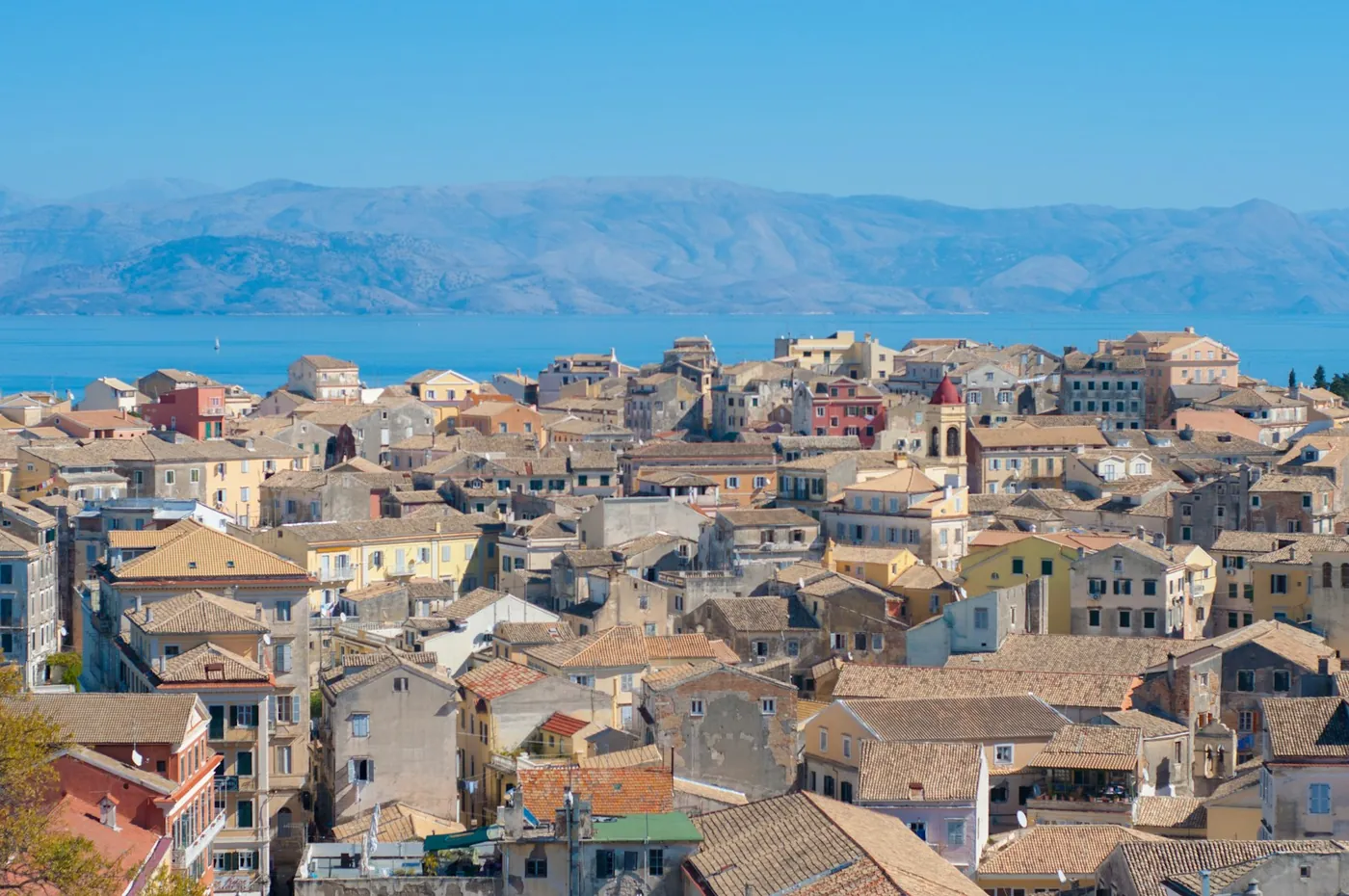
The Old Town of Corfu is a UNESCO World Heritage Site, and wandering it is the single best thing you can do here. Forget your map. The pleasure is getting lost in the kantounia, the narrow alleys where laundry hangs overhead and the smell of somebody’s slow-cooked lunch drifts out of an open door.
Do not miss the Church of Saint Spyridon, with its tall red-domed bell tower, where the island’s patron saint is kept. Climb the Old Fortress at least once for the view back over the terracotta rooftops. Then sit on the Liston with a coffee, which will cost more than elsewhere because you are paying for the view, and watch the town go by.
The Paleokastritsa coast
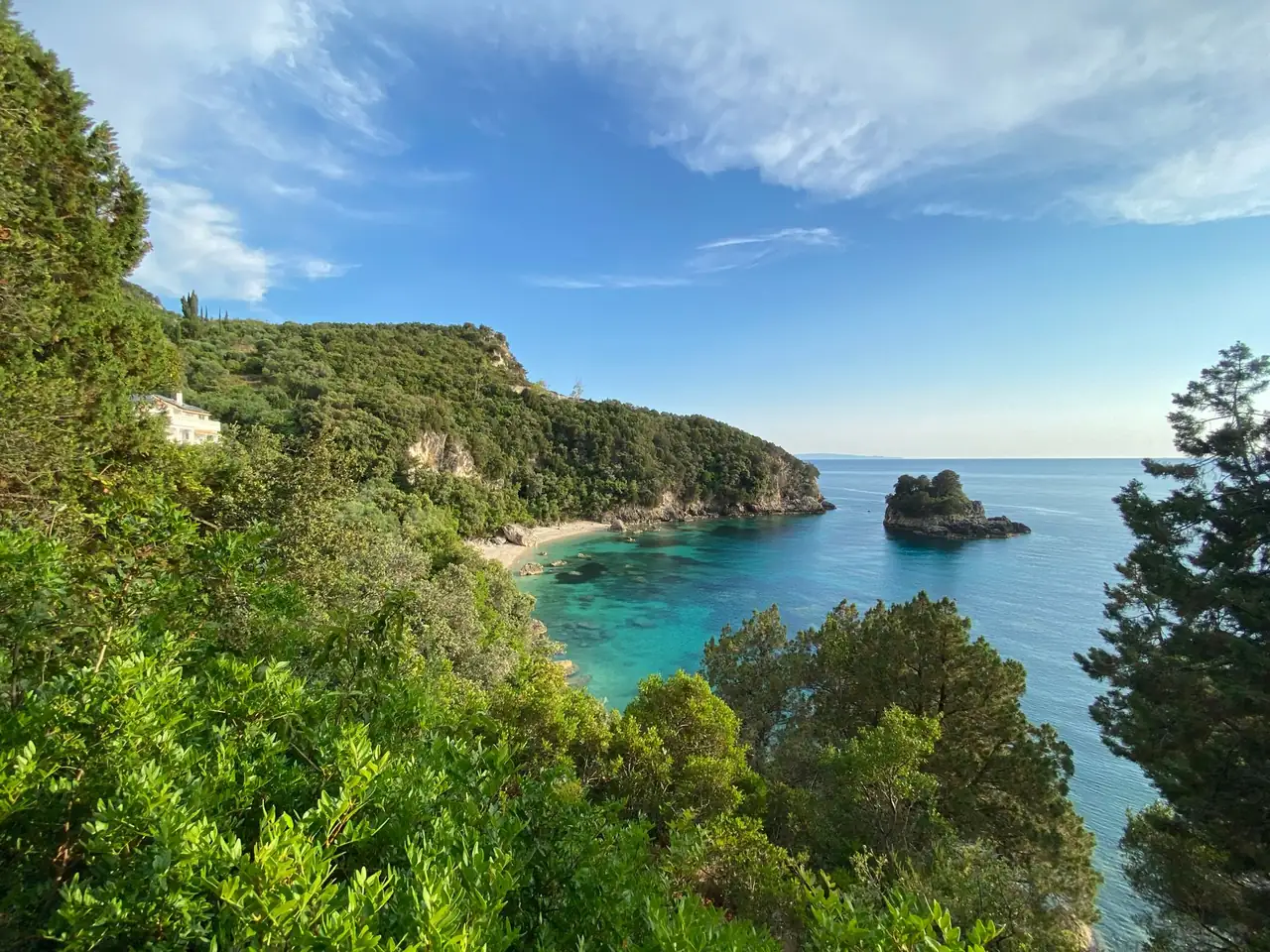
On the west coast, about a 40 minute drive from town, Paleokastritsa is the image most people carry away from Corfu: a string of small coves with startlingly clear water, backed by steep green headlands and a clifftop monastery. It is beautiful and, in high summer, it is busy, so I would go early or take a small boat out to the quieter caves and swimming spots.
From the village you can drive up to the hilltop settlement of Lakones and on to a viewpoint café known as the Bella Vista, where the whole bay unfolds below you. It is touristy, the coffee is not cheap, but the panorama genuinely earns the trip.
Beaches beyond the famous names
The far northwest has dramatic sandy beaches like Sidari, with its wind-carved rock formations, and quieter stretches near Agios Georgios. The far south around Issos and the Korission lagoon feels wilder, with dunes and birdlife. Corfu rewards a bit of driving.
Planning your route to Corfu?Compare seasonal direct and connecting fares before you bookHow does Corfu compare to the big islands?
People often ask me whether to pick Corfu or one of the giants like Crete. They offer quite different holidays, so here is a rough comparison.
| Feature | Corfu | A large Aegean island |
|---|---|---|
| Landscape | Green, wooded, hilly | Often drier and more barren |
| History | Venetian, French, British | Frequently Ottoman |
| Food accent | Italian-influenced | Classic Greek |
| Rainfall | Higher, greenest in spring | Lower, very dry summers |
| Size | Explorable in a week | Can need two weeks or more |
If you want scale, mountains and archaeology, a big island like the one covered in our Crete, a Complete Guide will suit you, and it helps to read up on where to stay in Crete before you commit. If you want a compact, green, walkable island with a European accent, Corfu is hard to beat.
What to eat
Corfiot food is one of the island’s quiet joys. Look for sofrito, thin veal in a garlic and white wine sauce, pastitsada, a rich beef or rooster stew served over thick pasta, and bourdeto, fish cooked with plenty of red pepper. The Venetian influence runs right through the kitchen. Wash it down with the local ginger beer for the full history lesson in a glass.
Getting there and getting around
Corfu has an airport just south of the town and it is well connected in summer, both from Athens and directly from several European cities, though which routes run varies by season and year, so check current schedules. Ferries also link the island to the Greek mainland and, in season, to Italy.
To see the green interior and the west coast properly, I would rent a car. The roads are narrow and winding, so drive gently, and confirm the current rules on driving permits for your own licence before you travel rather than assuming. Buses connect the main resorts but leave the quiet corners out of reach.
If you are combining Corfu with the Aegean
Plenty of trips pair a green Ionian island with a white Cycladic one, and it is a genuinely good contrast as long as you allow for the travel between them, which usually means going back through the mainland.
If Santorini is the other half, the accommodation decision there is unusually consequential, since the island’s fame rests on a view that only a strip of cliff has; our guide to where to stay in Santorini covers the villages and what the view actually costs.
Final thoughts
Corfu gave me the version of Greece I did not know I wanted: shady, layered, a little Italian, with the sea always close and the hills always green. It is not the stark, sun-bleached island of the brochures, and that is exactly the point. Have you been to the Ionian side of Greece, and did the green surprise you as much as it did me? Tell me in the comments.