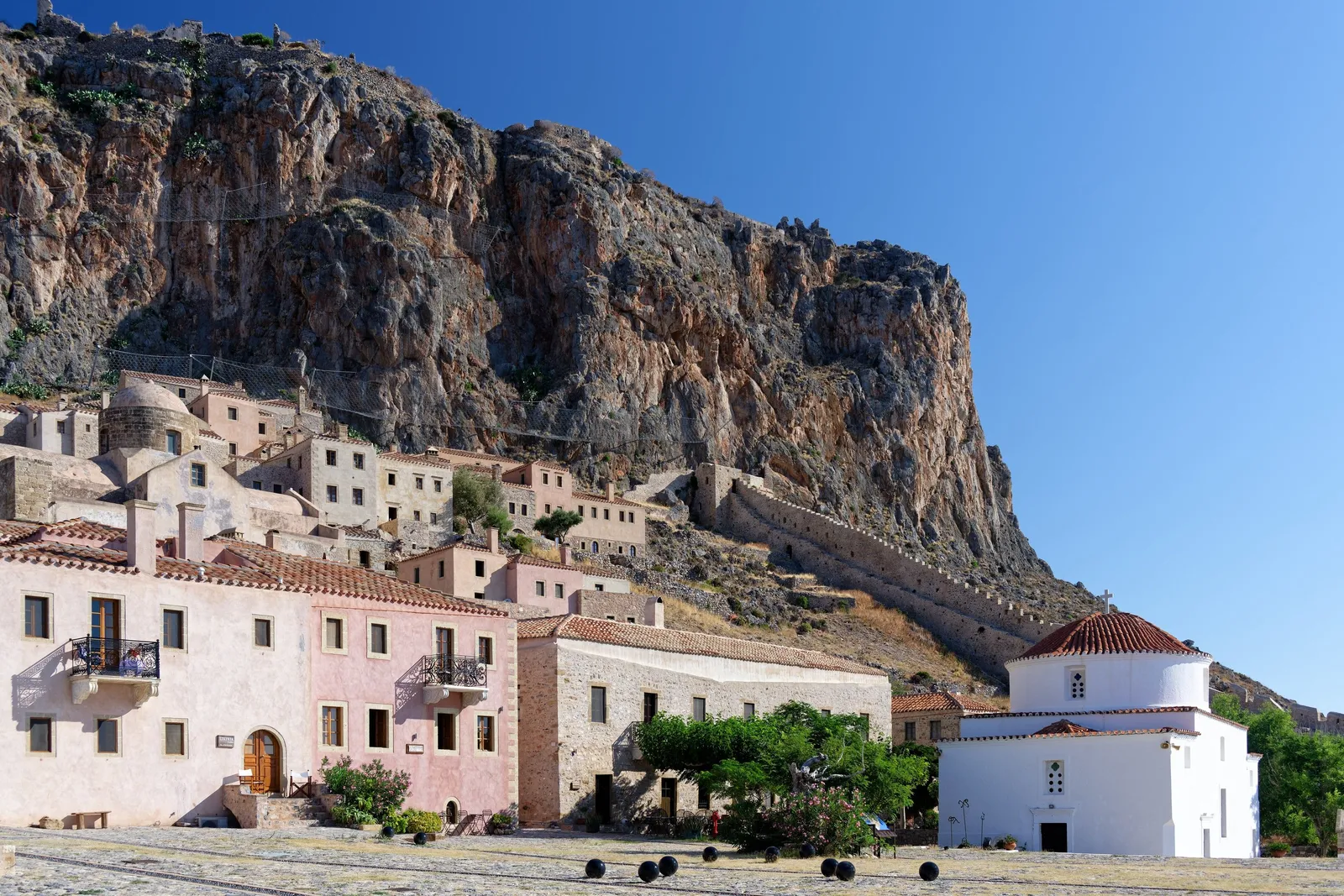
You drive along the coast road of the eastern Peloponnese and there is a rock in the sea, huge and bare and apparently empty. There is a causeway out to it. You cross, you follow the road around the base, and there is still nothing: cliff on one side, water on the other.
Then there is a gate in a wall, and through the gate there is a complete medieval town.
That is Monemvasia, and the trick of it never quite wears off. The town is built on the seaward flank of the rock, invisible from the mainland, which is exactly why it survived as long as it did.
What the place is
The name means single entrance, from moni emvasia, and it describes the defence: one causeway, one gate, and a fortress on a rock that nobody could usefully besiege.
The site was settled in the sixth century and became a significant Byzantine port, later passing through Venetian and Ottoman hands, each of which left something behind. It divides into two parts:
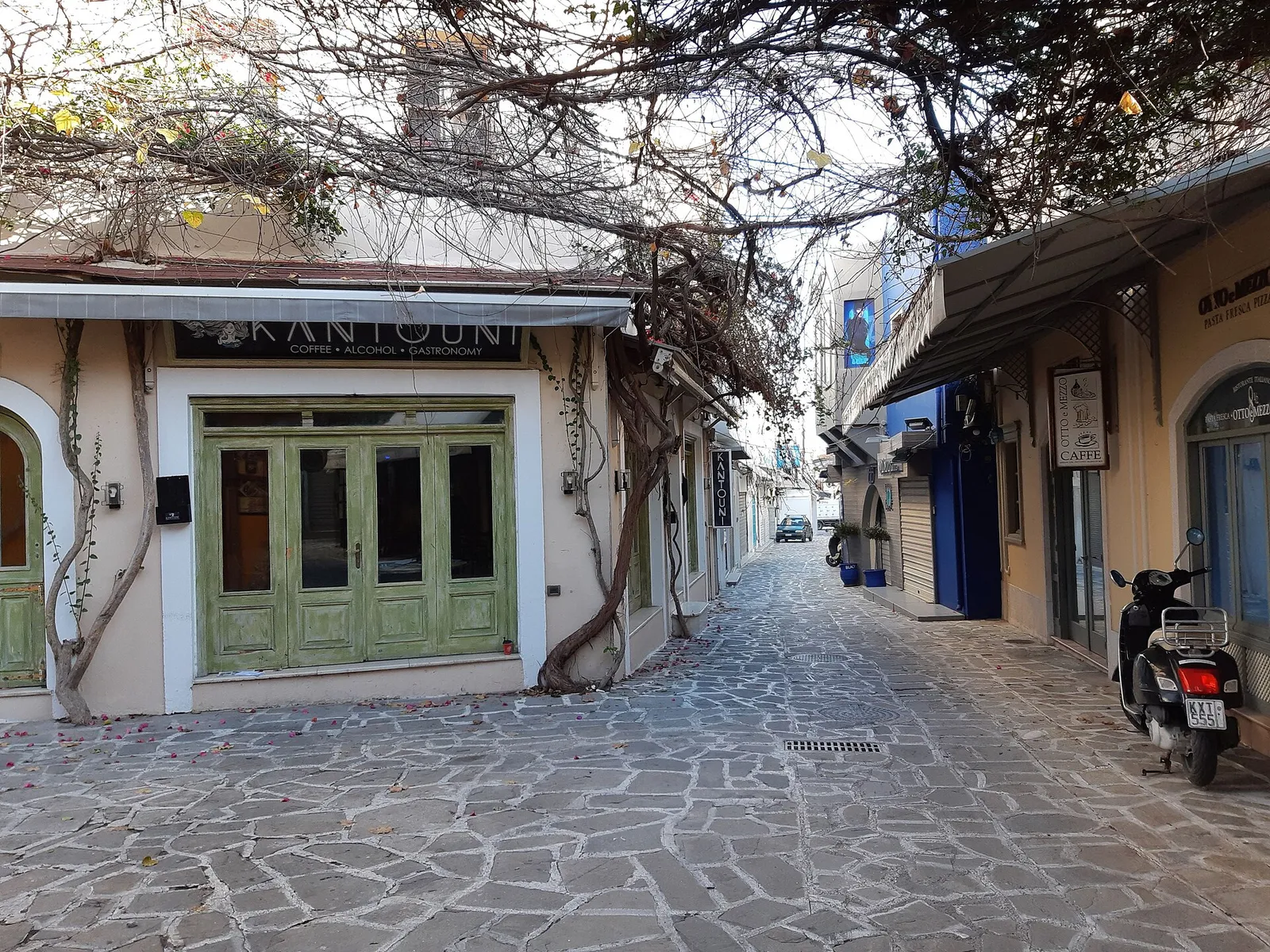
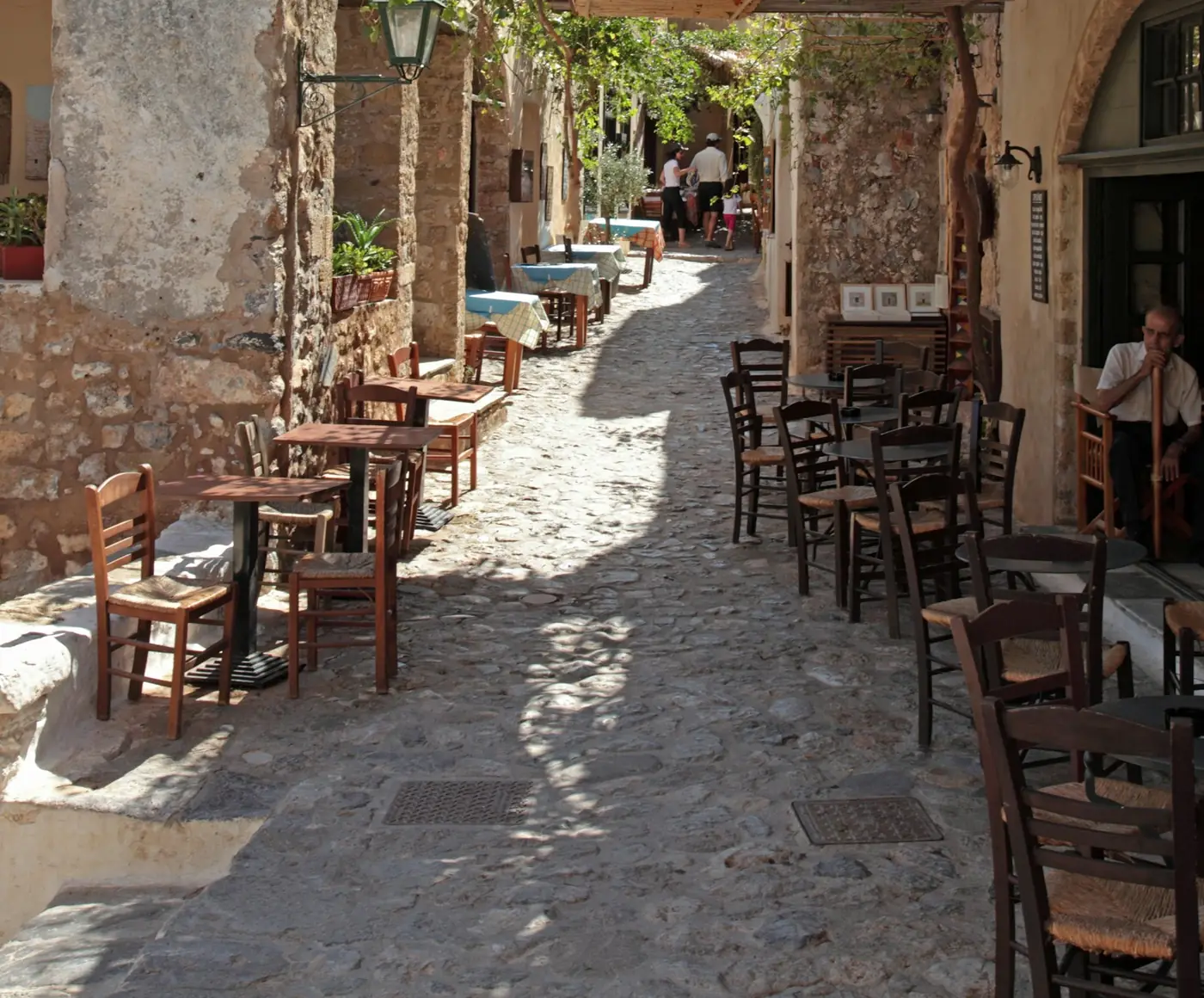
The lower town, inside the walls, which is inhabited and restored. Stone lanes, vaulted passages, churches, small hotels, tavernas and a handful of shops, all built in the same grey-gold stone and all pedestrian.
The upper town, on the flat top of the rock, which is ruins. This is where the fortress and much of the medieval town stood, and it was abandoned long ago.
The lower town is the one you sleep in. The upper town is the one you climb to.
Walking the lower town
It is small, and that is not a complaint. The main lane runs from the gate through to the far end, with alleys and steps climbing off it, and the whole thing can be walked in twenty minutes if you insist on walking it in twenty minutes.
Nobody does. The lanes turn constantly, the stone changes colour through the day, and there are courtyards and church doors and sudden views down to the water every few metres. Wandering with no destination is the correct approach.
Wear proper shoes. The surfaces are worn stone and cobble, uneven and slippery in places, and there are steps everywhere. This is a genuinely poor town for wheeled luggage, for buggies and for anyone unsteady on their feet.
The climb, and Agia Sofia
The path to the upper town starts inside the lower town and climbs the flank of the rock in a series of stone ramps and steps. It takes twenty to thirty minutes at an ordinary pace.
It is exposed almost the whole way. There is effectively no shade, no water once you set off, and in July or August the middle of the day is a bad idea rather than a hard one. Early morning or the last two hours before sunset are the hours for it.
What you get at the top is a large empty plateau of ruins, cisterns and house walls, and the church of Agia Sofia perched at the cliff edge with a drop straight down to the sea. The view back along the coast and down onto the roofs of the lower town is the payoff, and it is a considerable one.
Opening hours for the upper town site are set locally and change by season, so check on the day rather than planning a sunset climb and finding a locked gate.
Staying inside the walls
This is the single decision that changes the visit.
Monemvasia receives a lot of day visitors, mostly arriving late morning and gone by late afternoon. Between about six in the evening and about ten the next morning, the town belongs to the few dozen people staying in it.
The hotels inside the walls are small, converted stone houses, and they are not cheap. They are also the entire point. Lanes lit by lamps with nobody walking them, a taverna terrace over the water, and the rock going black above you is the version of Monemvasia that people remember, and it is not available on a day trip.
Book early for summer. There are not many rooms and they are the same rooms everybody wants.
Fitting it into a Peloponnese trip
Monemvasia is a long way from Athens and is not a half-day excursion from anywhere. It works as one stop on a driving loop rather than as a destination in itself.
The natural pairing is Nafplio, the elegant harbour town further north, which makes an easy base for the northern Peloponnese and is a much larger place with far more to do in the evening. Our guide to Nafplio and the Peloponnese covers the region and how the driving distances actually work, and Monemvasia sits at the far southern end of it.
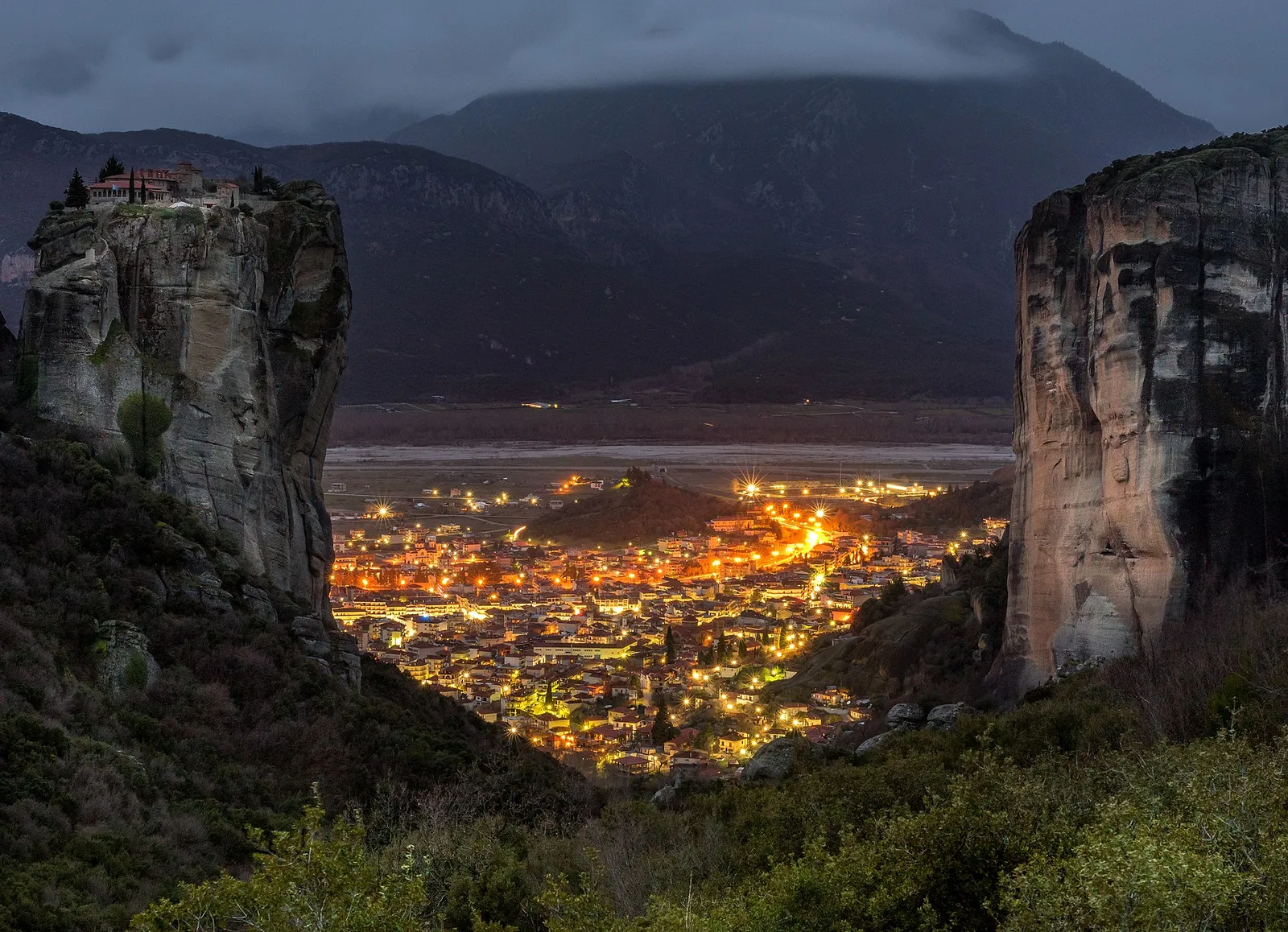
If your interest is specifically in dramatic Greek sites built somewhere improbable, the other one is inland and northern: our guide to the Meteora monasteries covers the rock pillars of Thessaly, and the two together make a strong mainland itinerary for anyone who has already done the islands.
Practical notes
Getting there is by road. It is several hours south of Athens by car, and a hire car is the sensible way to do it because the surrounding coast is worth having transport for. Long-distance buses run from Athens.
Parking is outside the gate, on the causeway and the mainland side. A shuttle runs along the causeway.
Cash is worth carrying. The town is small and some of the smaller tavernas and shops prefer it.
Season matters more than usual. Winter is quiet and many places close; high summer is hot for the climb and busy in the lanes. May, June, September and early October are close to ideal.
For a first trip to Greece, Monemvasia is not the obvious choice and probably should not displace an island. For a second trip, or for anyone who wants the mainland, it is one of the strongest places in the country. Our first-time guide to Greece sets out how to weigh islands against mainland when you are deciding.
In one line: stay the night inside the walls, climb the rock at either end of the day, and let the day visitors have the middle of it.