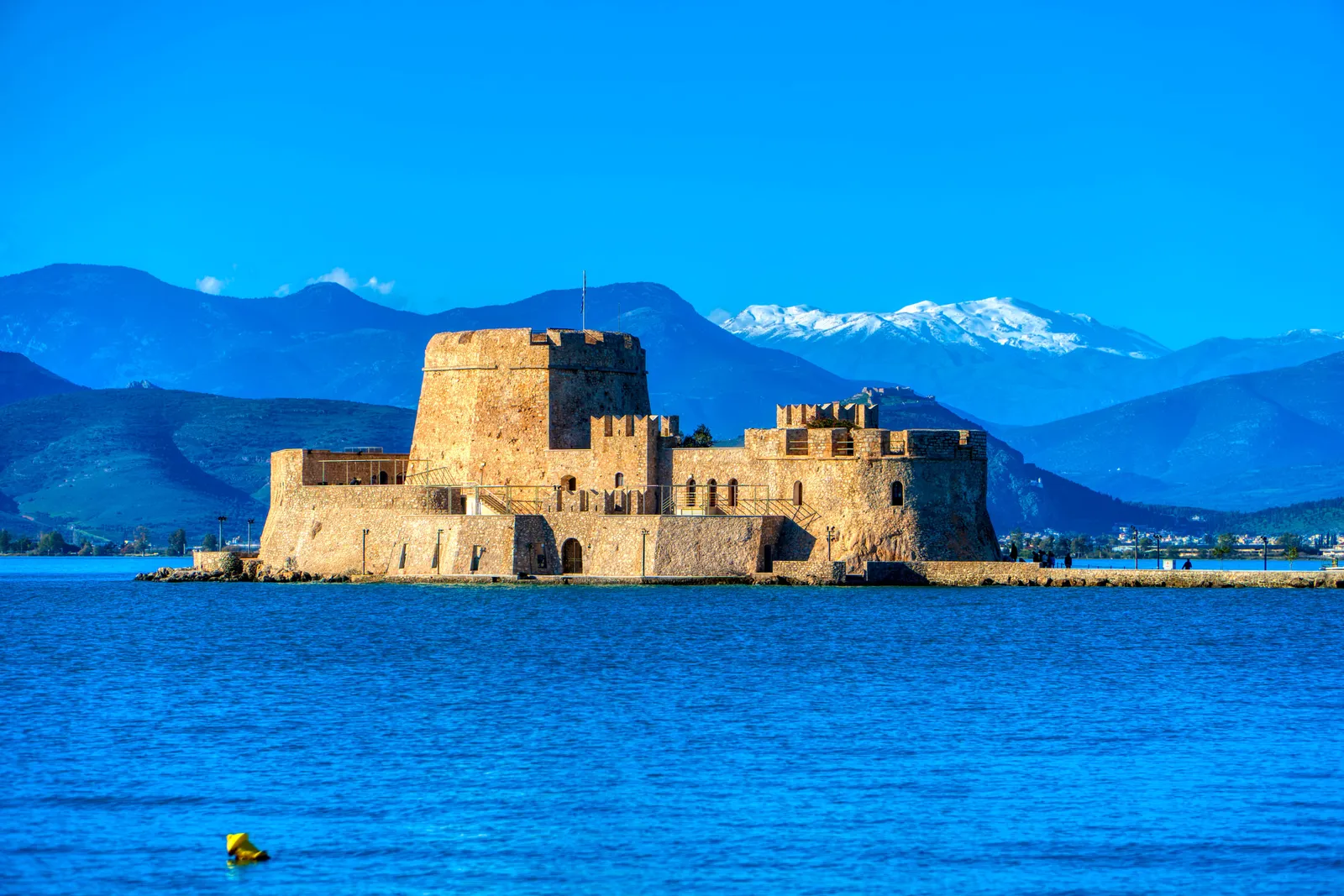
I went to Nafplio expecting a pleasant stop on the way to Mycenae and ended up staying two nights instead of one. It is the kind of town that keeps finding small reasons to delay you: another lane of neoclassical houses, another harbourside table with a view of the little fortress sitting out in the bay. If you are weighing up day trips from Athens, Nafplio is the one people most often regret rushing.
Why Nafplio looks the way it does
Nafplio was Greece’s first capital after independence, briefly, before the government moved to Athens, and the town still carries the layered history that made it worth fighting over. The Venetians held it for two long stretches between the fifteenth and eighteenth centuries and left the two fortresses that define the skyline, along with an Ottoman mosque and a scatter of grand houses from the years it briefly ran the new Greek state. Walk the old town and you are moving through Venetian, Ottoman and early Greek layers within the same few streets, which is unusual even by Greek standards.
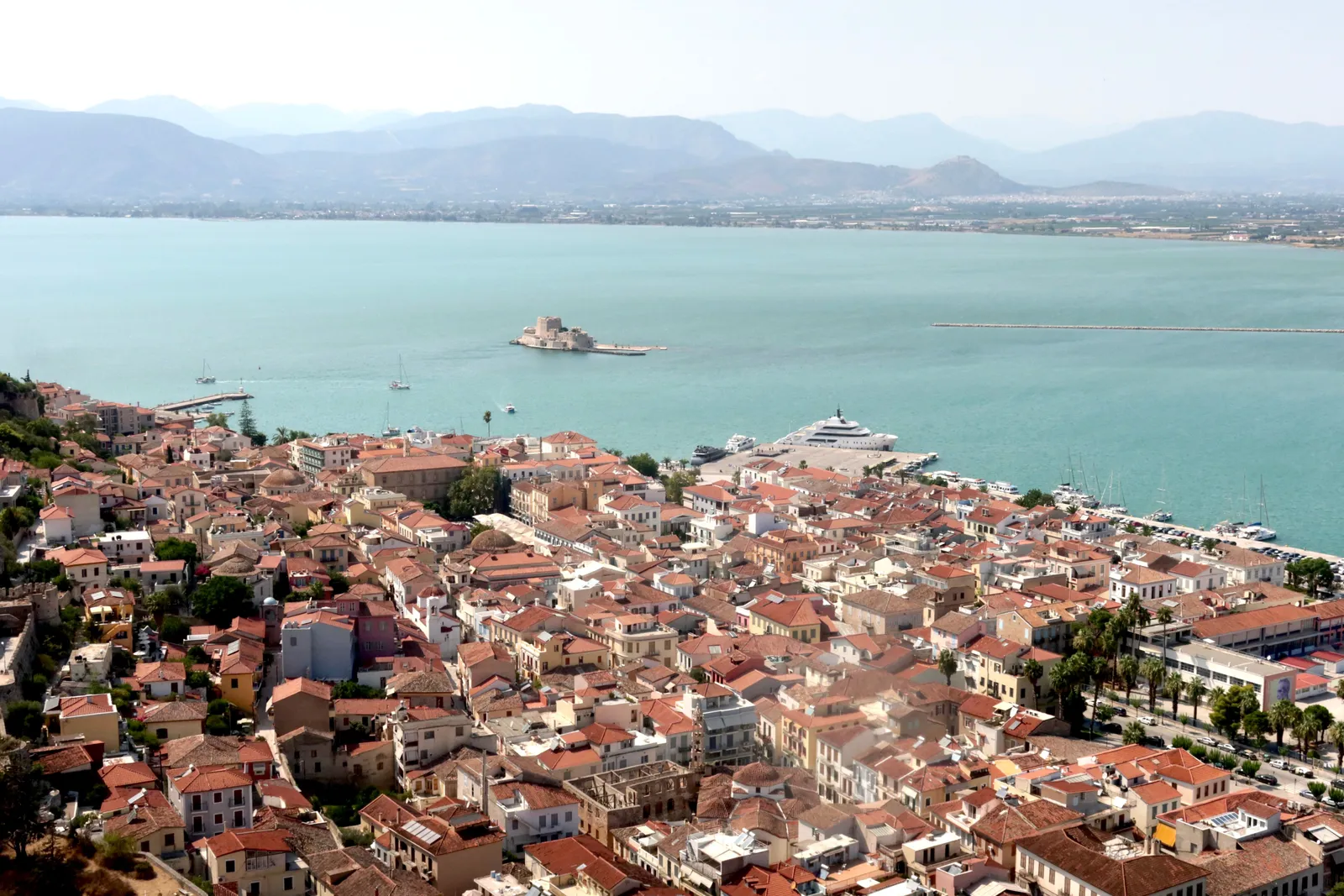
The result is a town centre that feels closer to a small Adriatic port than to the rest of the mainland Peloponnese. Marble-paved lanes run between shuttered neoclassical facades, Syntagma Square opens out with cafes on every side, and the whole old quarter sits on a promontory with the sea on two sides.
The Bourtzi, the little fortress everyone photographs
The Bourtzi is a compact Venetian fort built on its own small islet a short distance offshore, and it is the single image most people associate with Nafplio. It once housed the town’s executioner, a detail every local guide seems to enjoy sharing, and later spent decades as a hotel before becoming a monument again. Small boats run out to it from the harbour in the warmer months, but honestly the better use of your time is a table at one of the waterfront cafes as the light drops and the fort turns gold against the water.
Palamidi, the fortress on the hill
Above the town, the Palamidi fortress spreads across the hilltop, a Venetian stronghold with a chain of separate bastions rather than a single keep, built to be defensible piece by piece if part of it fell. You can drive up, or you can climb the long stone staircase cut into the cliff face that connects the old town to the fortress gate, a proper workout best attempted early in the day before the heat builds. Either way, the payoff is the same: the whole gulf laid out below, Nafplio’s rooftops, the Bourtzi in the bay, and on a clear day the mountains of the Argolid beyond.
Getting there from Athens
The drive from Athens takes around two hours on the toll motorway, through the Corinth Canal and into the Argolid. It is an easy, well-signed route, and having a car gives you the freedom to fold in Mycenae, Epidaurus or the ruins at Tiryns along the way, none of which sit directly on Nafplio’s doorstep. If you would rather not drive, KTEL buses run from the Kifisos terminal in Athens and take a broadly similar amount of time, though the schedule is worth checking a day or two ahead since services thin out later in the day.
There is no train service to Nafplio and no airport nearby, so road transport is really the only practical option, whether that is your own hire car, a bus, or an organised tour that bundles in Mycenae.
Day trip or overnight
This is the question everyone asks, and the honest answer depends on your pace. Paired with Mycenae in the morning, Nafplio works comfortably as a day trip: you arrive by early afternoon, wander the old town, climb or drive up to Palamidi, and have dinner before heading back. The trouble is that Nafplio’s best hour is the one you would be missing, the early evening when the day-trip coaches have gone, the harbour lights come on and the town belongs to the people actually staying there.
If your schedule allows even one night, take it. A stroll along the waterfront after dinner, with the Bourtzi lit up in the bay, is the kind of thing that stays with you longer than the extra archaeological site you might have squeezed in instead.
Pairing Nafplio with Mycenae and Epidaurus?A hire car from Athens gives you the freedom to link all three without waiting on a bus timetableWhere to base yourself
The old town is the obvious choice, and rightly so, since everything worth seeing is within a short walk and the harbourside restaurants are genuinely good rather than tourist traps. Rooms with a direct view of the Bourtzi are the most sought after and the first to sell out, particularly on spring and autumn weekends when Athenians drive down for a break of their own. The newer part of Nafplio, beyond the old walls, is cheaper and still an easy walk in, a sensible option if you are visiting in high season and the old town rooms are already gone.
| Area | Feel | Best for |
|---|---|---|
| Old town, seafront | Views of the Bourtzi, atmospheric | A splurge for one special night |
| Old town, backstreets | Quiet, marble lanes, still central | Best value in the historic centre |
| New town | Modern, a short walk from the old quarter | High season when old town rooms are gone |
What to eat
Nafplio takes its food seriously in a way that some more heavily touristed Greek towns do not. Look for grilled fish priced by the kilo at the harbourside tavernas, and for the local speciality of loukoumades, small honey-soaked doughnuts, sold from a stall near Syntagma Square that has been there for generations. Prices for a seafood dinner here run a little higher than inland Peloponnese towns, reflecting the setting, though nowhere near island prices in high season.
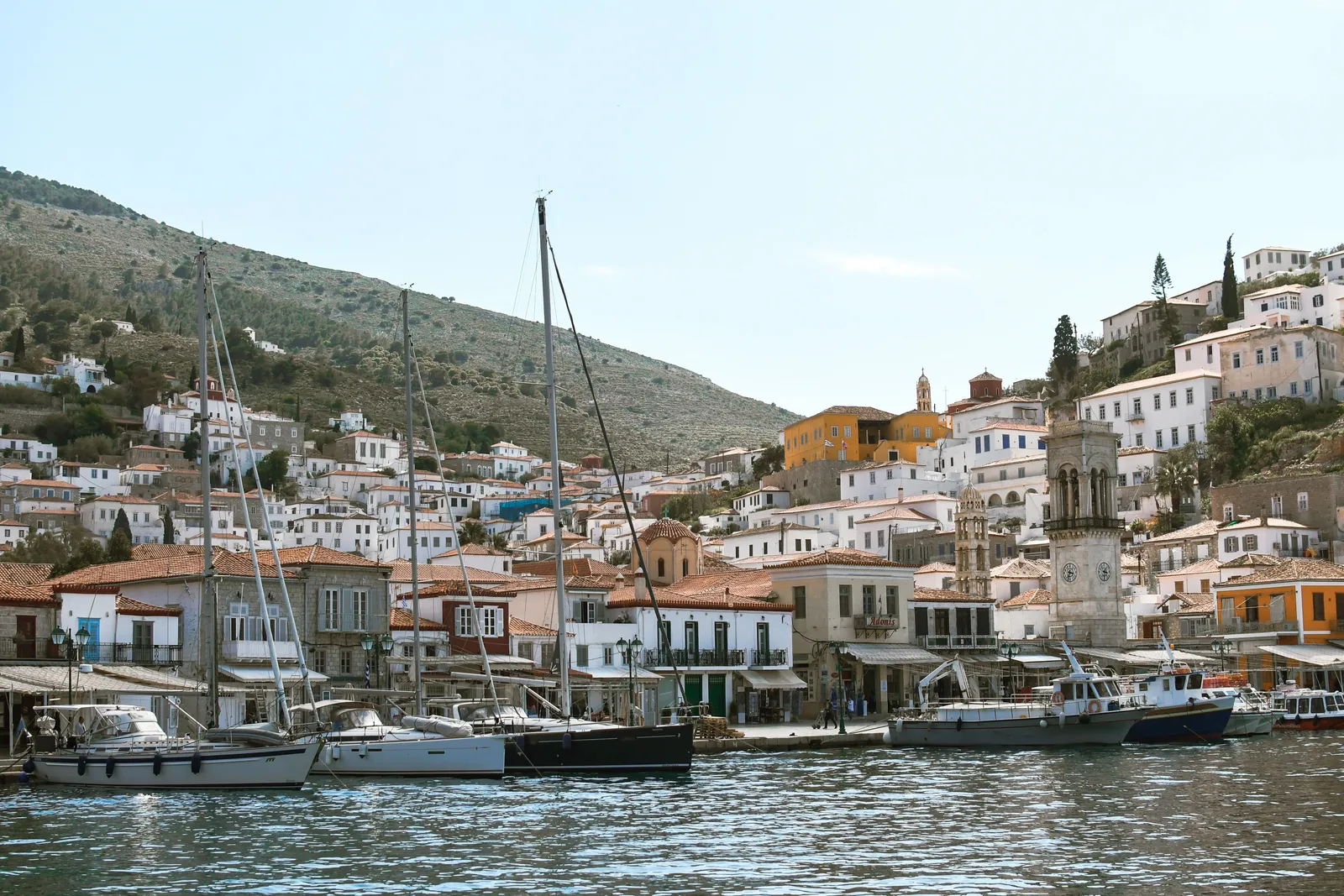
So is Nafplio worth the detour from the classic Athens and islands route? For anyone who likes a town that rewards slow walking as much as it rewards a checklist of sights, yes, without much hesitation. Just do not plan your visit so tightly that you miss the harbour after dark. If you are building this into a longer loop through the Peloponnese, our two-day Athens plan leaves you a clear window to head out here afterwards, and if you would rather swap the hire car for a boat and see how the same coastline looks from the water, our guide to island-hopping ferries covers how that side of a Greek trip actually works, including a stop on the car-free island of Hydra.