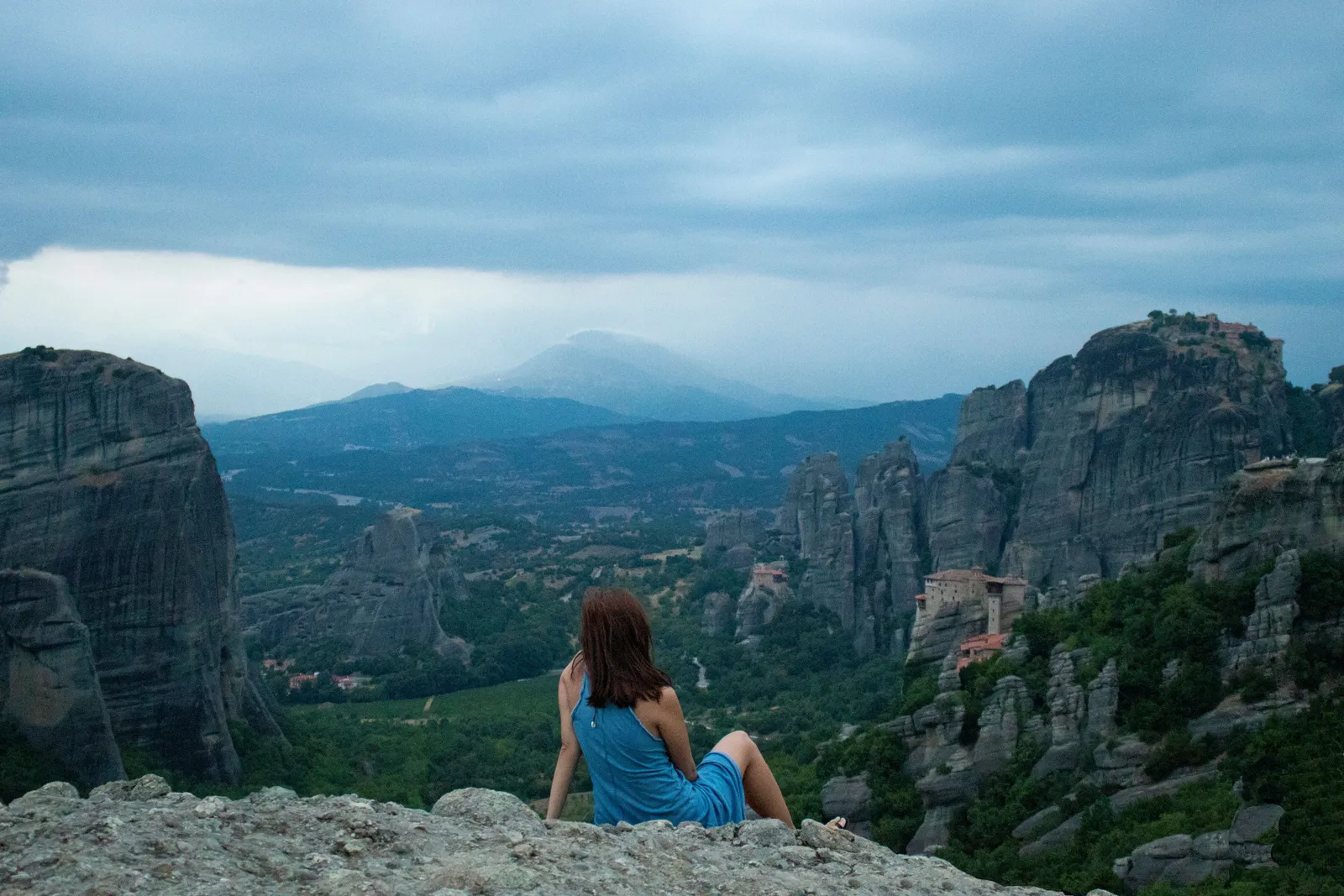
Greece’s mainland is where most visitors spend a day and a half before heading for a ferry, and it holds two of the most extraordinary places in the country. Delphi, where the ancient world came to ask questions, sits on a mountainside above a sea of olive trees. Meteora, four hours north, is a cluster of monasteries built on top of sandstone pillars hundreds of metres high, for the excellent reason that nobody could reach them.
Five days by car links them with the Pelion peninsula in between. No ferries, no wind cancellations, and a landscape that looks nothing like the islands. This pairs well with five days in Athens, and with the Peloponnese if you want a full mainland fortnight.
Itinerary at a glance
| Day | Area | Signature experience |
|---|---|---|
| 1 | Athens to Delphi | The sanctuary of the oracle, above the olive sea |
| 2 | Delphi to Meteora | Arriving as the pillars come into view |
| 3 | Meteora | Monasteries on rock, and the path between them |
| 4 | Pelion | Stone villages, cobbled mule paths, twin coasts |
| 5 | Back south | The coast road, and Osios Loukas on the way |
Day 1: Delphi
The ancient Greeks considered Delphi the centre of the world and marked the spot with a stone. Standing there, on a terrace of Mount Parnassus with the mountain rising behind and a valley of olive groves running down to the gulf in front, it is easy to see how they arrived at that.
Walk up the Sacred Way past the treasuries that competing cities built to show off, to the Temple of Apollo where the oracle gave her famously ambiguous answers, then on to the theatre and the stadium at the very top. The stadium is the highest point and the least visited, which is a reason to keep climbing.
Do not skip the museum. The bronze Charioteer is one of the finest surviving Greek bronzes anywhere, and he still has his inlaid eyes, which almost none of them do. See the Delphi guide.
Wow moment of the day: the view from the stadium at the top of the site, with the whole sanctuary stepped below you and the valley beyond.
Sleep in Delphi village or in Arachova, the stone built ski town above it, which is livelier in the evening.
Day 2: North to Meteora
The drive north crosses Thessaly, and for most of it there is no hint of what is coming. Then the plain ends and the pillars stand up out of it.
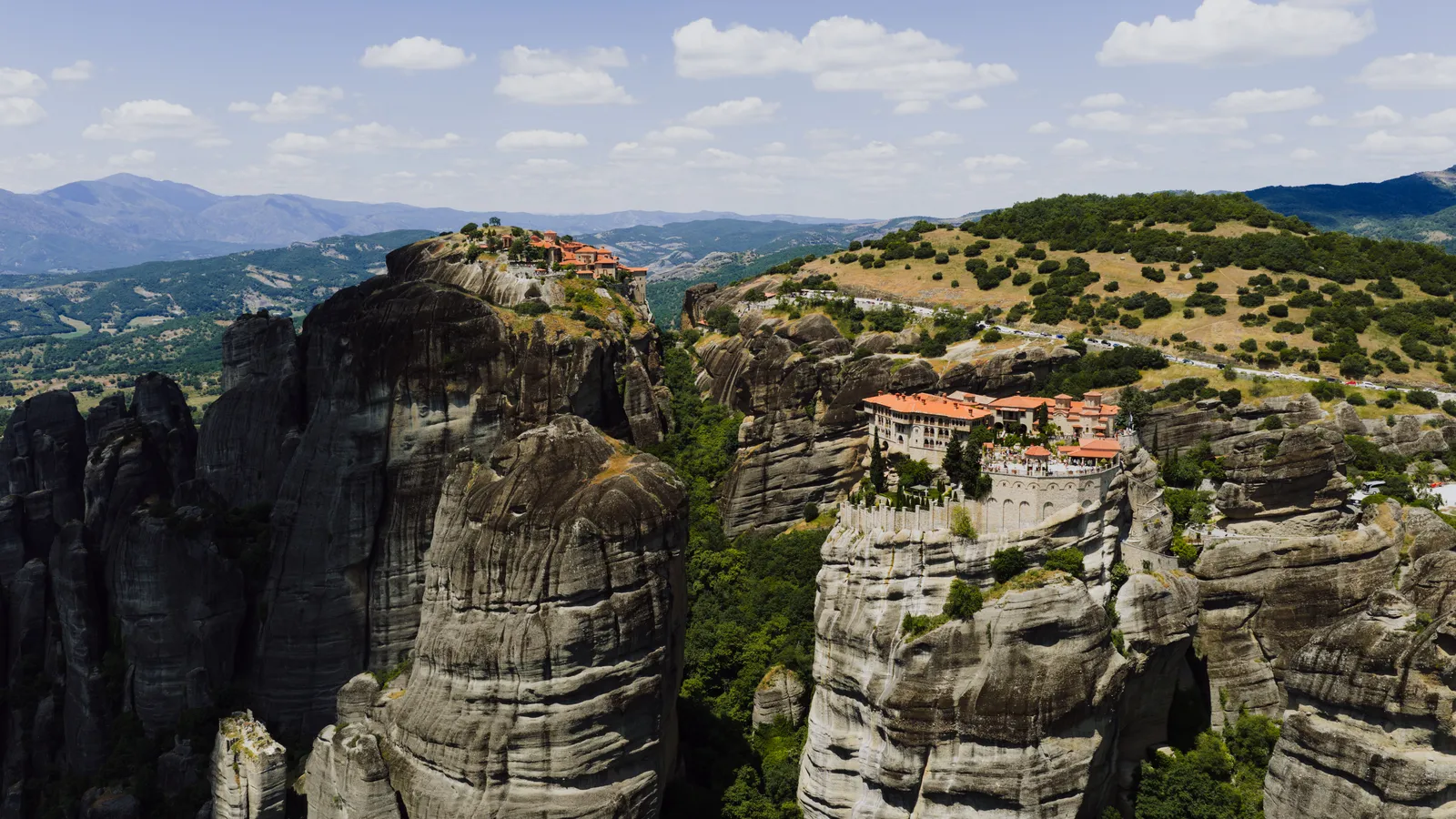
Meteora is a field of sandstone towers, some over four hundred metres, formed by erosion, and monks began climbing them in the fourteenth century precisely because they were unclimbable. Six monasteries remain active out of a peak of more than twenty.
Arrive in the afternoon, drive the loop road for orientation, and take sunset from one of the viewpoints on the ridge above Kastraki. Honest note: the main viewpoints are busy at sunset and the parking is limited, so arrive well before the light goes.
Sleep in Kalambaka or the smaller village of Kastraki directly beneath the rocks.
Day 3: The monasteries
Give this a full day. Each monastery has its own opening days, and they do not all open on the same days, so check which are open on your date before setting out rather than arriving at a closed gate.
Dress code is enforced and it is not a formality: shoulders covered for everyone, and long skirts for women, which most monasteries lend at the entrance. Trousers on women are usually not accepted even though shorts on men often are, so bring a wrap if that matters to you.
Wow moment of the day: the winch. Before the steps were cut in the twentieth century, the only way up was a net hauled by a hand cranked windlass, and several monasteries still have the tower, the rope and the basket in place, now used for supplies. The story that the rope was replaced only when it broke is the sort of thing that sounds invented and is repeated by the monks themselves.
If you would rather walk than drive, old footpaths connect the rocks through the woods below, and they are the best way to see the place. See the Meteora guide.
Day 4: Pelion
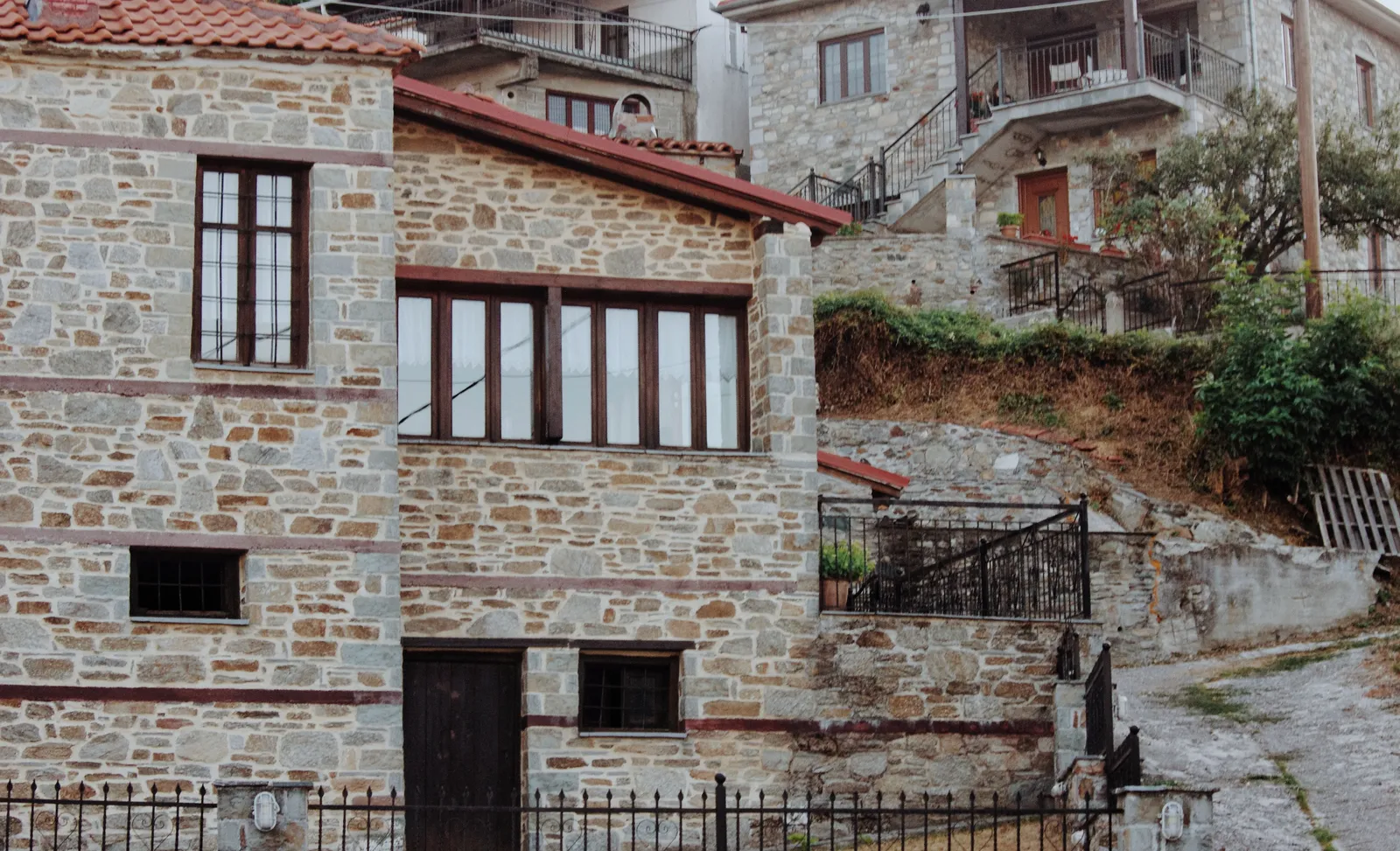
East from Meteora, the Pelion peninsula curls into the Aegean, and it is the mainland’s best kept secret: a forested mountain ridge with the open Aegean on one side and the sheltered Pagasetic gulf on the other, and around twenty four stone built villages spread over it.
The architecture is distinctive, tall slate roofed houses with wooden upper floors, and the villages are linked by kalderimia, cobbled mule paths that predate the roads and are still walkable. Makrinitsa, Vizitsa, Milies and Tsagarada are the classic stops.
Wow moment of the day: swimming at one of the east coast beaches such as Mylopotamos or Fakistra, which are reached down steep paths through chestnut and beech forest, so you go from deep woodland to open sea in ten minutes.
Pelion is also where tsipouro is drunk seriously, served with small plates that keep arriving.
Day 5: South, with one more stop
Head back towards Athens, and break the drive properly rather than pushing straight through.
Osios Loukas, near Distomo and roughly on the Delphi road, is one of the finest Byzantine monasteries in Greece and a UNESCO site. Its eleventh century mosaics on gold ground are in a completely different league from most of what survives, and it receives a small fraction of Meteora’s visitors.
Alternatively, take the coast road and stop at Galaxidi, a quiet harbour town of captains’ houses on the gulf below Delphi, for a long lunch by the water before the last stretch.
Doing it in the other direction
If you are flying into Thessaloniki rather than Athens, run the loop backwards: Meteora on day one, Pelion on days two and three, Delphi on day four, and finish in Athens. It is the same route and it saves the long drive back north.
And if you have a sixth day, the obvious extension is west into Epirus, where the stone villages of Zagori and the Vikos gorge sit about two hours from Meteora on a good road. That is a proper mountain region in its own right rather than a stop, so it deserves more than a day, but it is the natural next piece of the Greek mainland if this trip works for you.
Practical tips
- You need a car. There is a train to Kalambaka for Meteora, but the loop as a whole does not work on public transport. See car rental in Greece.
- When to go: spring and autumn are best. Meteora is beautiful in mist and cold in winter, Pelion is a ski area in winter, and Delphi is uncovered and hot in high summer. See the best time to visit Greece.
- Monastery opening days change seasonally. Confirm on the day, and allow for a lunchtime closure.
- Driving: mountain roads here are good but slow. Do not judge timings by distance.
- Shorter version: Delphi alone works as a long day from the city. See day trips from Athens.
- Food: mainland cooking is heartier than island cooking, with more meat, pies and mountain greens. See the Greek food guide.