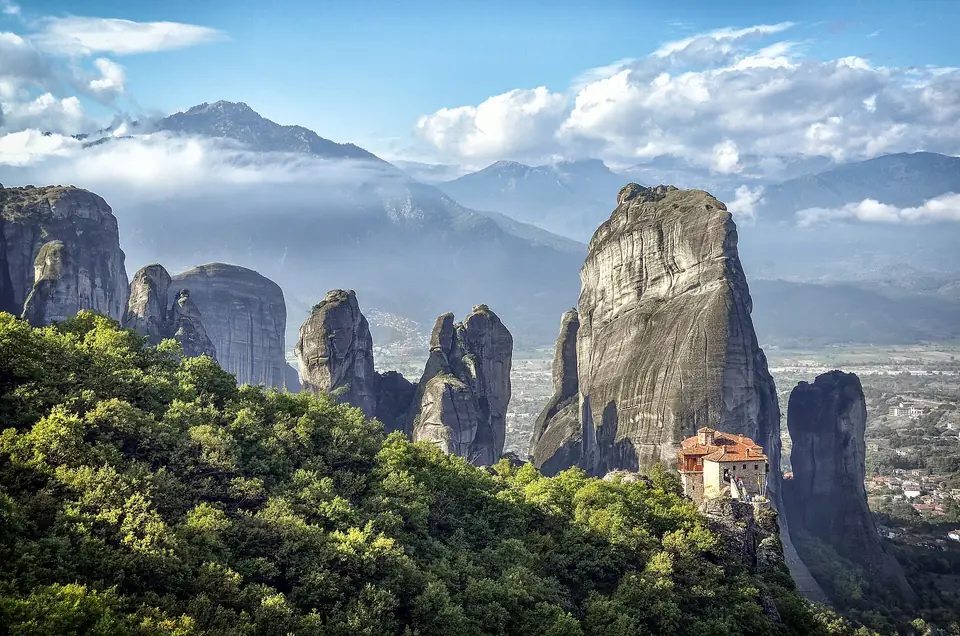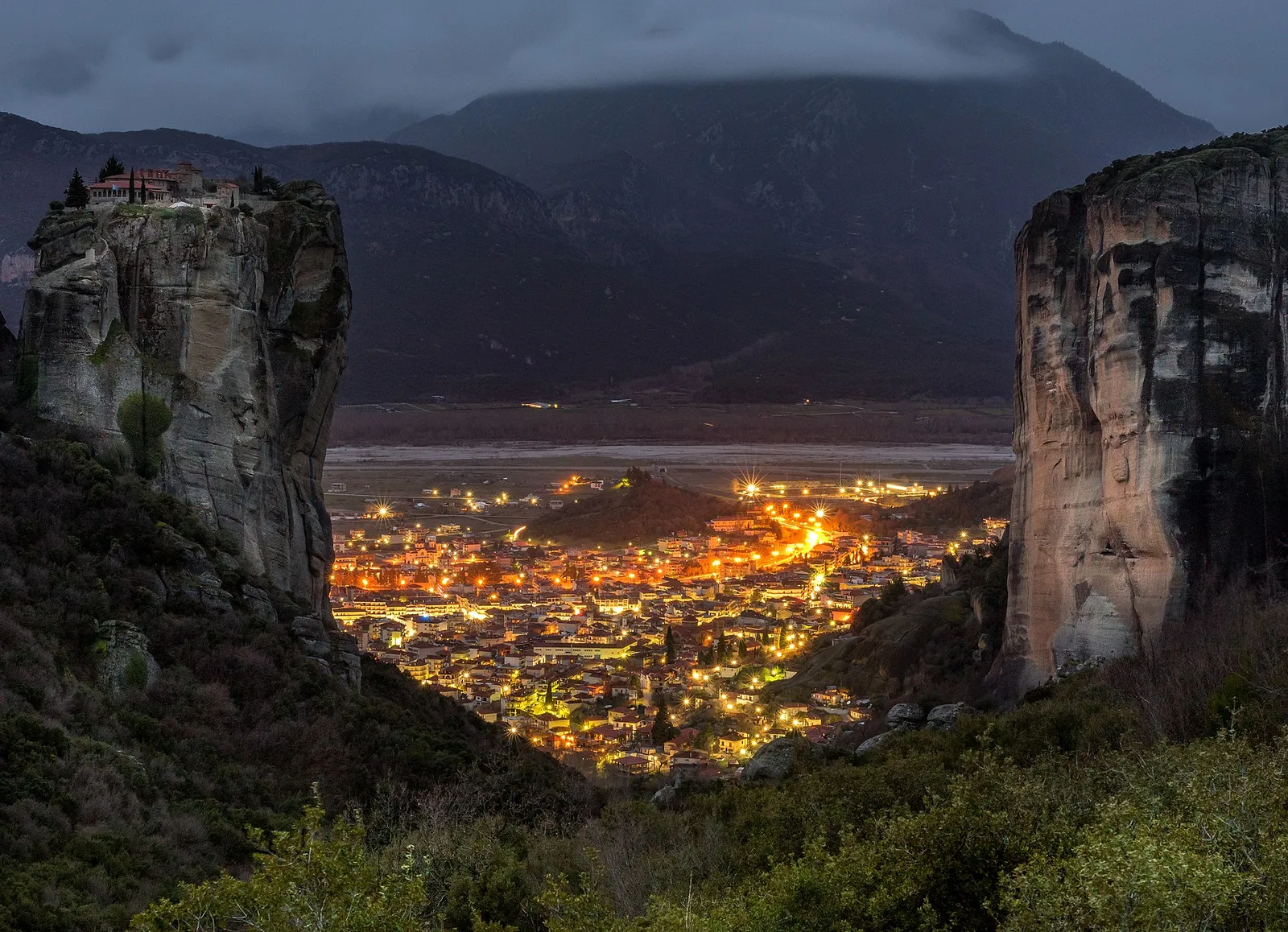
In central Greece, a plain ends abruptly in a forest of sandstone pillars several hundred metres high, and on top of some of them are monasteries. They were built from the fourteenth century onwards by monks who went up by rope ladder and net, in a place chosen precisely because it could not easily be reached, and six of them are still working communities that open their gates to visitors. Meteora is the most extraordinary thing on the Greek mainland and it is not on most first-time itineraries, which is the best argument for putting it on yours.
What you are looking at
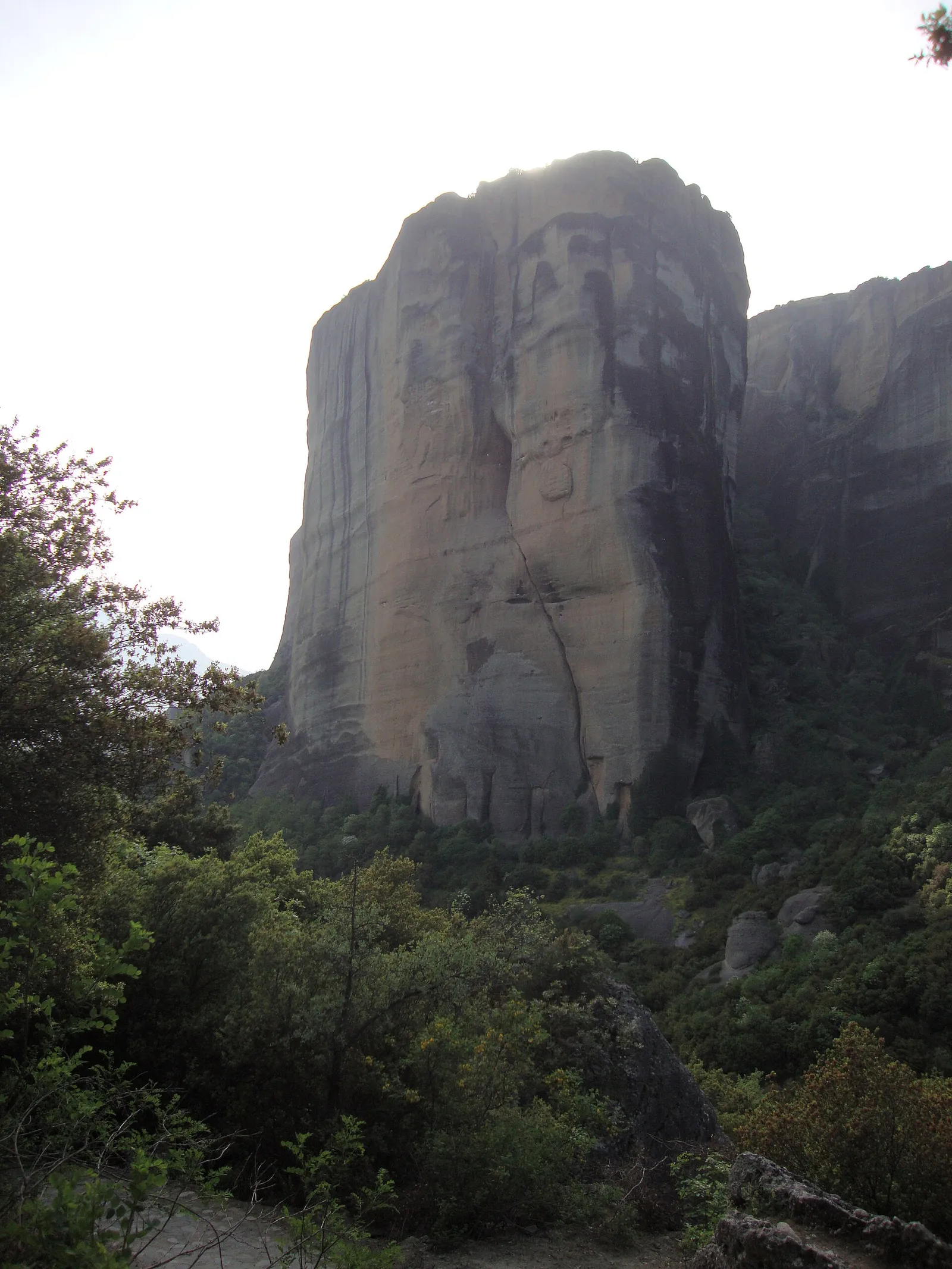
The rocks came first. The pillars are the eroded remains of an ancient river delta, and hermits were living in the caves in their sides long before anything was built on top.
The monasteries followed, from the fourteenth century, in a period when a place that was almost impossible to reach was also almost impossible to attack.
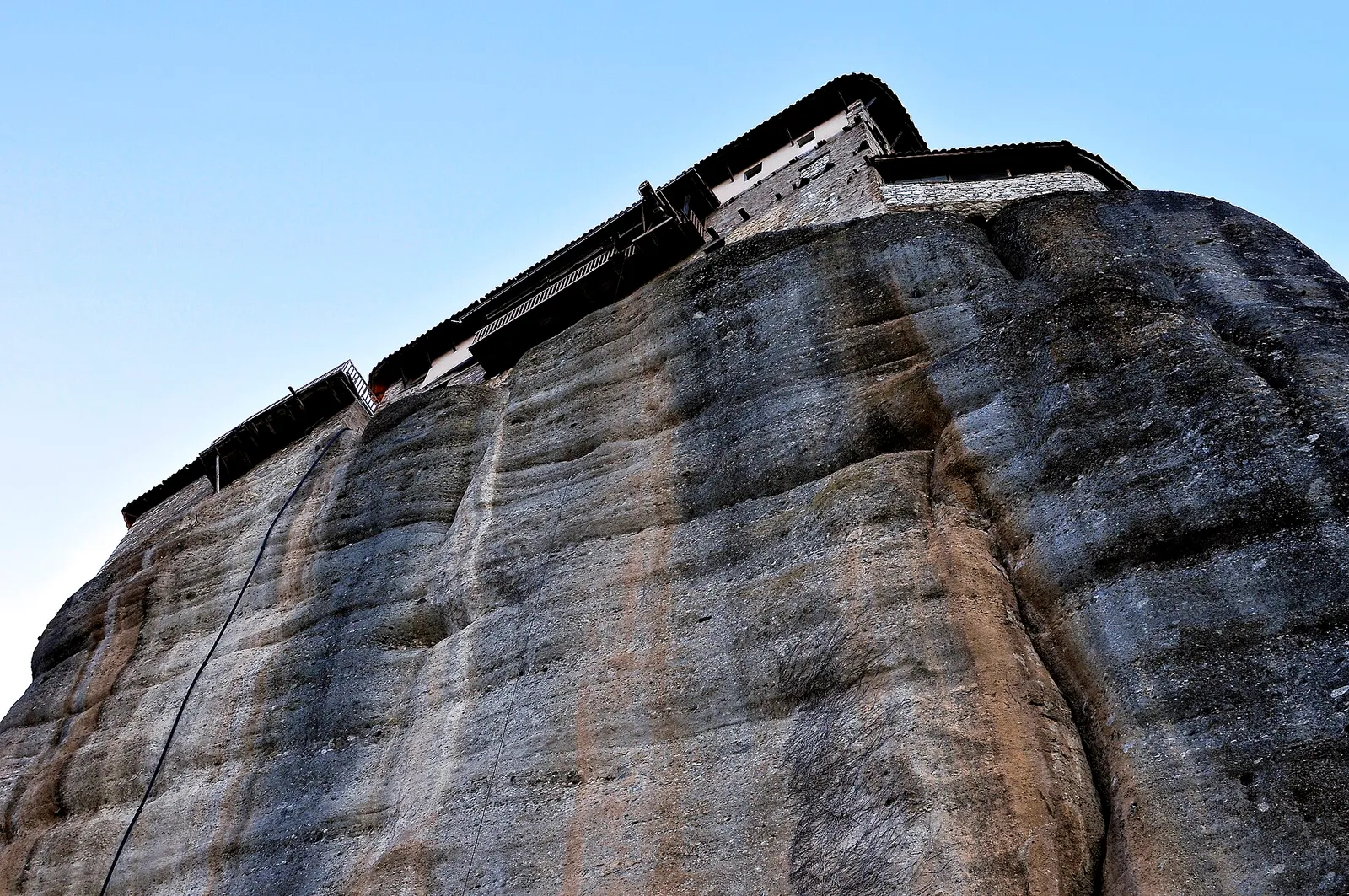
Access was by rope, ladder and net until roads and steps were cut in the twentieth century, which is the fact that reframes everything you see.
Six are open to visitors today, of a much larger number originally built, ranging from the very large to the very small.
They are working monasteries, not museums, which is why the dress code and the closing days exist.
Visiting them
Each has its own closing day, and they differ from one another. This is the single most common way a Meteora plan goes wrong, and it is entirely avoidable by checking the current days before you set out.
They open in the morning and close in the afternoon, with shorter hours in winter. Because these vary by season and by monastery, treat any specific time you read as approximate and confirm locally.
Every one involves steps, in some cases a great many, cut into the rock.
Two or three in a day is a good pace. Six is an endurance event and they start to blur.
Photography inside the churches is usually not permitted, and the frescoes are the reason to go in.
Beyond the monasteries
The rocks themselves are the other half of the visit and cost nothing.
The old monk paths run between and below the pillars, waymarked and walkable, and they are how the place was crossed before the road. Even one short section changes your sense of the scale.
Sunset from the viewpoints on the high road is the classic photograph, and it is genuinely worth the wait.
Rock climbing is serious here and has been for a century, with routes on the pillars used by climbers from across Europe.
The town below, Kalambaka, and the smaller village of Kastraki are where you sleep, eat and hire a guide, and staying the night is what turns a rushed day into a proper visit.
Getting there and staying
By car, Meteora sits naturally on a mainland driving route between Athens, Delphi and the north, and it is the anchor of that itinerary.
By train, the line from Athens and from Thessaloniki reaches Kalambaka, which makes it one of the few major Greek sights reachable without driving.
Day trips run from Athens and from Thessaloniki and involve a great deal of travelling for the time on the rocks.
Stay two nights if you can. It costs little, the town is inexpensive, and it buys you a sunset, a sunrise and a second day for whatever was closed on the first.
Where this fits in a Greek trip
Meteora belongs to the mainland half of Greece, which most first-time visitors skip entirely in favour of the islands, and which holds the country’s greatest historical sites.
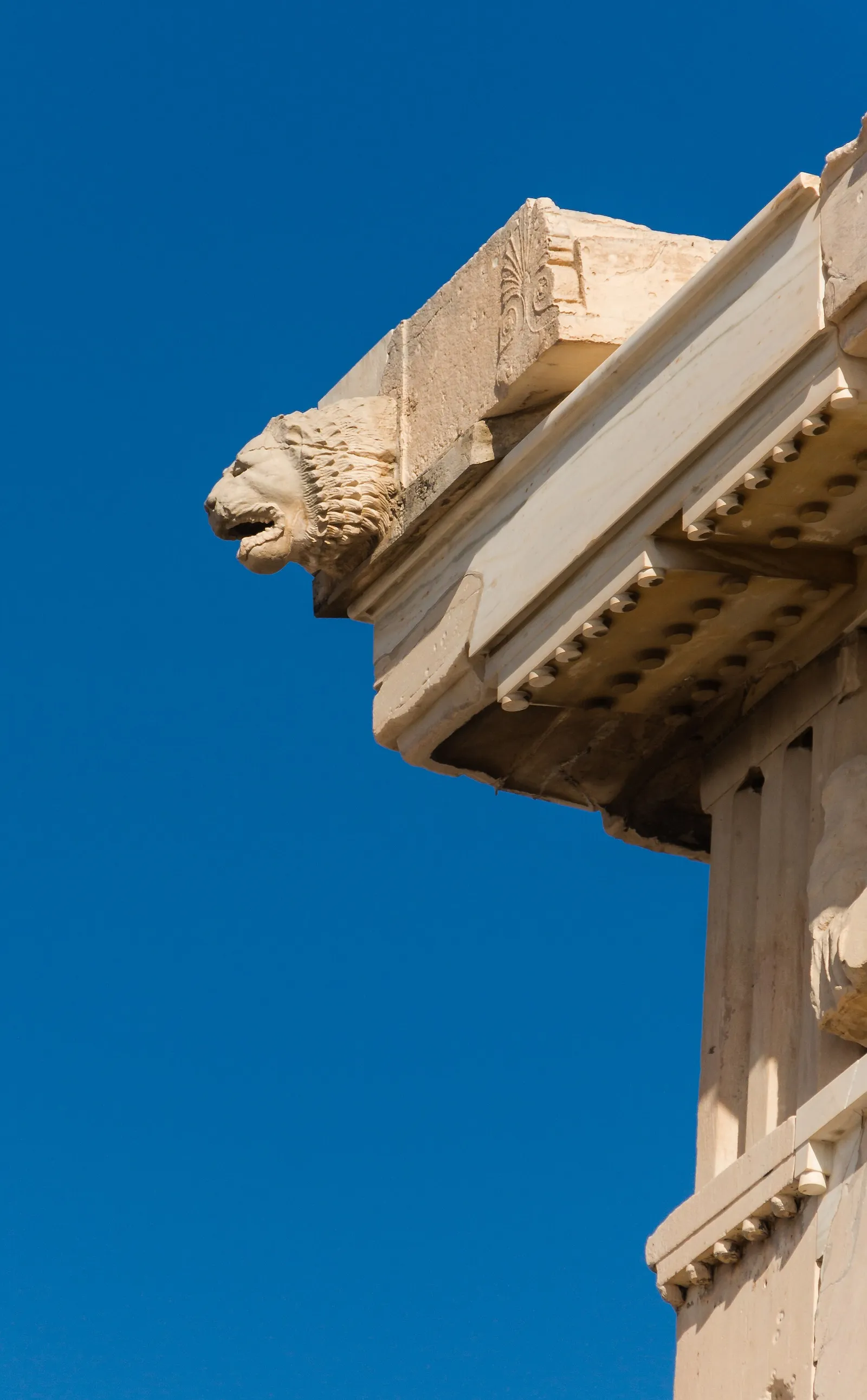
For the one everybody does see, and how to visit it without the queue and the midday heat, our guide to the Acropolis in Athens covers the essential first stop.
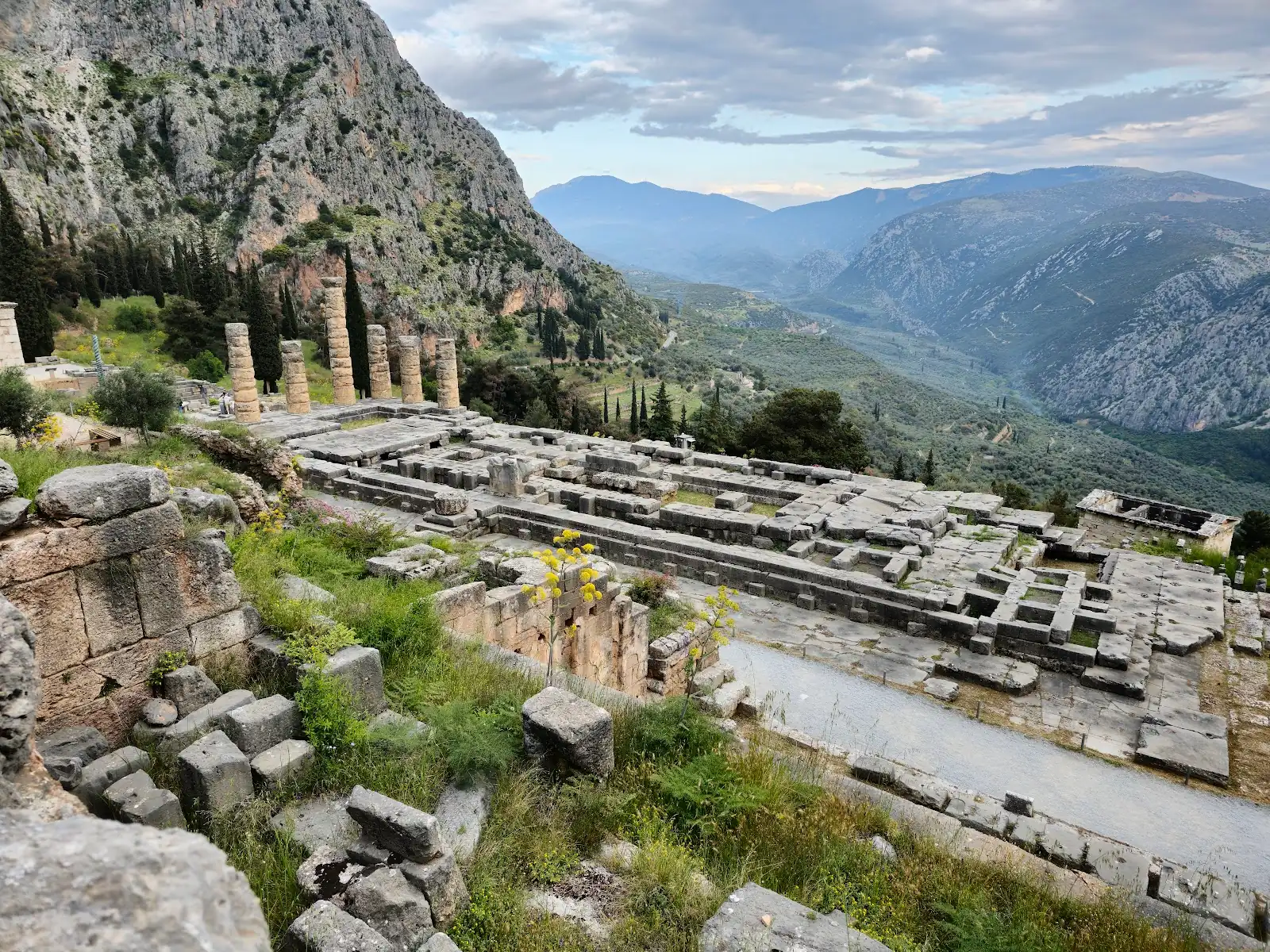
The natural partner on a driving route from Athens is the sanctuary in the mountains to the southwest, and our guide to Delphi covers what is arguably the most beautifully sited ancient place in the country.
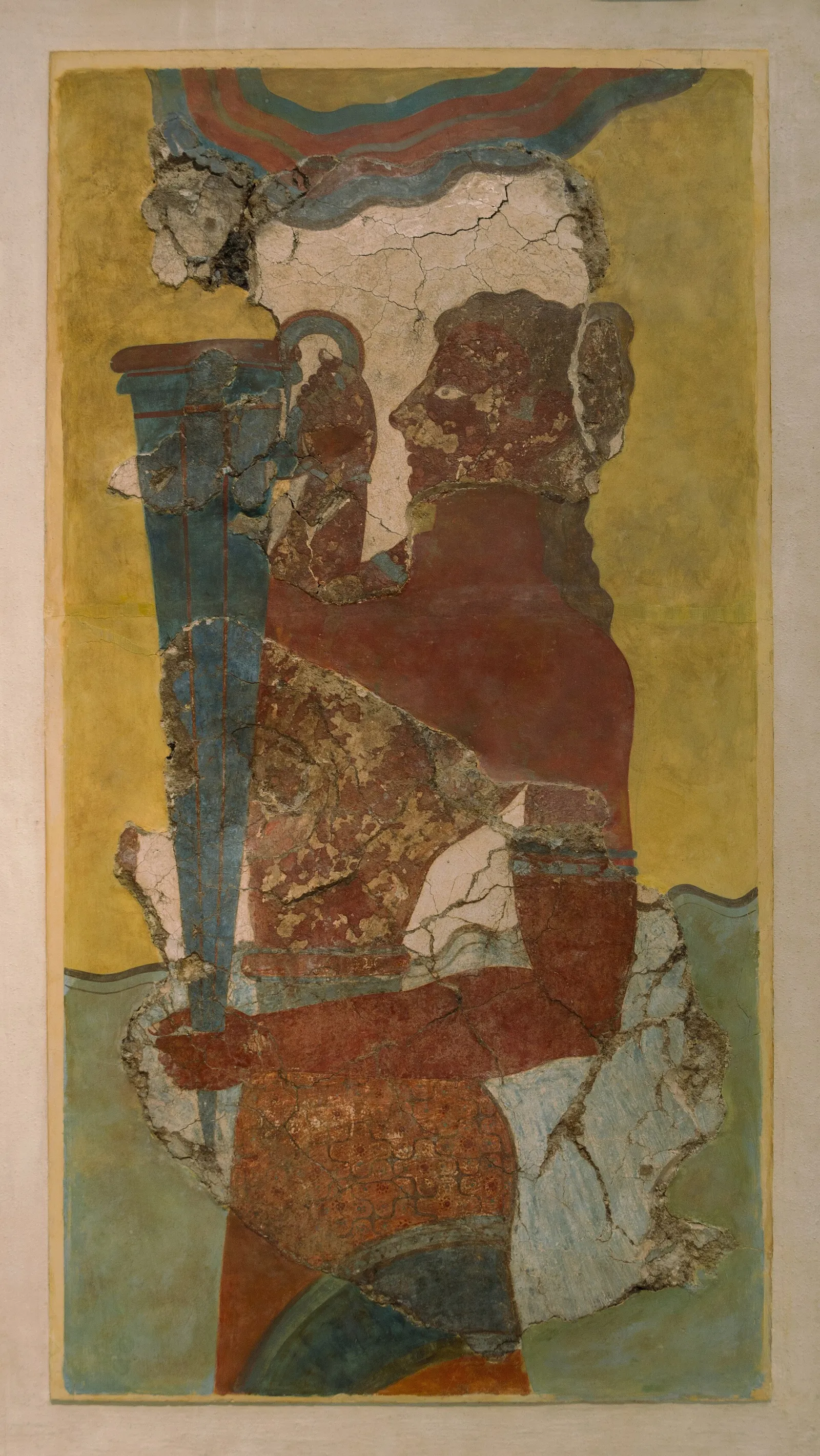
And for a different civilisation altogether, a thousand years older and on Crete, our guide to Knossos covers the palace at the root of the Minoan world.
The short version
Stay two nights in the town at the foot of the rocks rather than passing through on a day trip, because sunset and a second day are most of the value. Check the current closing days the evening before, since each monastery shuts on a different one. Visit two or three rather than all six, mixing one large with one small. Bring a wrap and a long skirt so the dress code is never an issue. Walk at least one section of the old monk paths. And take a guide or a tour for one of the visits, because almost nothing here is explained on the spot.
Meteora pairs naturally with Delphi and the mountain north, and five days is enough for all three without spending the trip driving through the good parts. Five days on the Greek mainland sets out that route.