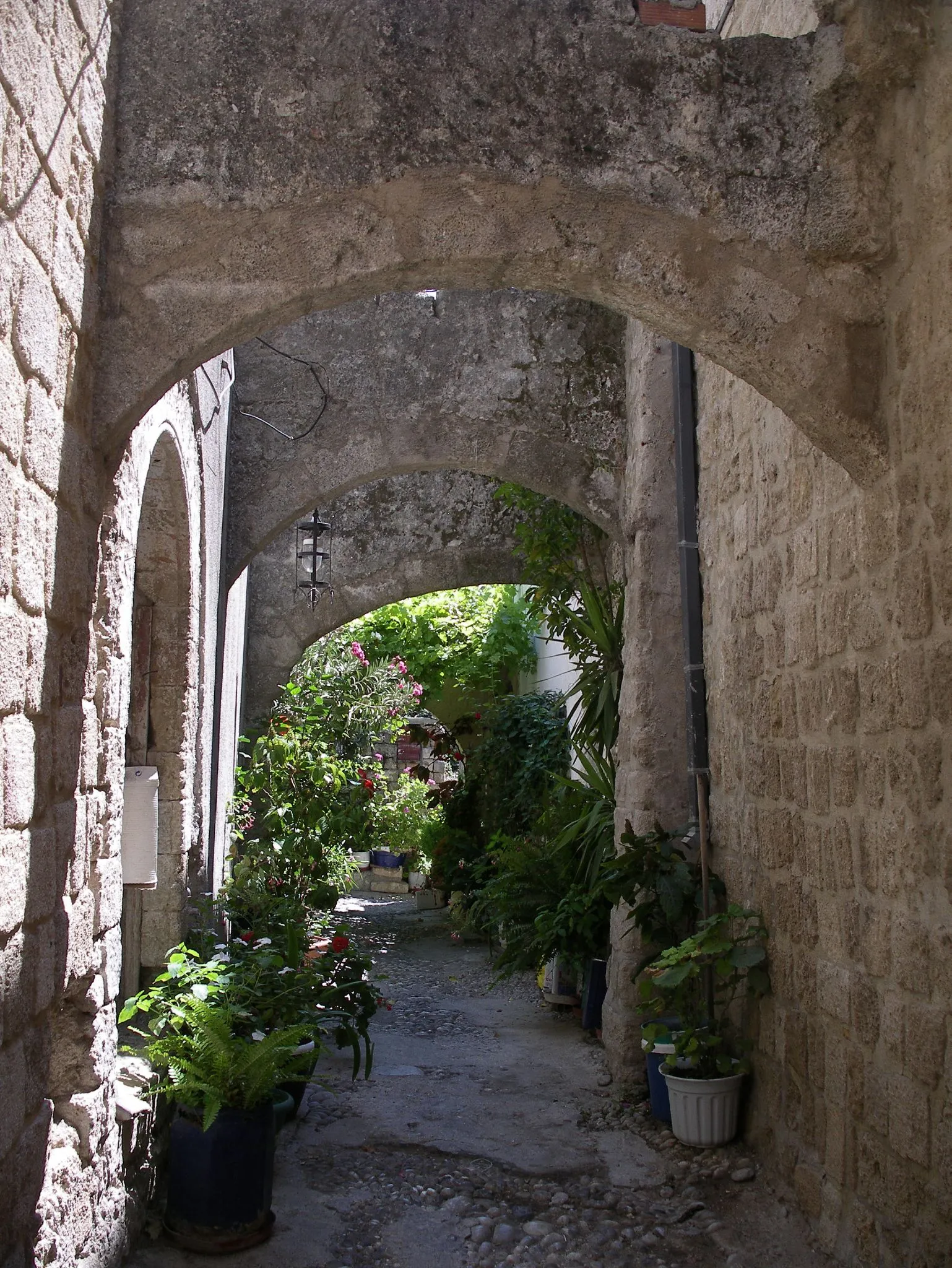
Rhodes is the largest island in the Dodecanese and the one that comes with a city attached. Its old town is a complete walled medieval settlement, still lived in, with a street of crusader inns, a palace at the top and cats asleep on the cobbles. Around it is an island eighty kilometres long with two contrasting coasts, mountain villages, one of the most photographed hilltop settlements in Greece, and a season that starts earlier and ends later than almost anywhere else in the country.
The old town
This is the reason Rhodes is not simply a beach island.
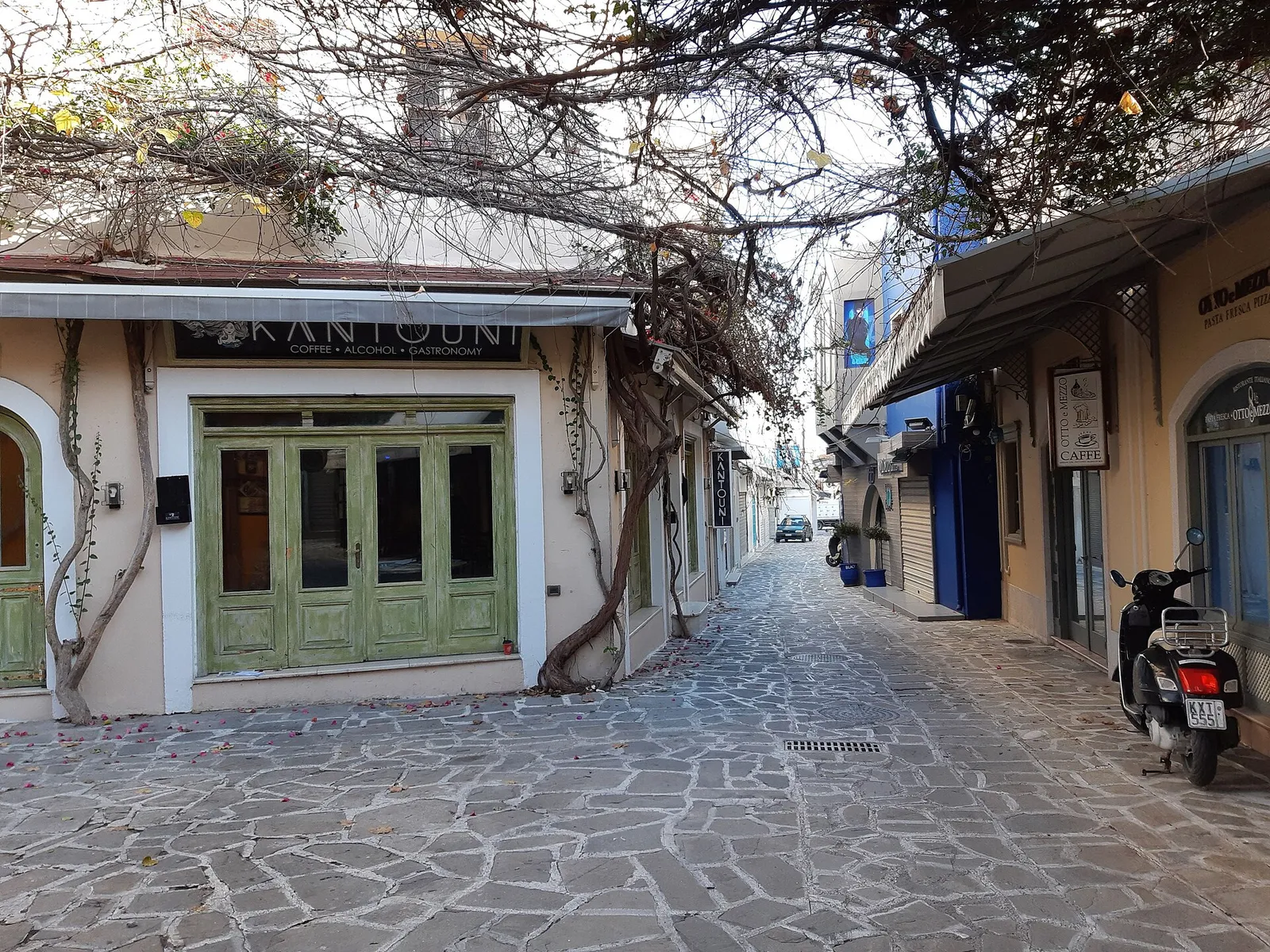
It is a working medieval city, walled, moated, largely closed to cars, and inhabited rather than preserved as a museum.
The Street of the Knights runs uphill from the medieval hospital to the palace, lined with the inns of the crusader orders, and it is one of the best preserved streets of its kind anywhere.
The palace at the top is the set-piece building, rebuilt in the twentieth century and worth an hour.
The moat is dry, planted and walkable, a green ring around the whole circuit with almost nobody in it.
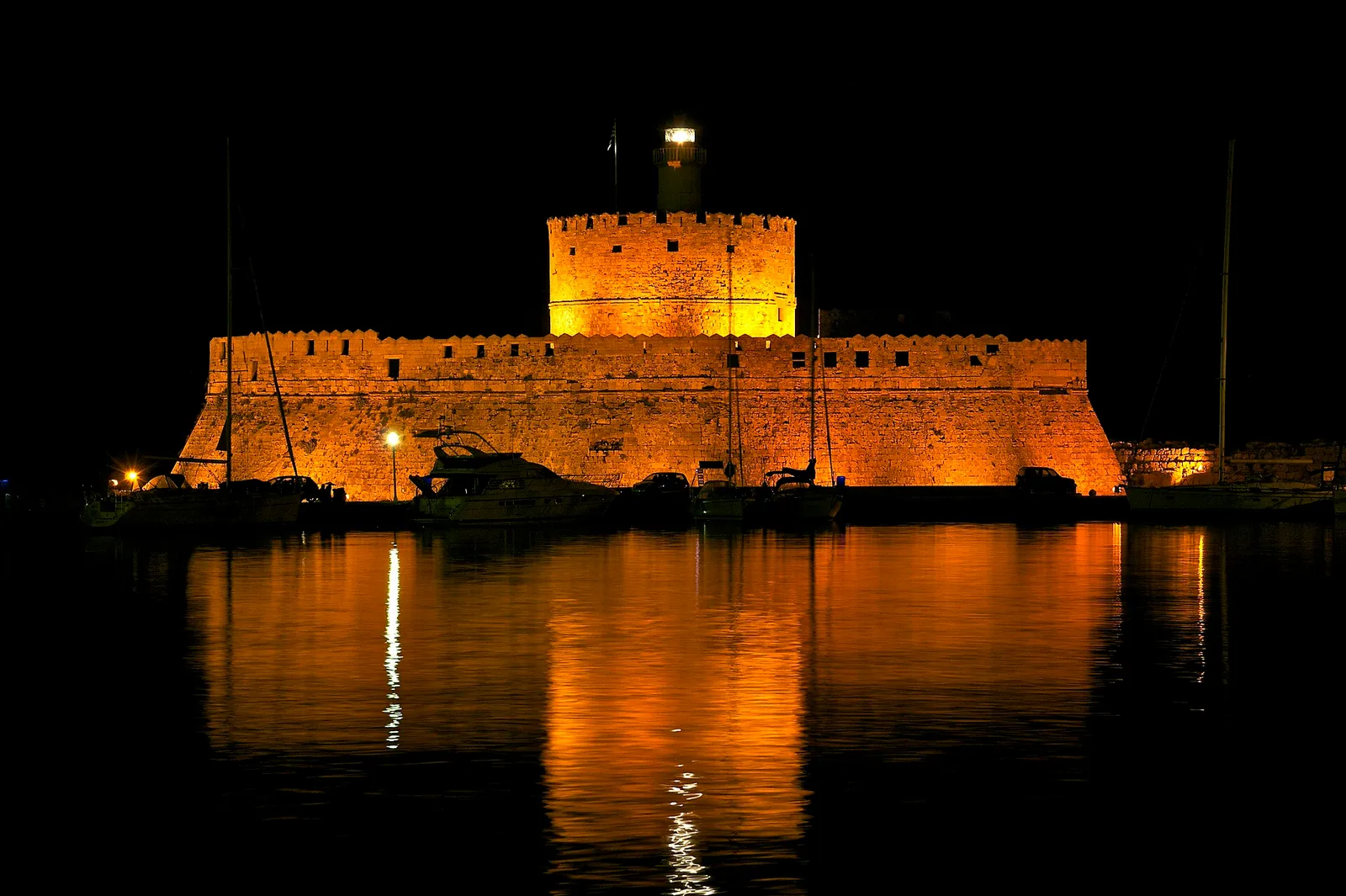
Go back after dark. The day visitors leave, the lanes empty, and the town becomes something else entirely. That single hour is the argument for sleeping inside the walls.
Lindos
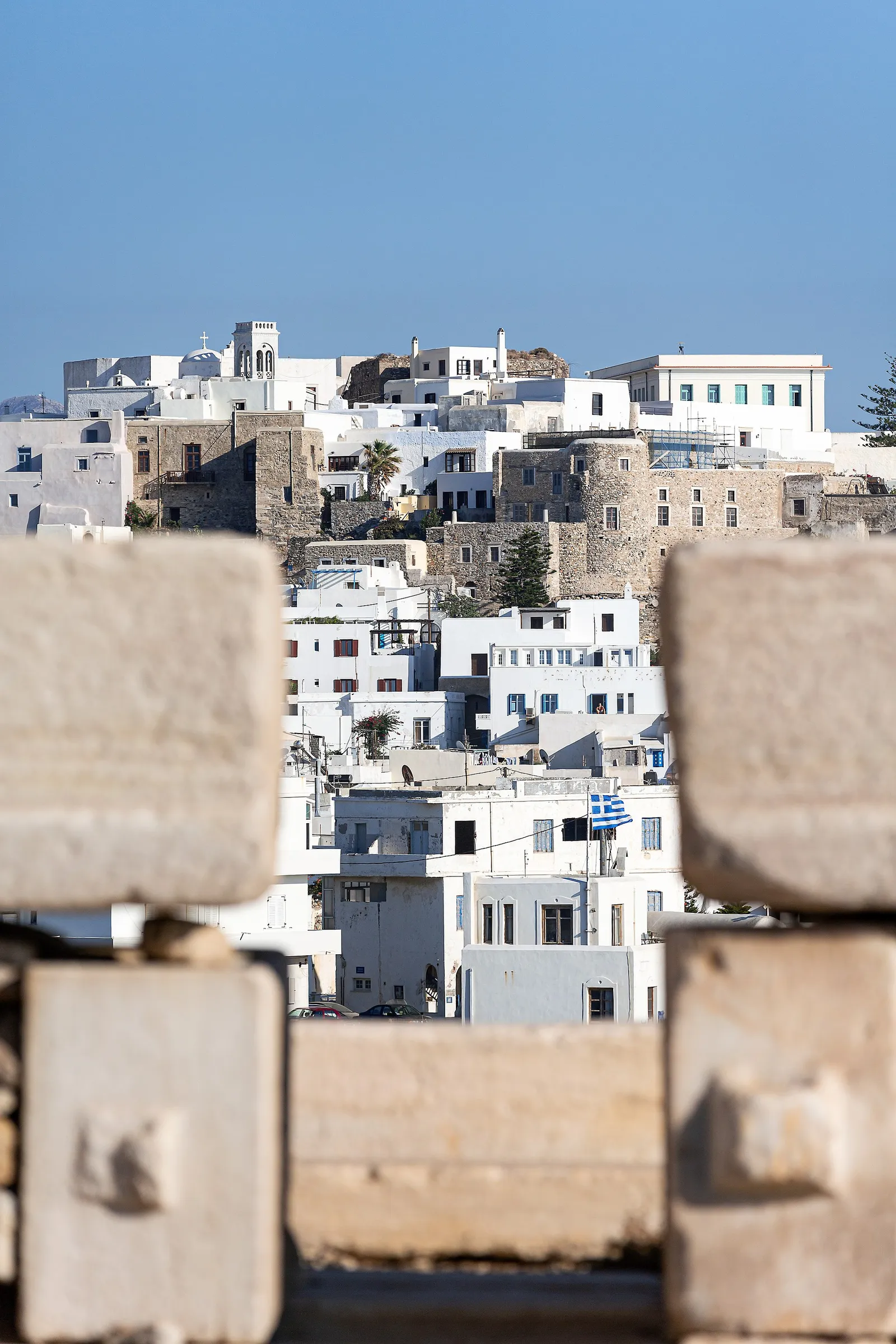
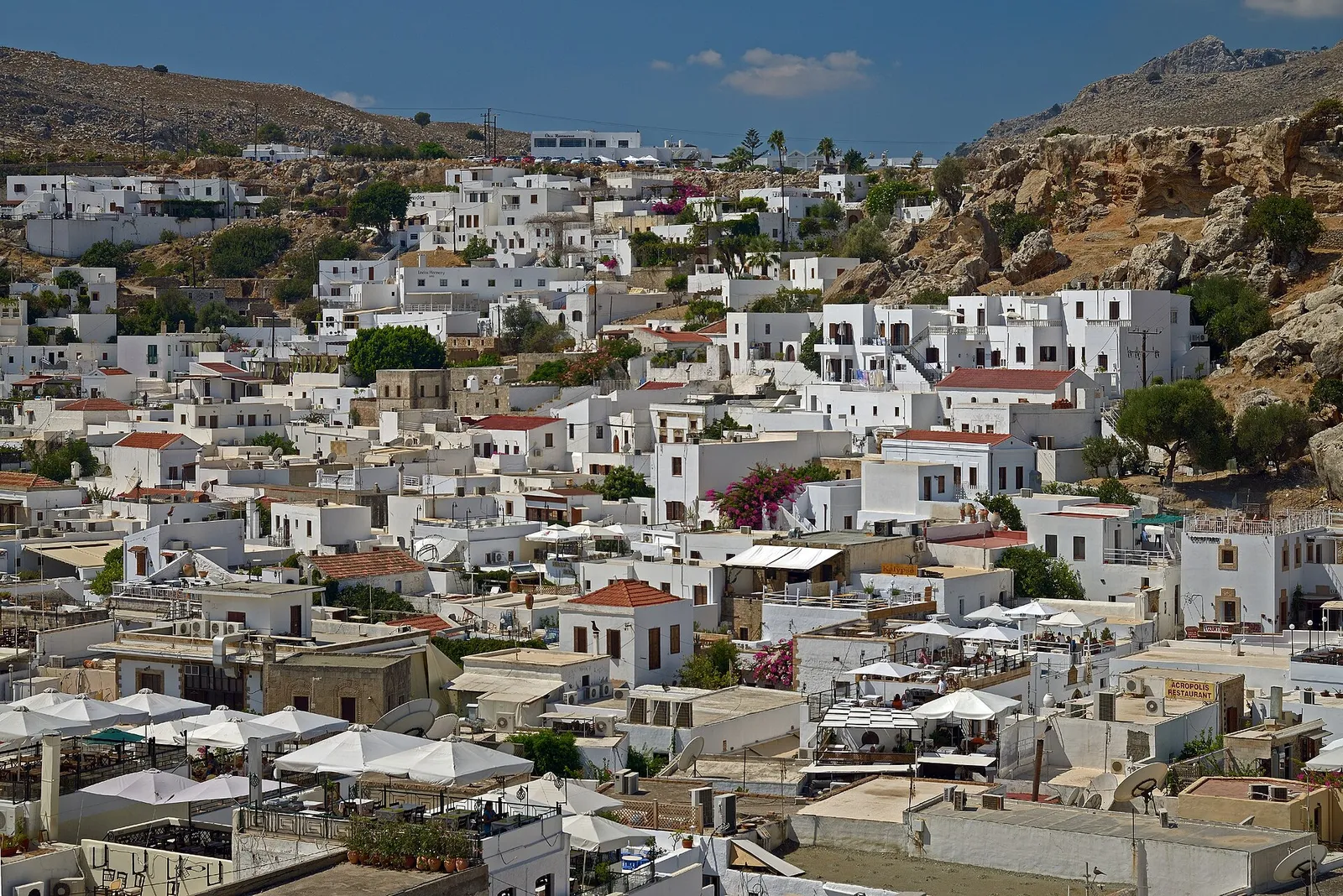
Forty five minutes down the east coast, Lindos is the island’s other set-piece: a village of white flat-roofed houses spilling down a hillside, with an acropolis on the rock above it holding both an ancient temple and a later castle, and two bays at its feet.
Go early. By late morning the lanes are full and the climb is hot.
The walk up is steep and unshaded, and the donkeys offered at the bottom are best declined.
The village itself rewards a wander once the tour groups thin in the late afternoon, and the courtyards with pebble mosaic floors are the detail to look for.
The two coasts
The east coast is the sheltered one: sandy beaches, the main resorts, the road to Lindos, and the calm swimming. This is where most visitors stay.
The west coast faces the prevailing wind, has pebble beaches and surf, and is the windsurfing side of the island. It is also where the airport is.
The far south, beyond the resorts, is empty in a way the rest of the island is not, with long beaches and a lighthouse at the point where the two coasts meet.
The interior holds mountain villages, a valley famous for its butterflies in high summer, and an abandoned Italian-era hill town that is one of the strangest places on the island.
Practical notes
Getting there. Rhodes has a large international airport with direct flights across Europe through the season, plus ferries to the other Dodecanese islands and to the mainland, which is why it works as a start or end point rather than a middle stop.
The season is long. Warm sea into October is normal here, which makes Rhodes one of the better autumn options in Greece.
Distances are real. The drive from the town to the southern tip takes a couple of hours, so plan days by region rather than trying to combine ends of the island.
Shade and water matter at Lindos and on the acropolis, where there is neither.
Where it fits in a Greek trip
Rhodes is far enough southeast that it usually anchors its own trip rather than joining a Cycladic hop.
For the wider decision of which part of Greece to fly into at all, our guide to choosing a Greek island sets out how the Dodecanese differ from the Cyclades and the Ionian in feel, season and cost.
Rhodes is also the easiest place in the Dodecanese to reach another island from, and the obvious one is its flat, cycling-friendly neighbour: our guide to Kos covers the Asklepion, the beaches and the split between its quiet side and its resort strip.
And for a Cycladic contrast on a similar scale, our guide to Naxos covers the big, green, sandy island that Rhodes visitors most often move on to.
The short version
Give Rhodes five nights or more and consider splitting them between the old town and the coast, because the walled city after dark is the thing you will remember and the beach is why you came. See Lindos before mid-morning and go back to the old town after eight in the evening, since both are transformed by the hour. Hire a car for part of the stay to reach the south and the interior. And if you are choosing a month, look hard at September and October here, when the sea is still warm and the island has quietened down.