If you have already done western Crete, or if you are flying into Heraklion and want to stay east of it, this is the other half of the island. It is a different trip: less gorge hiking, far more archaeology, a mountain plateau ringed with windmills, and an island in a bay whose story is one of the strangest in modern Greece.
Five days and a car covers it comfortably. Read the Crete guide for the island as a whole, and where to stay in Crete before choosing your base.
Itinerary at a glance
| Day | Area | Signature experience |
|---|---|---|
| 1 | Heraklion and Knossos | The palace, then the museum that explains it |
| 2 | The Lasithi plateau | A high farming bowl ringed by mountains |
| 3 | Elounda and Spinalonga | A fortress island with a twentieth century story |
| 4 | The far east and Vai | Europe’s only native palm forest |
| 5 | The south coast | Beaches, a monastery and the Libyan sea |
Day 1: Knossos, and the museum that makes sense of it
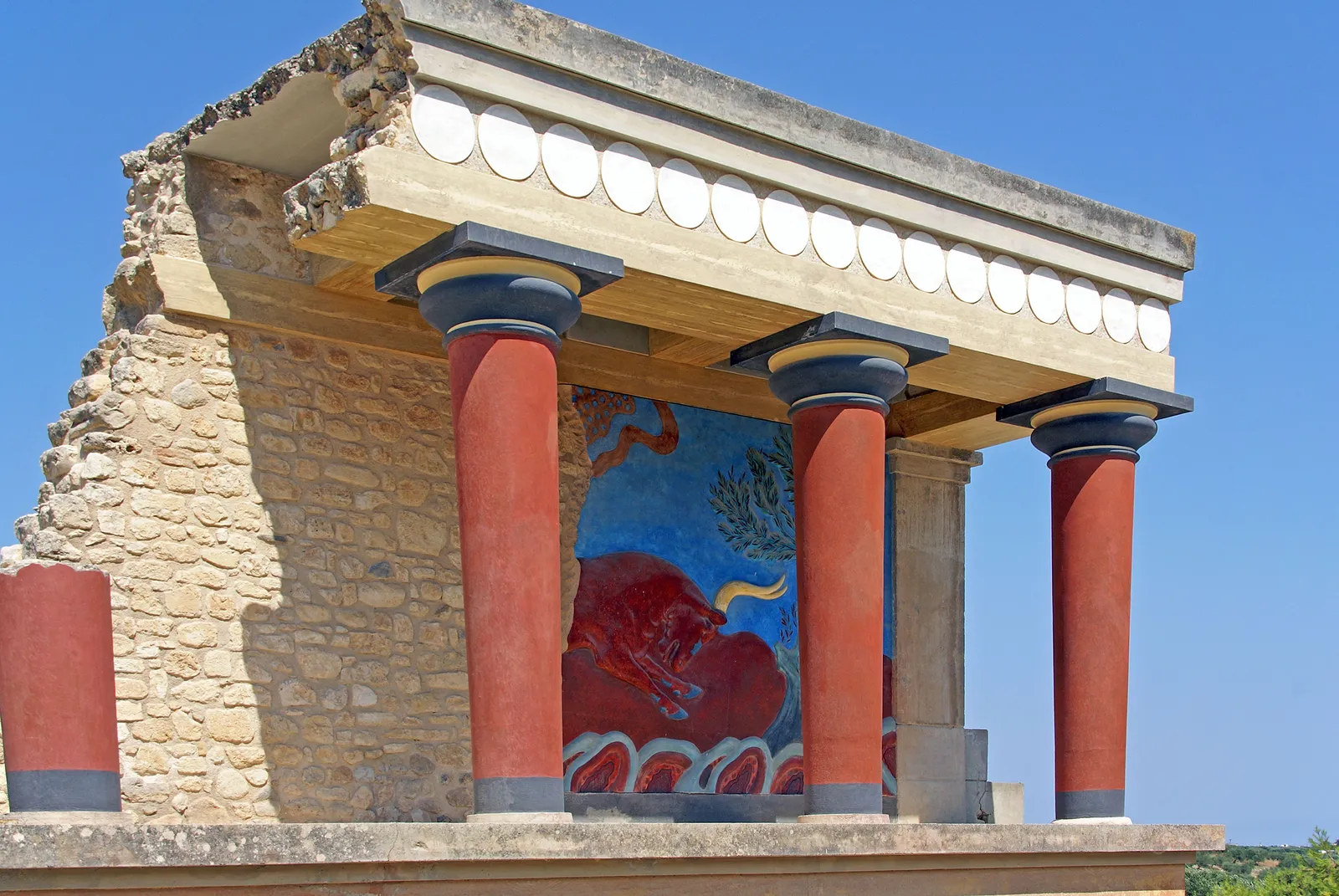
Knossos is the largest Bronze Age site on Crete and the centre of Minoan Europe, a palace complex of storerooms, staircases and frescoed halls that was already ancient when classical Greece began.
Go early. It is uncovered, it is the busiest site on the island, and by midday in summer it is both hot and full. The site is partly reconstructed in concrete and paint by its early excavator, a choice that remains genuinely controversial among archaeologists, and knowing that before you arrive changes how you read it.
Then, and this is the part people skip, go to the Heraklion Archaeological Museum in town. The originals of almost everything are there, including the frescoes whose copies you just saw on the walls at the site. Seeing the palace and then the objects in that order is what makes the day land. See the Knossos guide.
Wow moment of the day: the storerooms, rows of clay jars taller than a person, still standing in the rooms they were made for.
Day 2: The Lasithi plateau
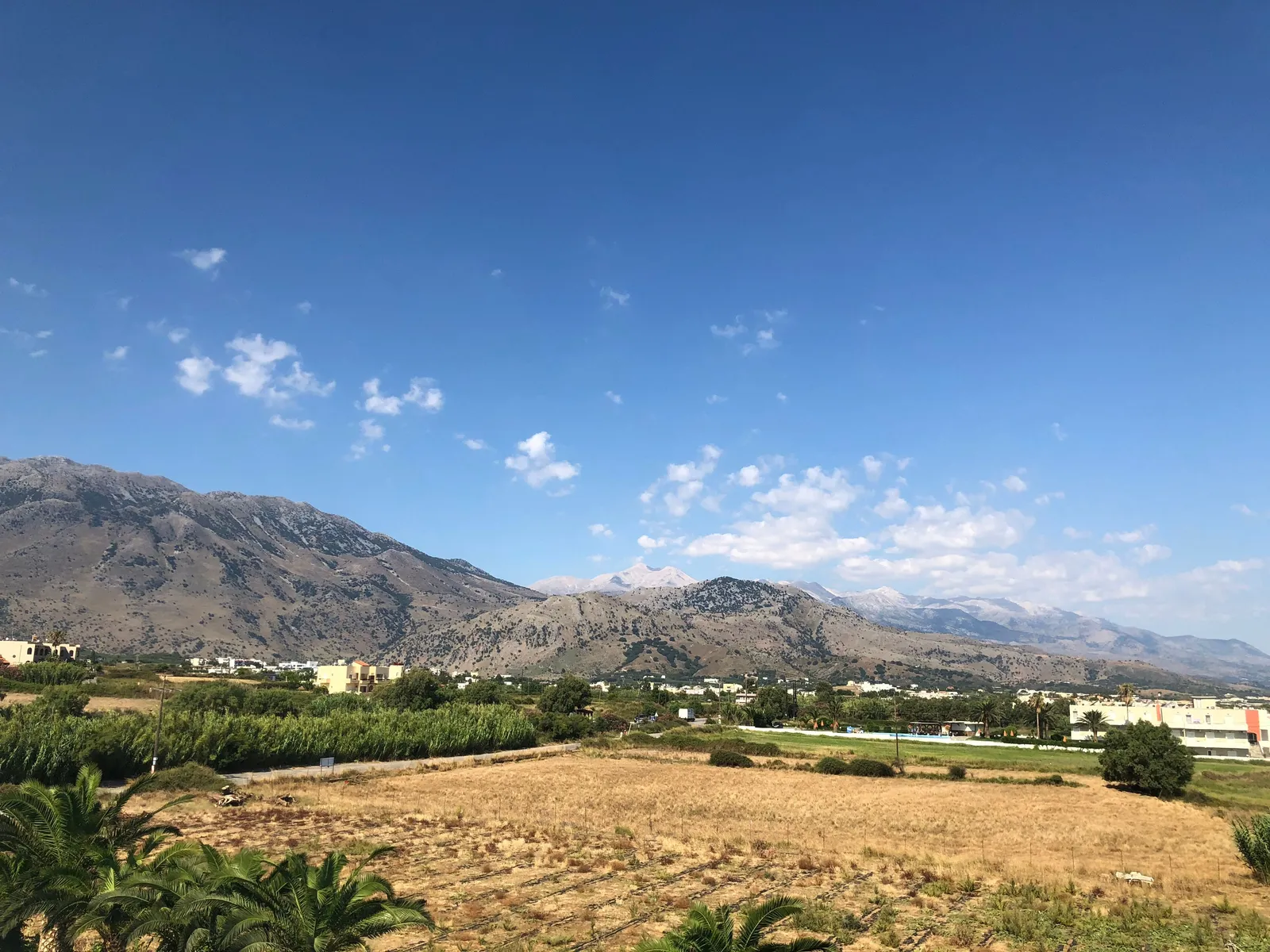
Climb inland to a flat fertile bowl at around eight hundred metres, entirely encircled by mountains, farmed continuously for thousands of years. The road up switchbacks through villages and the temperature drops noticeably as you go.
The plateau was once covered in thousands of white canvas sailed windmills that pumped irrigation water. Honest note: most are gone or are now rusted skeletons, replaced by diesel and electric pumps, and the postcard image of a plateau full of turning white sails is a historical one rather than what you will see. The frames are still there in numbers, and they are still remarkable.
At the eastern edge, the Diktean cave at Psychro is where myth says Zeus was born and hidden from his father. It is a real cave with a stiff walk up to the mouth and a stepped descent inside, so proper shoes matter.
Eat in a village on the plateau, where the food is mountain food: beans, greens, cheese and lamb.
Day 3: Elounda and Spinalonga
Elounda sits on a sheltered bay and is the luxury end of Crete, which is worth knowing before you look at menu prices. Just offshore is Spinalonga.
The island is a Venetian sea fortress, and from 1903 until 1957 it was Greece’s leper colony, one of the last in Europe. Boats run over from Elounda and Plaka in a few minutes. You walk in through a tunnel in the fortress wall, along the main street of what was a functioning town with shops, a church and a cinema, and out the far side.
Wow moment of the day: the ordinariness of it. Shop doorways, house numbers, a laundry. People built a normal town in a place they were sent to and did not expect to leave.
Sunken remains of the ancient city of Olous lie in the shallows near the causeway at Elounda, visible from the water on a calm day.
Day 4: The far east and the palm forest at Vai
The drive east thins out fast. Past Agios Nikolaos and Sitia the landscape turns dry and empty, and the road runs along cliffs above an intensely blue sea.
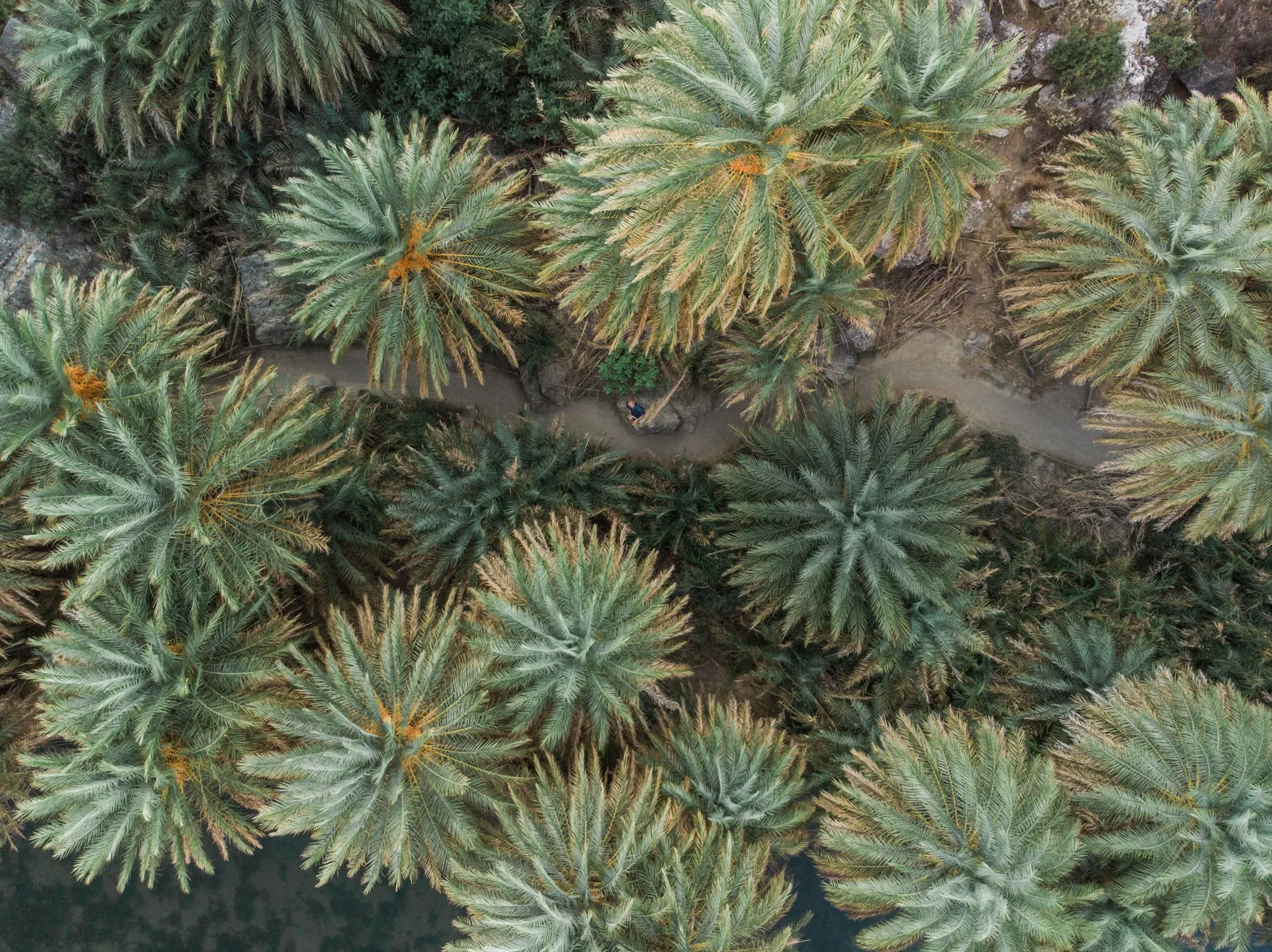
Vai is the reward: a beach backed by thousands of Cretan date palms, the largest native palm forest in Europe, and not a planted resort landscape but a genuinely wild stand that has been there for millennia. Honest note: it is protected, so the grove itself is fenced and you view it from the paths rather than walking through it, and it gets busy in season. Arrive early.
Nearby, the Minoan town of Palekastro and the monastery at Toplou, a fortified building that looks more like a small castle than a church, fill the rest of the day. Toplou also produces its own olive oil and wine.
Day 5: Over to the south coast
Cross the spine of the island to the Libyan sea, which feels a long way from the resort coast in the north.
Ierapetra is the southernmost town in Europe and an unpretentious working place. West of it, Myrtos is a quiet village of white houses that has kept its character. Further along, Matala has the famous cliff of caves, cut as Roman era tombs and later occupied by a well documented community of travellers in the nineteen sixties.
Honest note on the south: it is hotter and drier than the north, and the beaches are more exposed. On a windy day the sea here is not swimmable while the north coast is calm, and the reverse is also true, which is the practical advantage of an island with two coasts.
What this trip deliberately leaves out
Two things people expect to fit and cannot. Santorini is visible from Crete’s north coast on a clear day and there are seasonal fast boats, but it is a long crossing in each direction and it turns a five day island trip into two rushed half days. The Samaria gorge is at the opposite end of the island, four hours away, and belongs to the western itinerary rather than this one. If both matter to you, give Crete eight days and split it in the middle, or accept that this is the archaeology and coastline half.
Practical tips
- You need a car. The plateau, the far east and the south coast are not practical by bus. See car rental in Greece.
- Basing yourself: Heraklion is central for Knossos, Agios Nikolaos or Elounda is better for days three and five. See where to stay in Crete.
- When to go: May, June, September and October. The far east and the south are seriously hot in July and August. See the best time to visit Greece.
- Distances: Crete’s roads are good on the north coast and slow everywhere else. Assume mountain routes take longer than the map suggests.
- Food: see the Greek food guide, and expect the raki at the end of the meal here too.
- Insurance: if you plan to drive mountain roads or walk to remote coves, check your cover. See travel insurance for Greece.