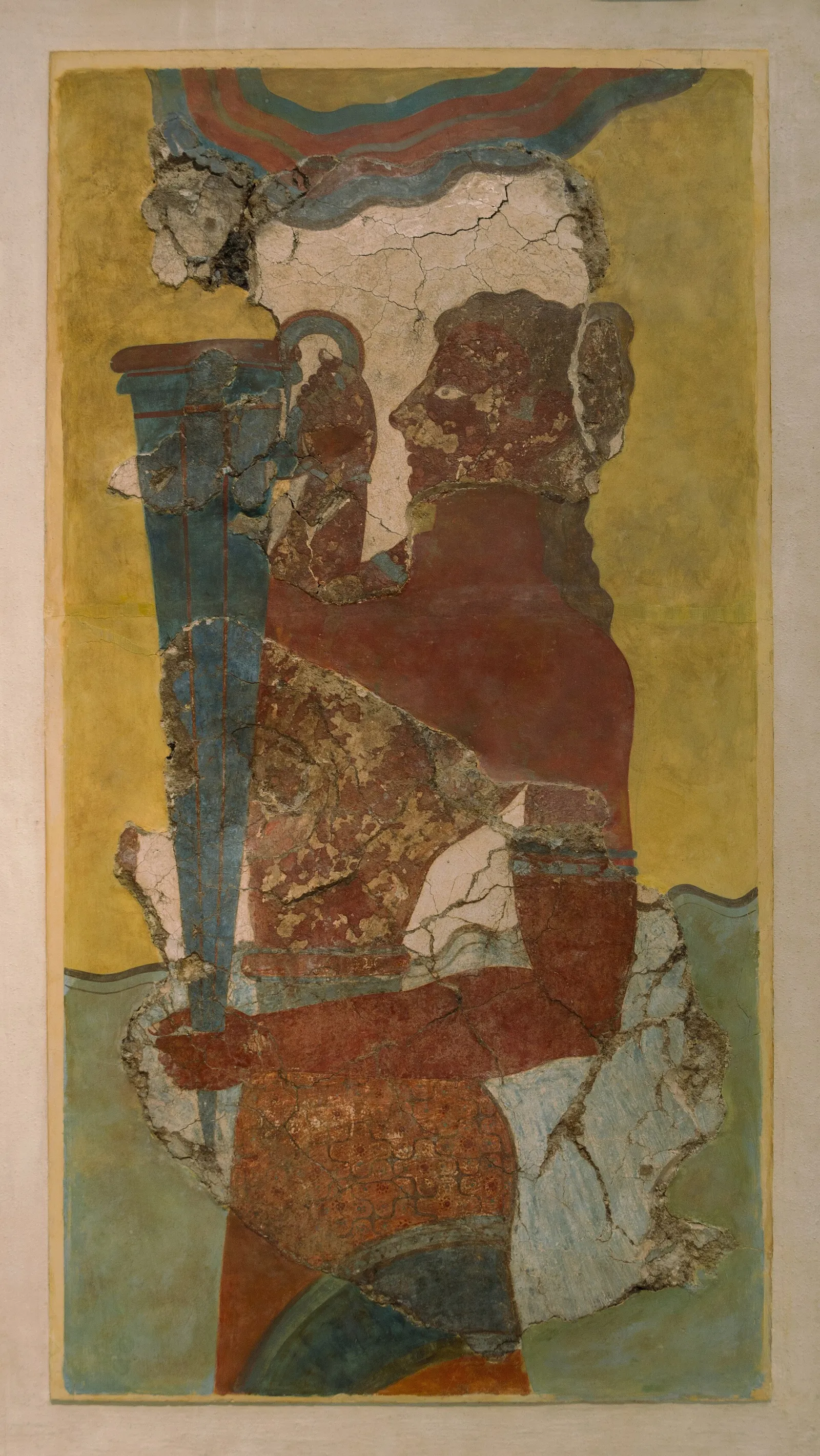
Knossos is the oldest city in Europe and the centre of the Minoan civilisation, which was building multi-storey palaces with drainage and running water while most of the continent was doing nothing of the kind. It is also the most argued-about archaeological site in Greece, because a large part of what you walk through was reconstructed in concrete in the early twentieth century by the man who excavated it. Both of those facts are worth knowing before you arrive, because together they explain why some visitors leave transfixed and others leave confused.
What the site is
A palace complex covering a large area on a low hill just outside Heraklion, occupied and rebuilt over centuries in the Bronze Age.
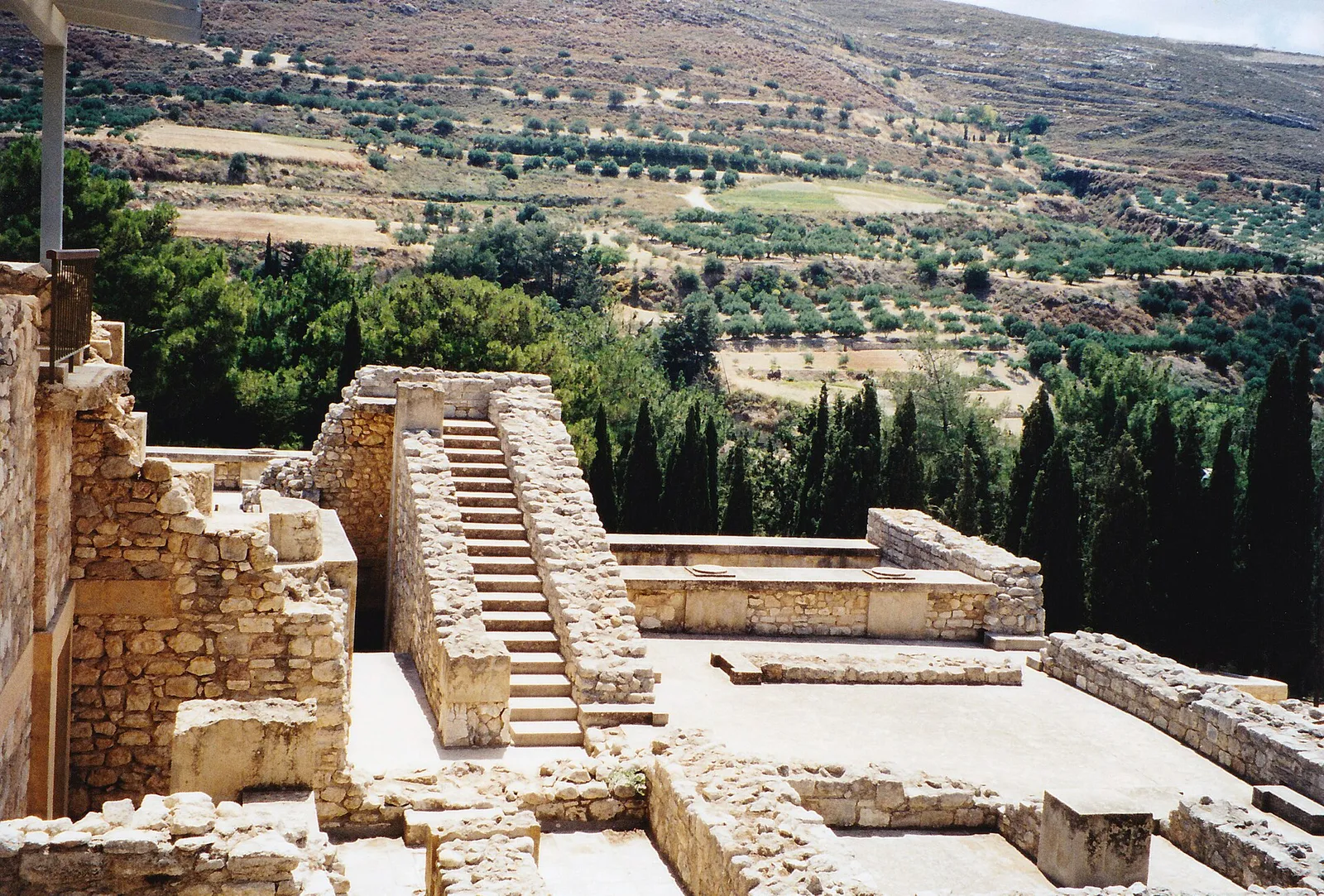
Sophisticated beyond expectation. Multiple storeys, light wells, storerooms with enormous jars still in place, a drainage system, and workshops.
The origin of the labyrinth story. The myth of the minotaur attaches to this building, and the sheer complexity of the plan makes it obvious why.
Destroyed and rebuilt repeatedly, then abandoned, which is why the layers on the ground are so hard to read without help.
The reconstruction question
This is the thing that divides visitors and it is worth understanding rather than being surprised by.
Large parts were rebuilt in concrete and painted, with columns, upper floors and copies of the frescoes put back in place by the excavator.
The case for it is that it makes an otherwise unreadable site comprehensible and preserved fragile remains from collapse.
The case against it is that it fixed one interpretation, in materials that are unmistakably modern, over a site that could have supported others.
Either way, know what you are looking at. The red columns and the bright frescoes are a hundred-year-old reading of the evidence, not the thing itself, and the site is far more interesting once you can tell the two apart.
Visiting well
Go at opening. The site is inland, unshaded and hot, and it takes both independent visitors and coach groups. The first hour is a different place from the middle of the day.
Take narration of some kind, whether a guide at the entrance, an official audio guide or a good app. Without it the site is low walls.
Allow two hours on the site itself.
Water, hat and real shoes. The surfaces are uneven and there is nowhere to hide from the sun.
Combined tickets with the Heraklion museum have been offered and the arrangements change, so ask at the ticket desk rather than assuming.
What to look for
The storerooms, lined with the huge jars that held oil and grain, which is where the scale of the palace economy becomes obvious.
The throne room, small, with a stone seat and painted griffins, and the most atmospheric space on the site.
The light wells, which are the clever engineering: open shafts bringing daylight and air into the middle of a deep multi-storey building.
The drainage, still visible, and genuinely ahead of anything else in Europe for a very long time afterwards.
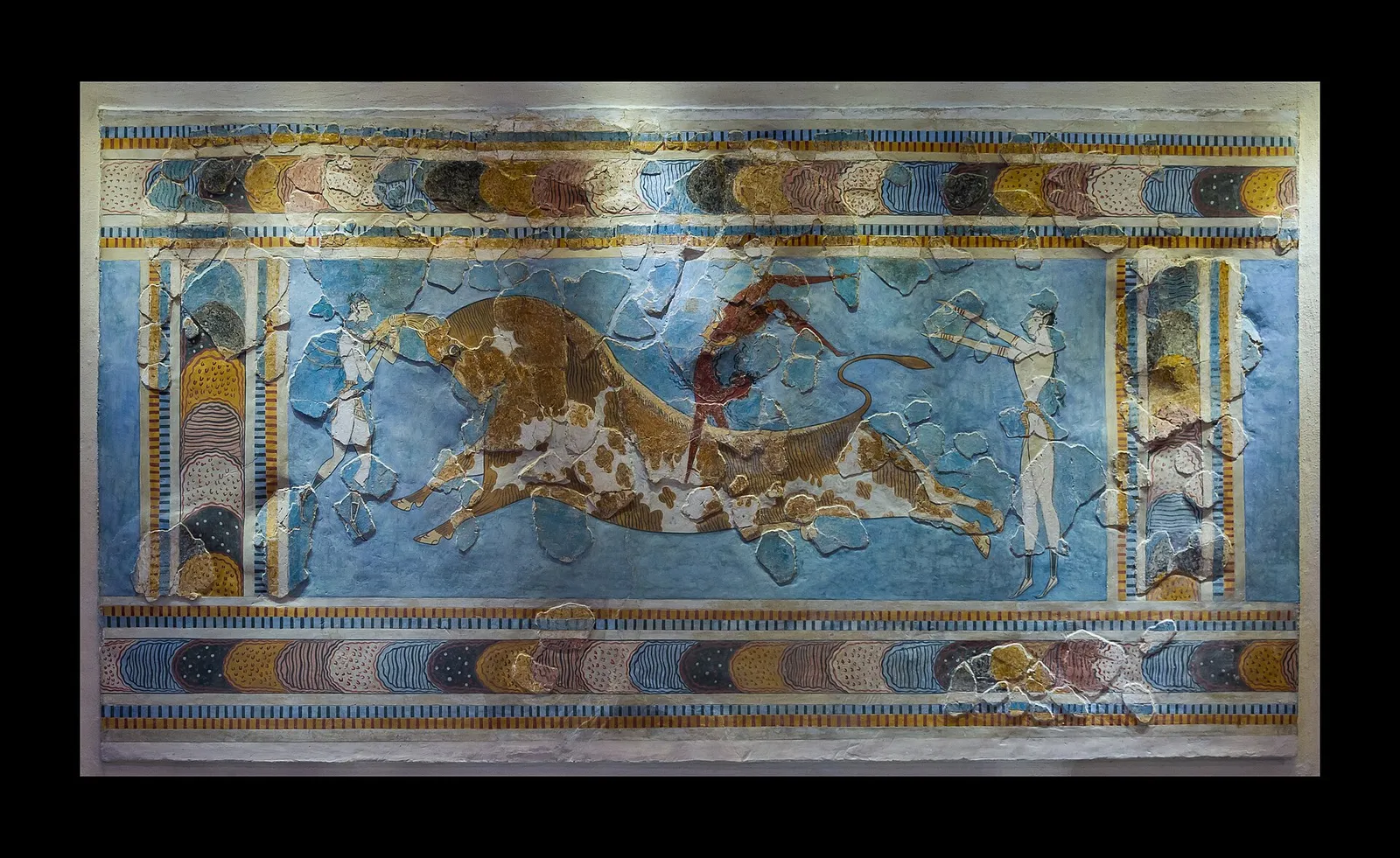
The bull imagery everywhere, which connects the architecture to the myth and to the frescoes waiting in the museum.
Where this fits on Crete
Knossos sits just outside Heraklion in the middle of the north coast, which makes it an easy first or last day on the island.
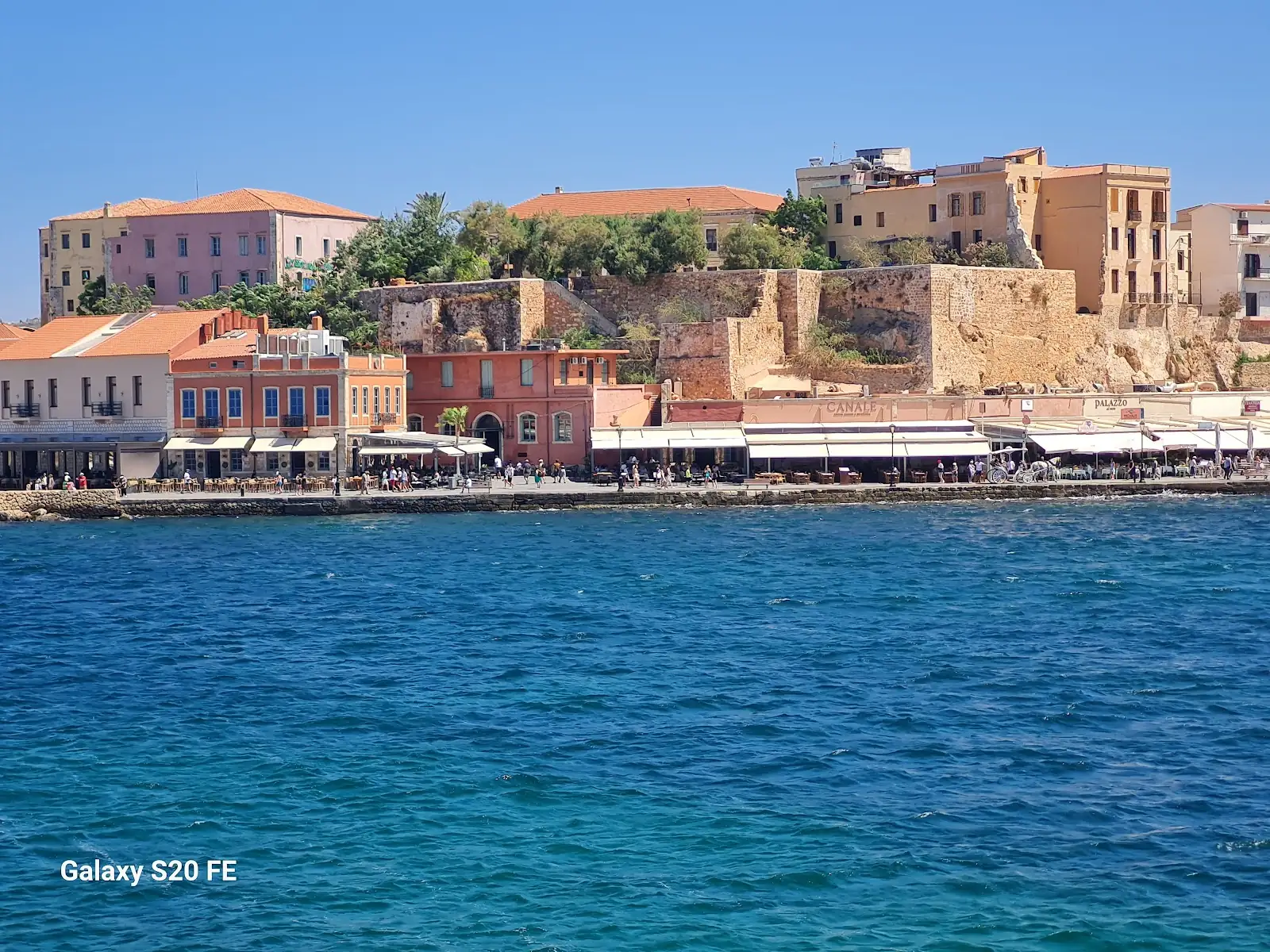
For the island around it, from the gorges and the western beaches to how to split a Crete trip so you are not driving for hours every morning, our guide to Crete covers the whole thing.
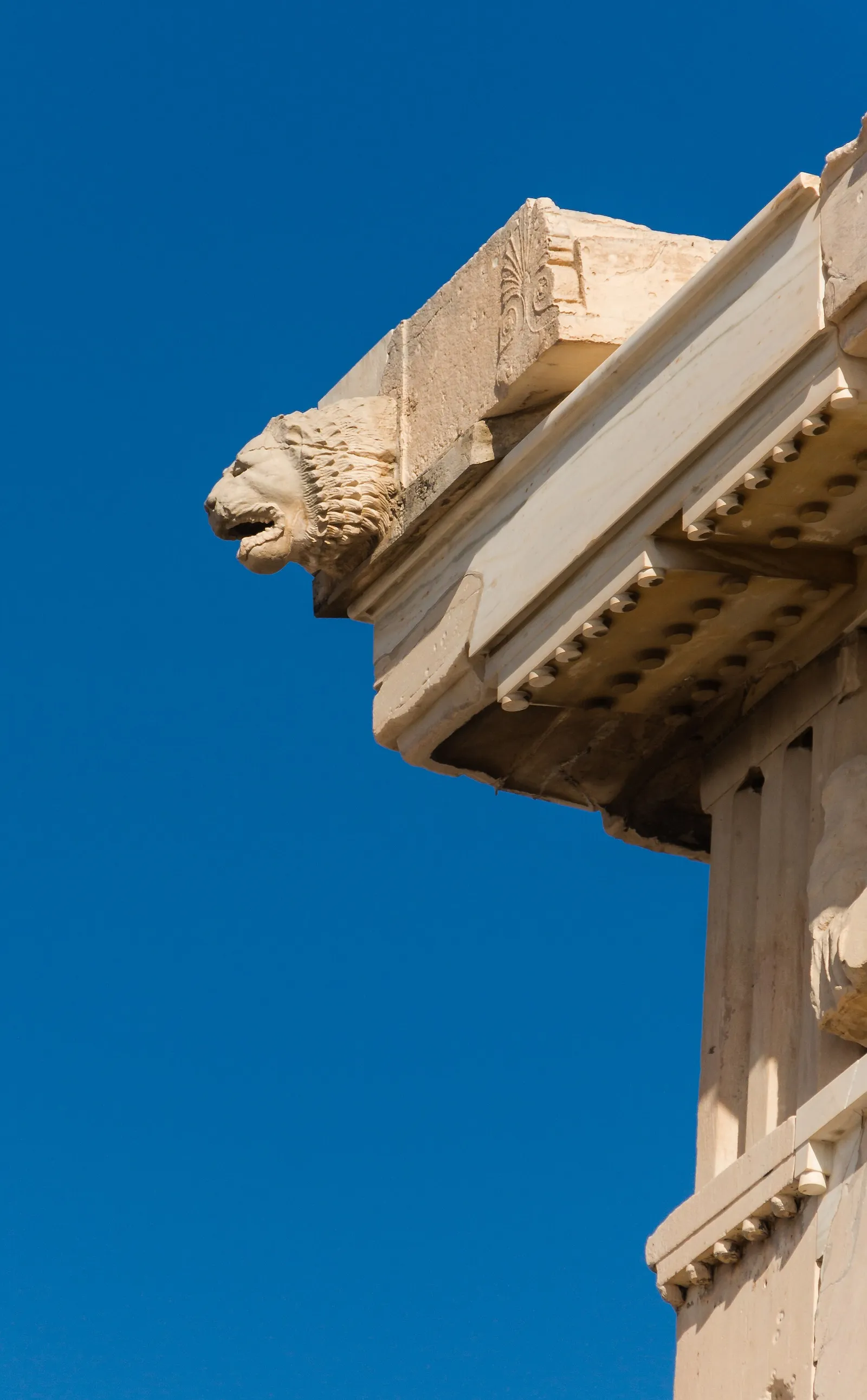
For the equivalent site on the mainland and the one visit no first-time trip to Greece skips, our guide to the Acropolis in Athens covers the timing and the ticket.
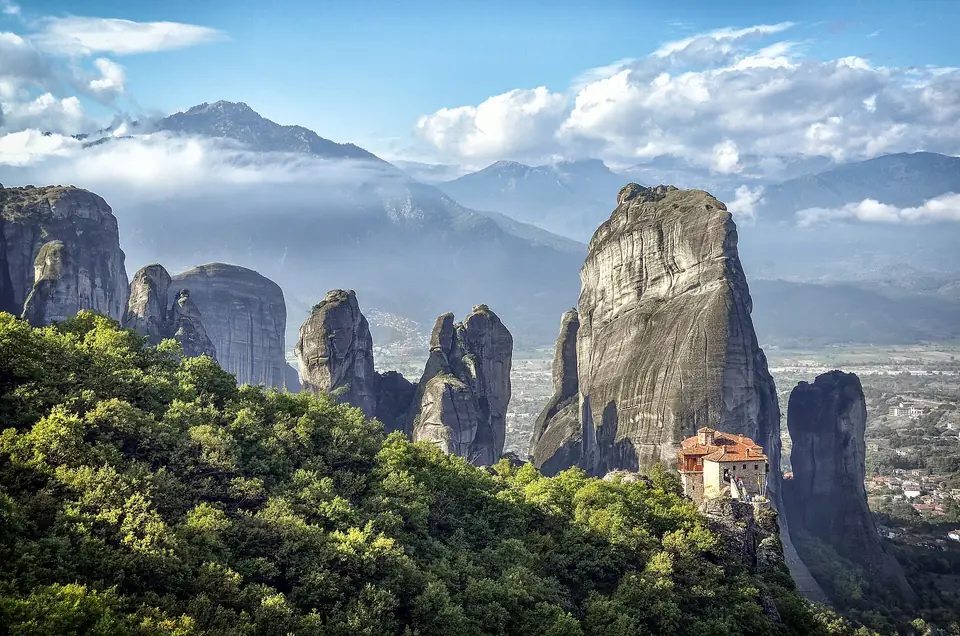
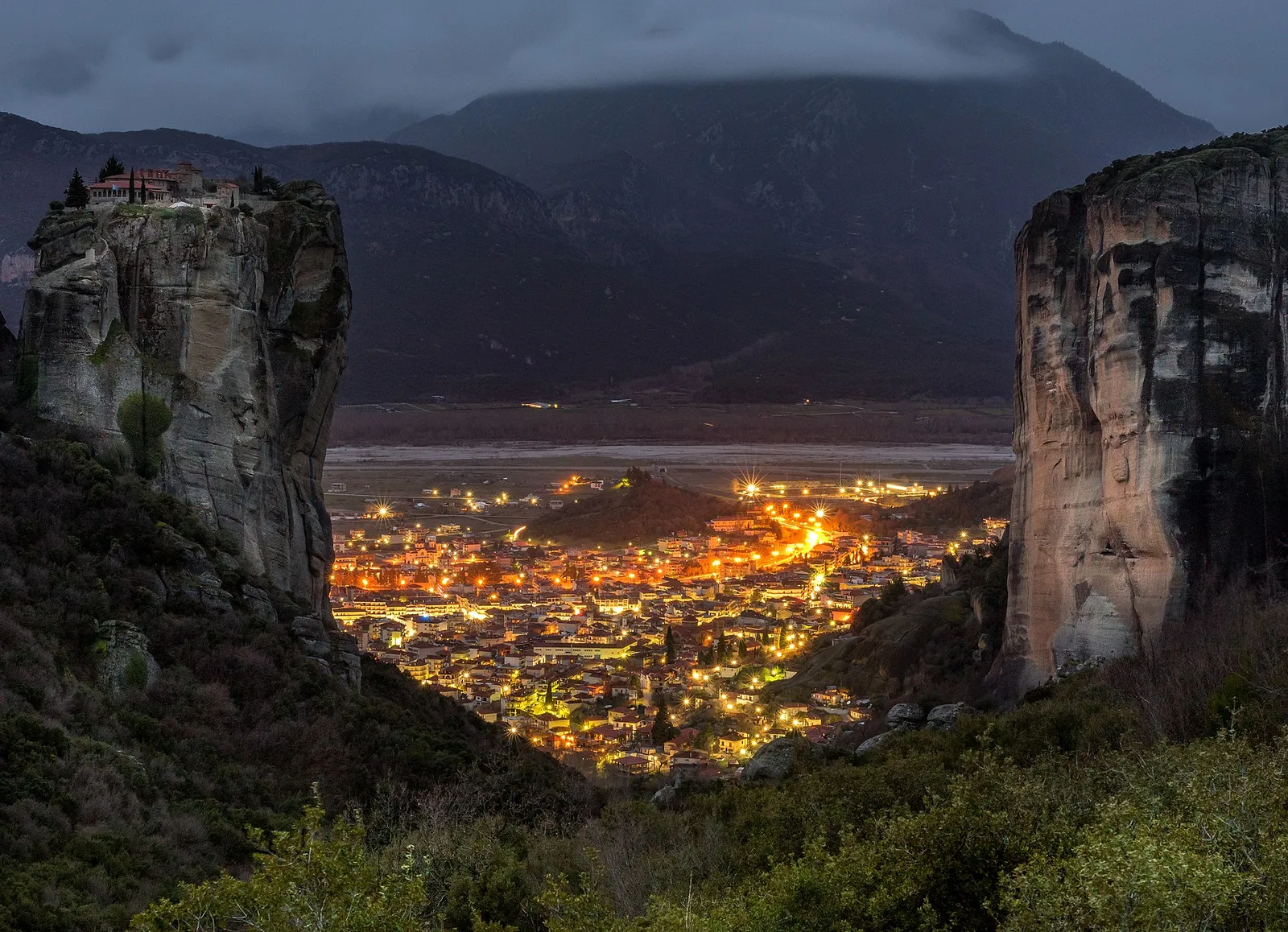
And for the mainland’s most extraordinary sight, from an era three thousand years later, our guide to the Meteora monasteries covers the rocks and the monasteries on top of them.
The short version
Treat Knossos and the archaeological museum in Heraklion as a single day in two halves, with the site in the cool of the early morning and the museum in the afternoon heat. Take a guide, an audio guide or a good app, because the site explains almost nothing about itself. Understand before you arrive that the red columns and bright frescoes are a reconstruction, which makes them interesting rather than disappointing. Allow two hours on the hill, bring water and a hat, and go at opening rather than at eleven.