Most first Greek holidays never leave the ferry network: an island or two, a handful of ports, and home. That is a genuinely good trip, but it skips half the country. West and south of Athens, reached entirely by road, sits the Peloponnese, a large peninsula thick with sites that predate the Acropolis by a thousand years or more. At its centre, an easy run from the capital, is Nafplio, a small harbour town that turns out to be an unusually good base for exploring the region without living out of a suitcase every night. If you are still weighing up the basics of a first Greek trip, our first time in Greece guide covers that groundwork; this one is about a single detour worth making, trading a ferry ticket for a hire car.
Why the Peloponnese works differently from the islands
Island hopping in Greece runs on a schedule that is not yours: ferries decide when you move, and a spell of wind can rearrange a week without much warning. The Peloponnese has none of that. There are no crossings to time and no port to queue at before dawn, just an open road and a car. The towns here also keep going without visitors, since the peninsula’s economy was never built on tourism the way a small island port’s often is.
The bigger difference is what the history is doing. On the islands, the past tends to sit in the background, a monastery here, a windmill there. Around Nafplio it is the whole point of the trip: within a short drive you move from a Bronze Age citadel to a Roman era theatre to a Venetian fortress, each one layered on top of what came before it.
Nafplio as a base, not just a stopover
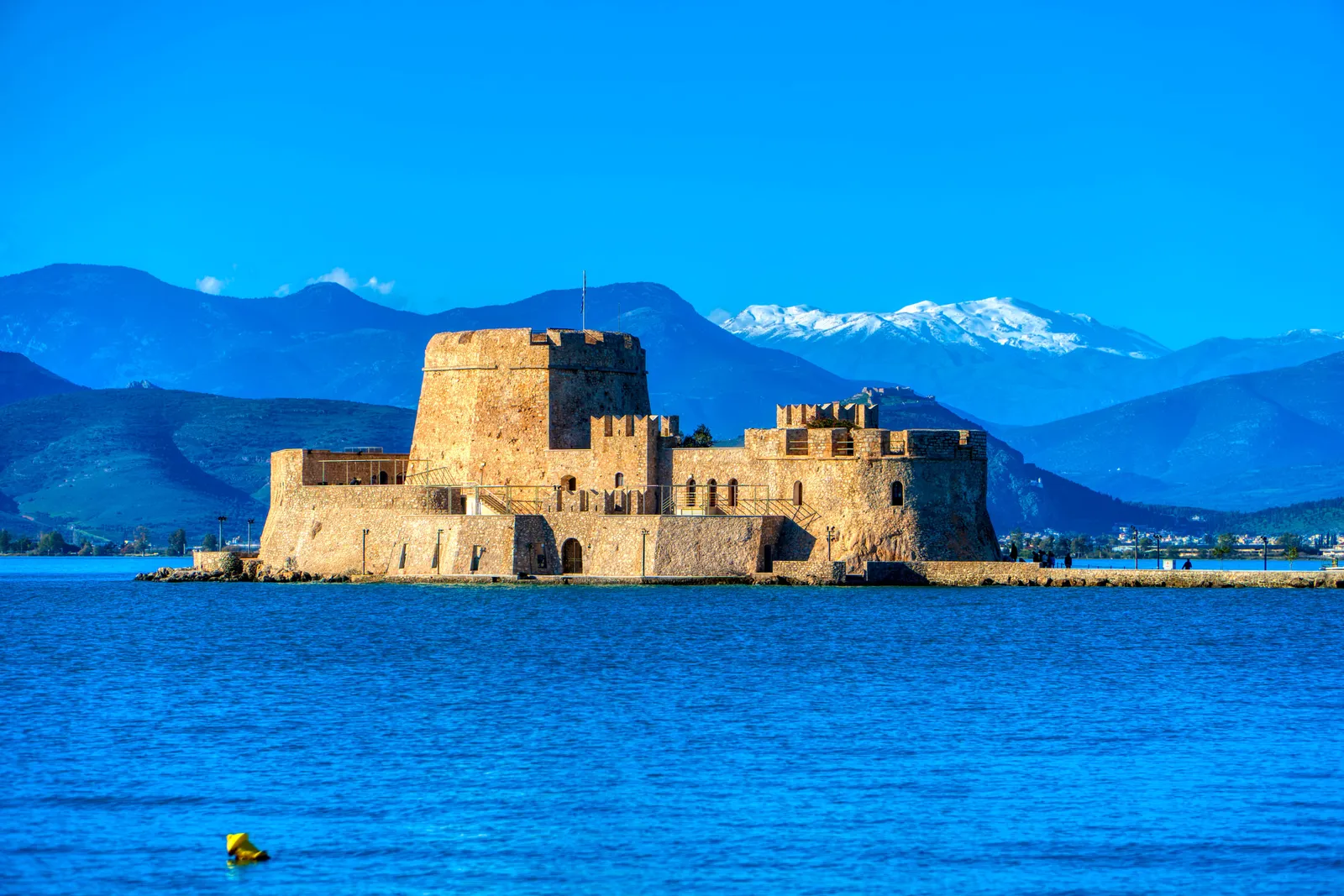
Nafplio itself, its two fortresses, the old quarter of pastel neoclassical houses, and the small fort sitting out in the bay, gets a full write up of its own in our Nafplio guide. What matters for this piece is its position: a compact, walkable town with the gulf on one side and easy road access to the rest of the Argolid on the other, close enough to the region’s headline sites that you can be back at a harbourside table for dinner most evenings.
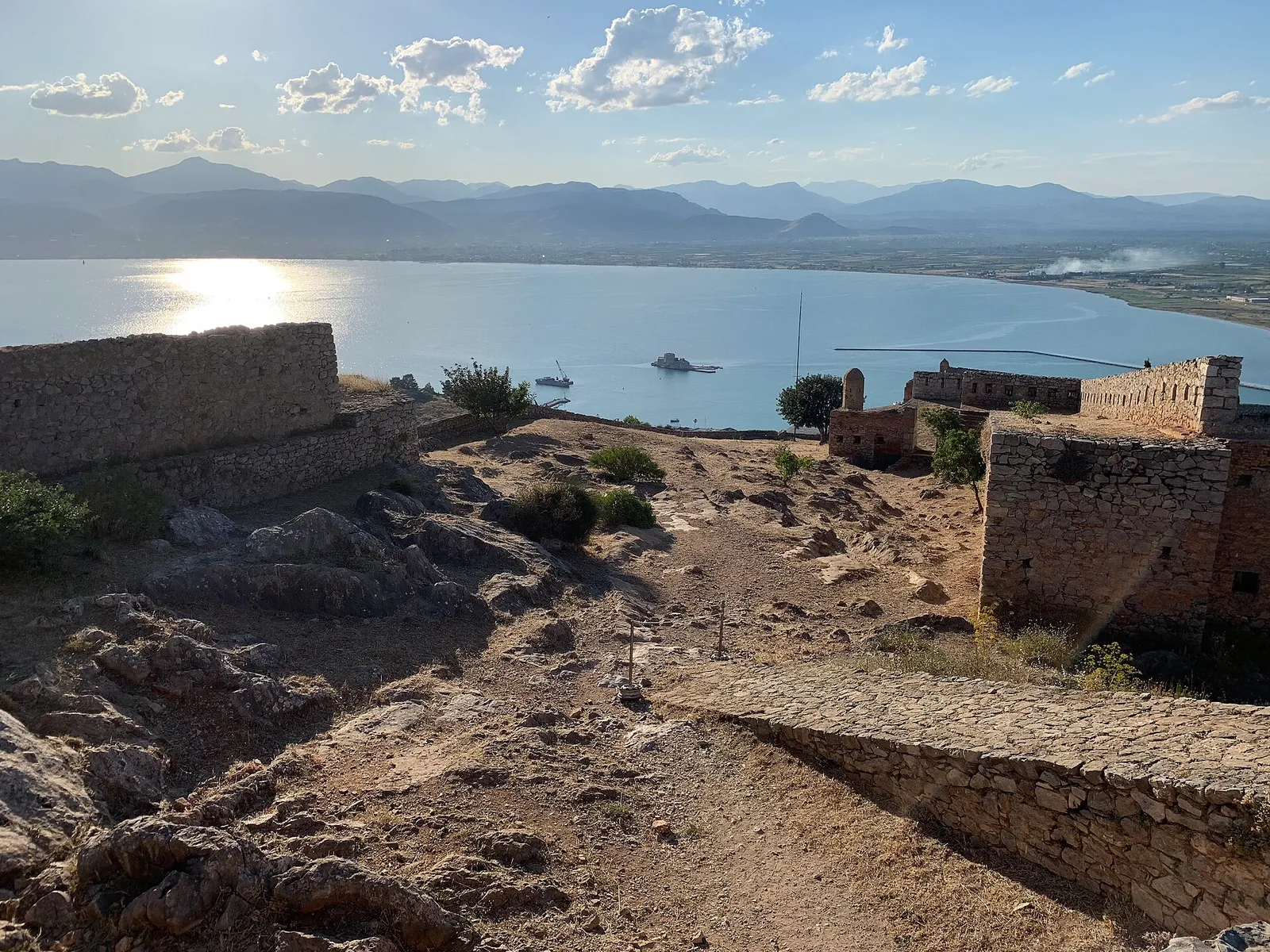
Climb the walls of Palamidi, the Venetian fortress above the town, and the geography of the whole trip lays itself out below you: the gulf, the plain running inland, and the mountains that ring the Argolid on every side. It works as much as an orientation point as it does a viewpoint.
Mycenae: three thousand years back
A short drive inland, roughly half an hour or so from Nafplio, sits Mycenae, the citadel of Homer’s Agamemnon and one of the most important Bronze Age sites in Europe. The Lion Gate, its two carved lionesses still standing guard after more than three thousand years, is the image everyone comes for, but the Cyclopean walls, the beehive tombs cut into the hillside, and the small on site museum are what make the visit worth the climb around the ruins in the heat.
Go early if you can. There is very little shade on the hilltop, and the site is at its best, and least crowded, before the coach groups arrive from Athens.
Epidaurus and the best seat in ancient Greece
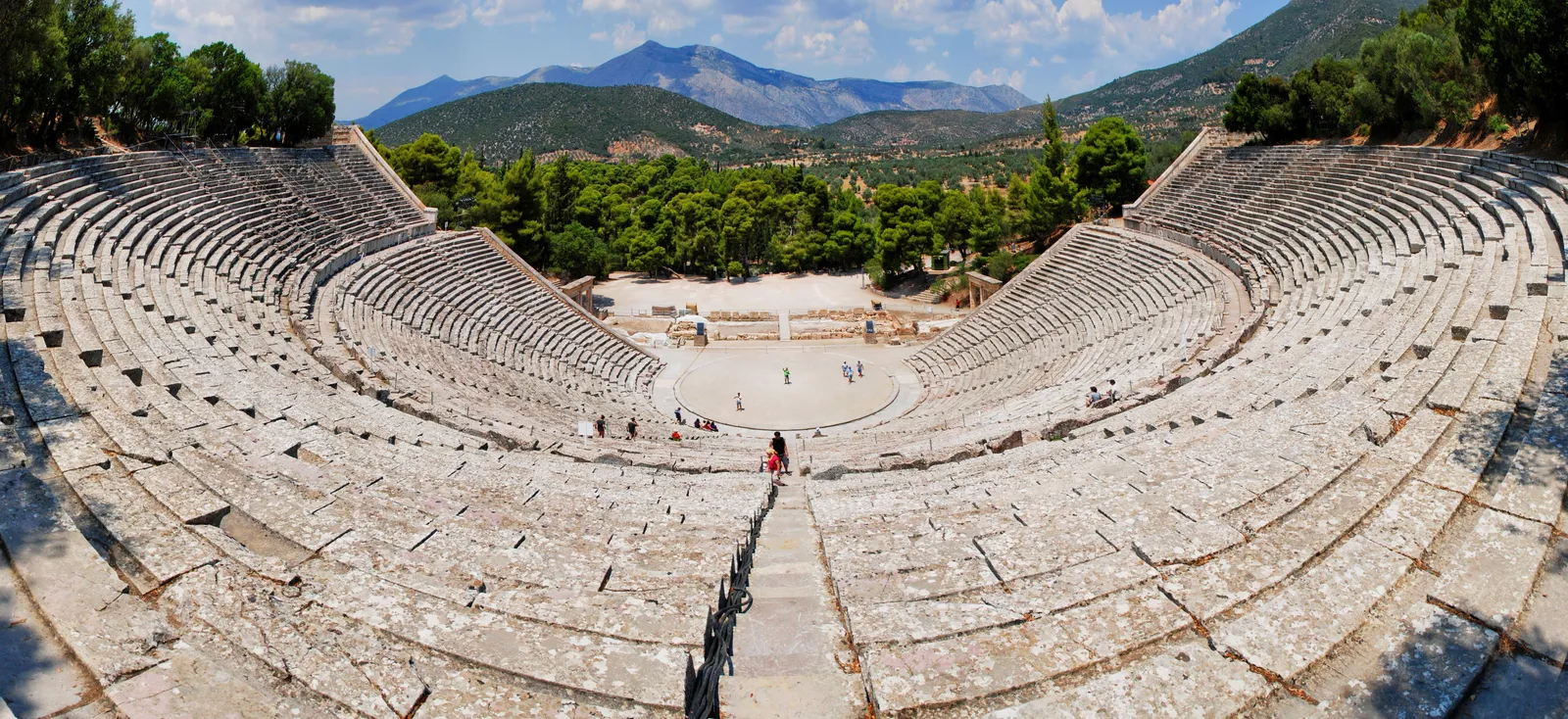
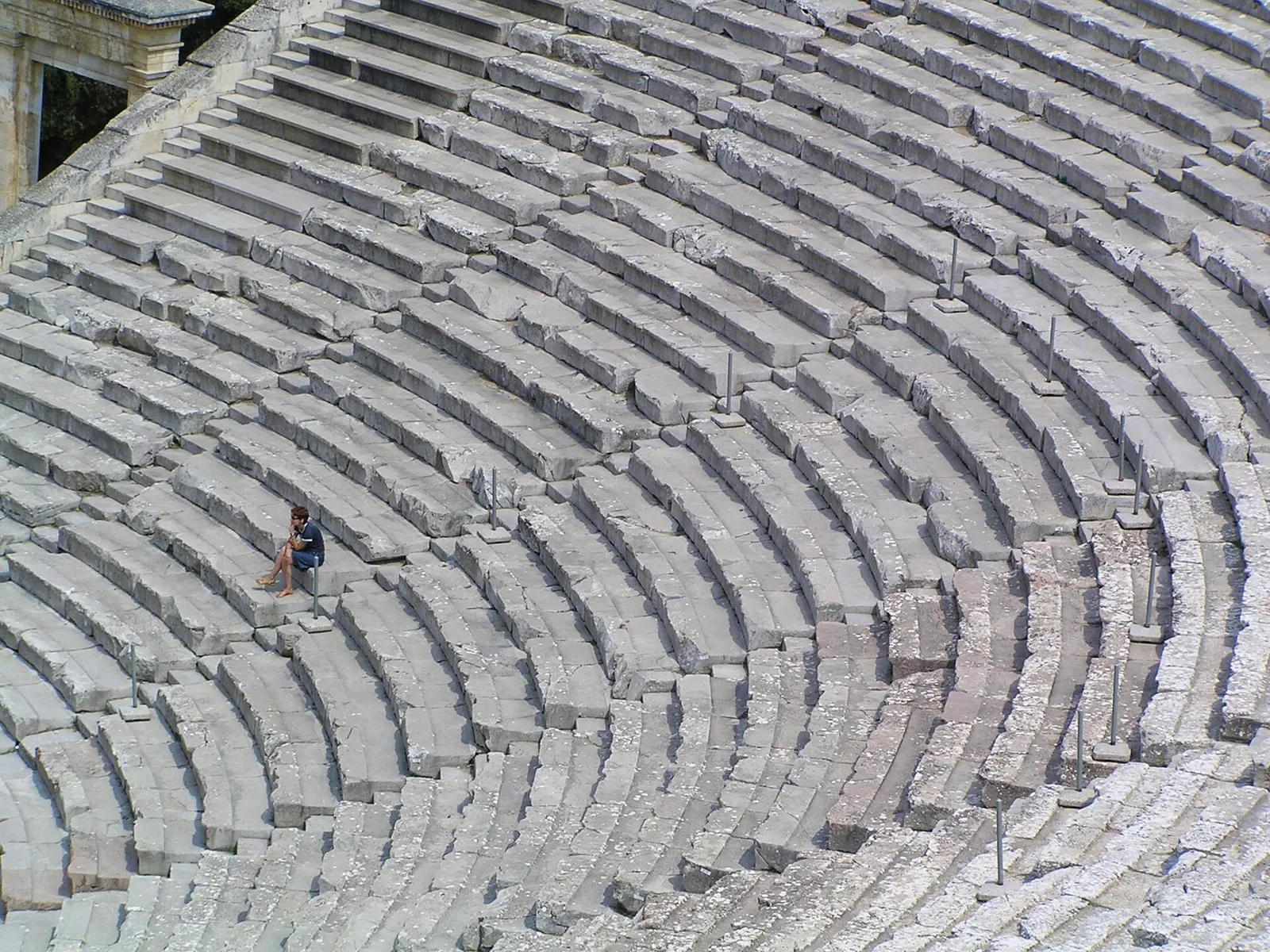
Not far from Mycenae, and easily combined with it in a single day, is the ancient theatre of Epidaurus, one of the best preserved in the Greek world. Built into a natural hillside around the fourth century BC, it once held an audience of thousands, and its acoustics remain the thing people travel here to test for themselves: stand at the centre of the orchestra, have someone drop a coin or strike a match at the very top row, and the sound carries as though they were standing beside you.
The wider sanctuary around the theatre was also an ancient healing centre dedicated to Asclepius, and the ruins of its dormitories, baths and temple are worth the extra half hour if you are not rushing straight back to Nafplio for the evening.
Ancient Corinth, Tiryns and the rest
If you have a second or third day, two more sites fill it well. Ancient Corinth, roughly under an hour from Nafplio, is anchored by the Temple of Apollo and a Roman era agora, and the drive there takes you past the Corinth Canal, a narrow, sheer sided cut through rock that is worth a stop in its own right. Closer to Nafplio, barely ten minutes out, Tiryns is a smaller, far quieter Mycenaean fortress with walls so massive that later Greeks assumed only giants could have built them.
| Site | Roughly how far from Nafplio | Known for |
|---|---|---|
| Tiryns | About 10 minutes | Cyclopean walls, few crowds |
| Mycenae | Around 25 to 30 minutes | The Lion Gate and beehive tombs |
| Epidaurus | Around half an hour | The ancient theatre’s acoustics |
| Ancient Corinth | Under an hour | Temple ruins and the canal nearby |
Treat every time on this list as a rough guide rather than a promise. Roads, roadworks and your own pace all move the number, and a hire car makes it easy to link two or three of these sites in a single, unhurried day.
Planning your days around Nafplio
Three days is a comfortable minimum: one to settle into Nafplio and climb Palamidi, one for Mycenae and Epidaurus together, and one for Ancient Corinth and Tiryns on the way back toward Athens, or in the opposite direction if you are continuing on. Two days works if you keep to the big two, Mycenae and Epidaurus, and simply enjoy Nafplio’s old town in between.
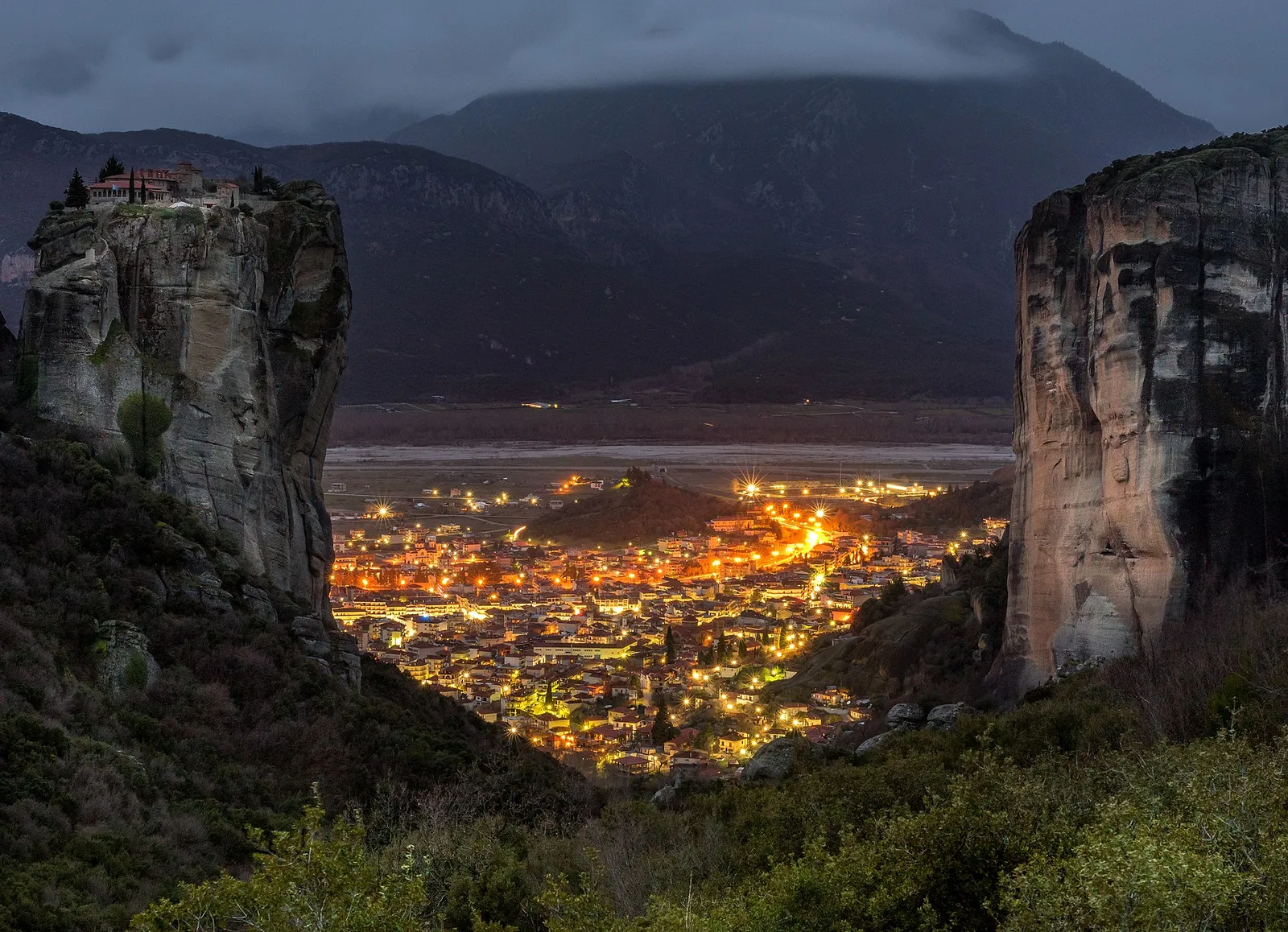
If you are building a longer mainland loop and want to keep the car a while longer, Nafplio also works as the southern end of a route that runs north to Meteora, the monasteries built on top of sandstone pillars, several hours further into central Greece. Either way, give the Peloponnese more than a single rushed day if you can manage it. It is the part of Greece that rewards travellers willing to trade one ferry crossing for a longer drive and a lot more history along the way.
The one site in the northern Peloponnese that rewards a detour more than its photographs suggest is a theatre where a coin dropped on the orchestra floor carries to the back row. Our guide to the ancient theatre of Epidaurus covers what survives, when to go and whether the acoustics live up to the claim.
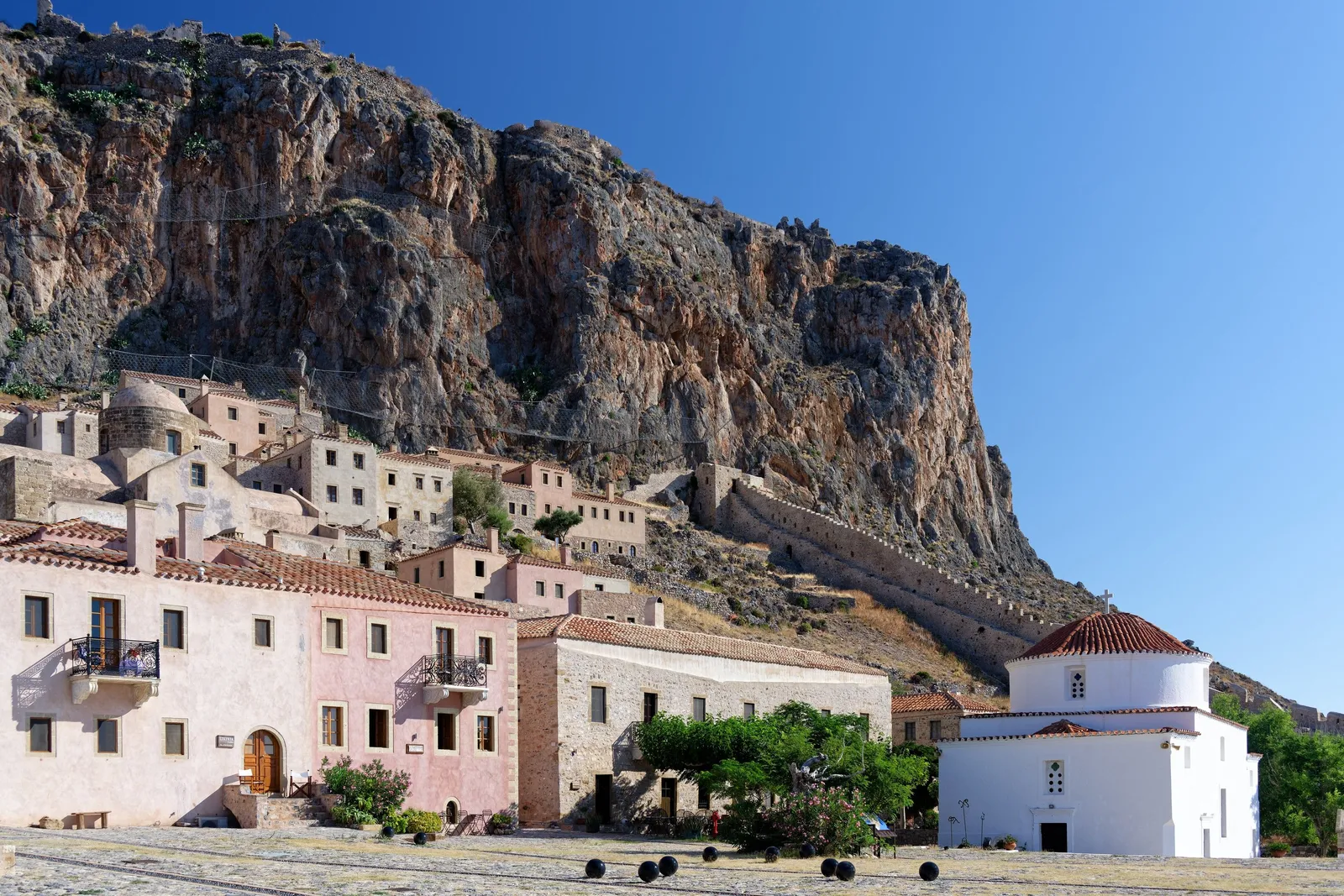
At the far southern end of the same peninsula sits a Byzantine town hidden behind a rock in the sea, invisible from the mainland until you walk around it. Our guide to Monemvasia covers the lower town, the climb to the ruins above it and why staying the night changes the visit.
Nafplio works better as a base than as a stop, and the sites within reach of it fill several days on their own. Five days in the Peloponnese links it with Mycenae, Mystras and Monemvasia.