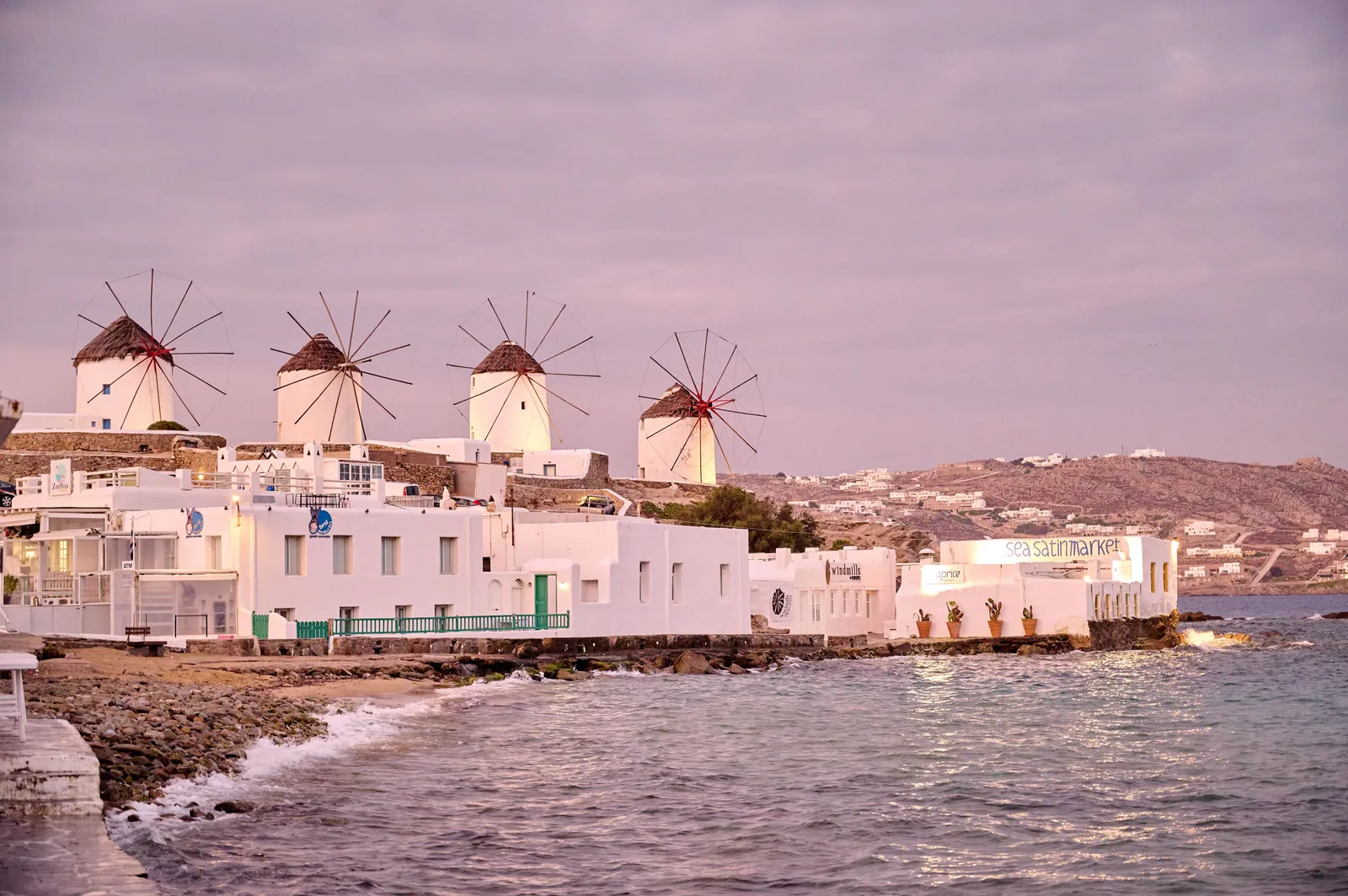
Mykonos has a reputation that arrives before you do, and it is only about a third of the story. Yes, this is the loudest island in the Cyclades and the most expensive place in Greece to order a bottle by a pool. It is also a genuinely beautiful Cycladic town, a coastline with wild empty bays on its northern side, and the jumping off point for Delos, an entire abandoned ancient city half an hour away by boat.
Five days is enough to do all three without feeling like you signed up for the wrong holiday. Read the Mykonos guide first, and the where to stay in Mykonos guide before booking, because the difference between town and the south coast changes the trip completely.
Itinerary at a glance
| Day | Area | Signature experience |
|---|---|---|
| 1 | Mykonos Town | Getting lost in lanes built to confuse pirates |
| 2 | Delos | A whole ancient city on an uninhabited island |
| 3 | South coast beaches | Organised bays, from family to full volume |
| 4 | North coast beaches | Wild, unserviced and almost empty |
| 5 | Slow day and the night | A late start, then the town after dark |
Day 1: Mykonos Town, on foot
The old town is a deliberate maze. The lanes were laid out narrow and confusing to slow down raiding pirates, and they still work perfectly well on visitors. The right approach is to give up on the map for a couple of hours.
Work your way towards Little Venice, where houses sit with their balconies directly over the water, and up to the row of windmills on the ridge above. Nearby is Panagia Paraportiani, a chapel that is really four chapels fused into one rounded white mass, and one of the most photographed buildings in Greece.
Eat kopanisti, the island’s peppery aged cheese, and louza, cured pork loin, on a mezze plate. Honest note: a table with its feet in the water in Little Venice carries a serious premium over the same food one lane inland.
Wow moment of the day: the moment the lanes stop making sense and you realise that is the point. It happens to everyone, usually around the third identical whitewashed corner.
Day 2: Delos
The boat crosses to an island where nobody has been allowed to live for centuries. Delos was one of the most important religious and trading centres in the ancient Mediterranean, mythological birthplace of Apollo and Artemis, and it is now an open archaeological site covering most of the island.
Walk the theatre quarter, where the mosaic floors of merchant houses are still in place, and up to the Terrace of the Lions. The lions you photograph are replicas, and the originals are in the site museum a short walk away, which is worth the detour.
Honest note, and it matters: there is almost no shade, no shop, and the return boats run to a strict timetable. Bring water, a hat and proper shoes, and know your boat time before you set off inland. The crossing is also weather dependent and is cancelled in strong wind, so do not save it for your last morning.
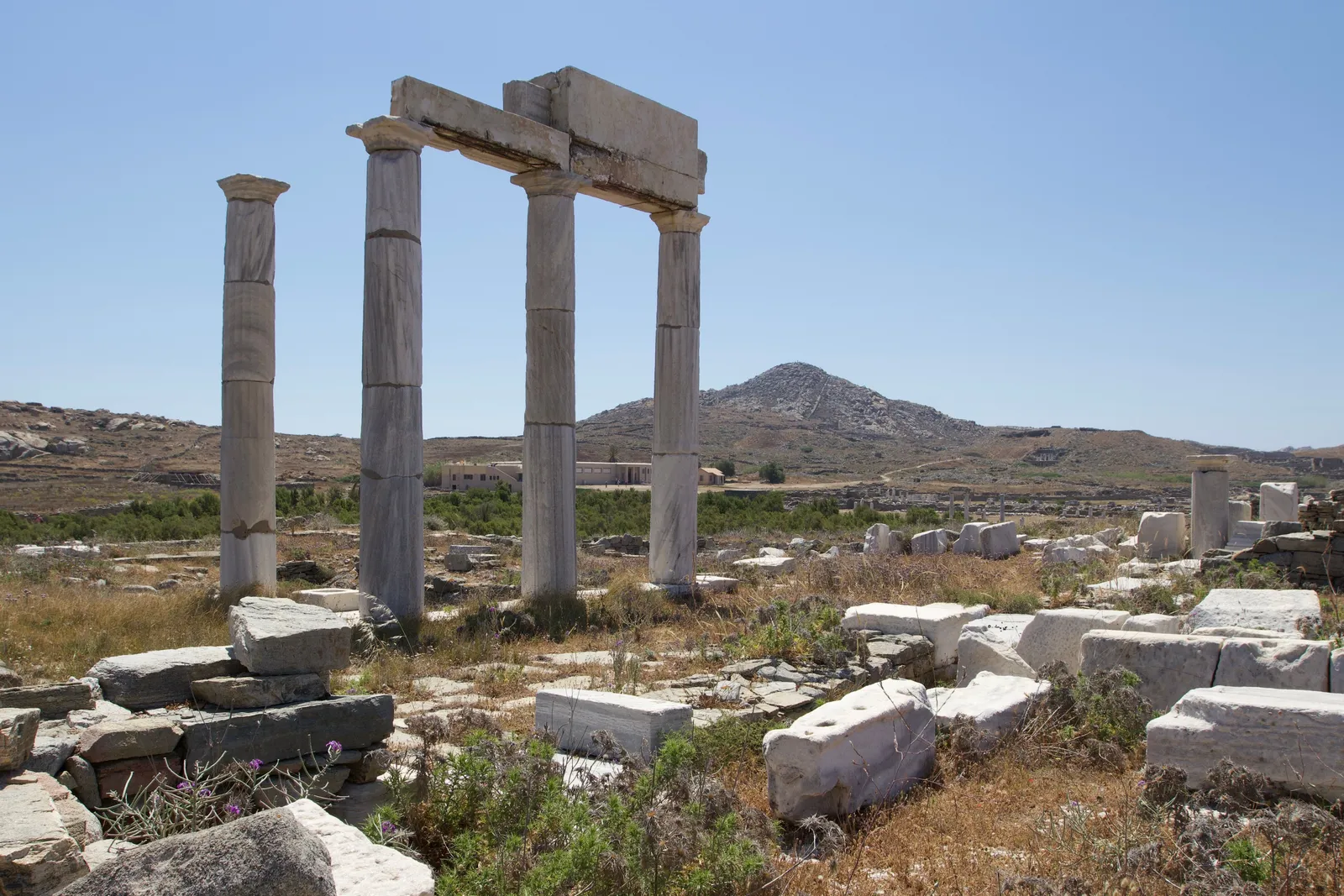
Optional guided tour: Delos is one of the few sites where a guide genuinely changes the visit, because without one the layout reads as a field of low walls.
Day 3: The south coast
The south is where the organised beaches are, and they are not interchangeable.
Paradise and Super Paradise are the club beaches, with daytime parties that run into the evening. Platis Gialos and Ornos are calmer, family friendly, well served by buses and by the small boats that shuttle along the coast. Psarou is the see and be seen bay.
Honest note on cost, because this is the thing people are caught out by: on the organised bays you are paying for the sunbed set, and at the higher end places that means a minimum spend rather than a simple hire fee. Ask what the arrangement is before you sit down, not after. The public stretches at either end of most bays are free.
The coastal boats between Platis Gialos, Paradise and the neighbouring bays are a pleasant way to move around and avoid the parking problem entirely.
Day 4: The north coast
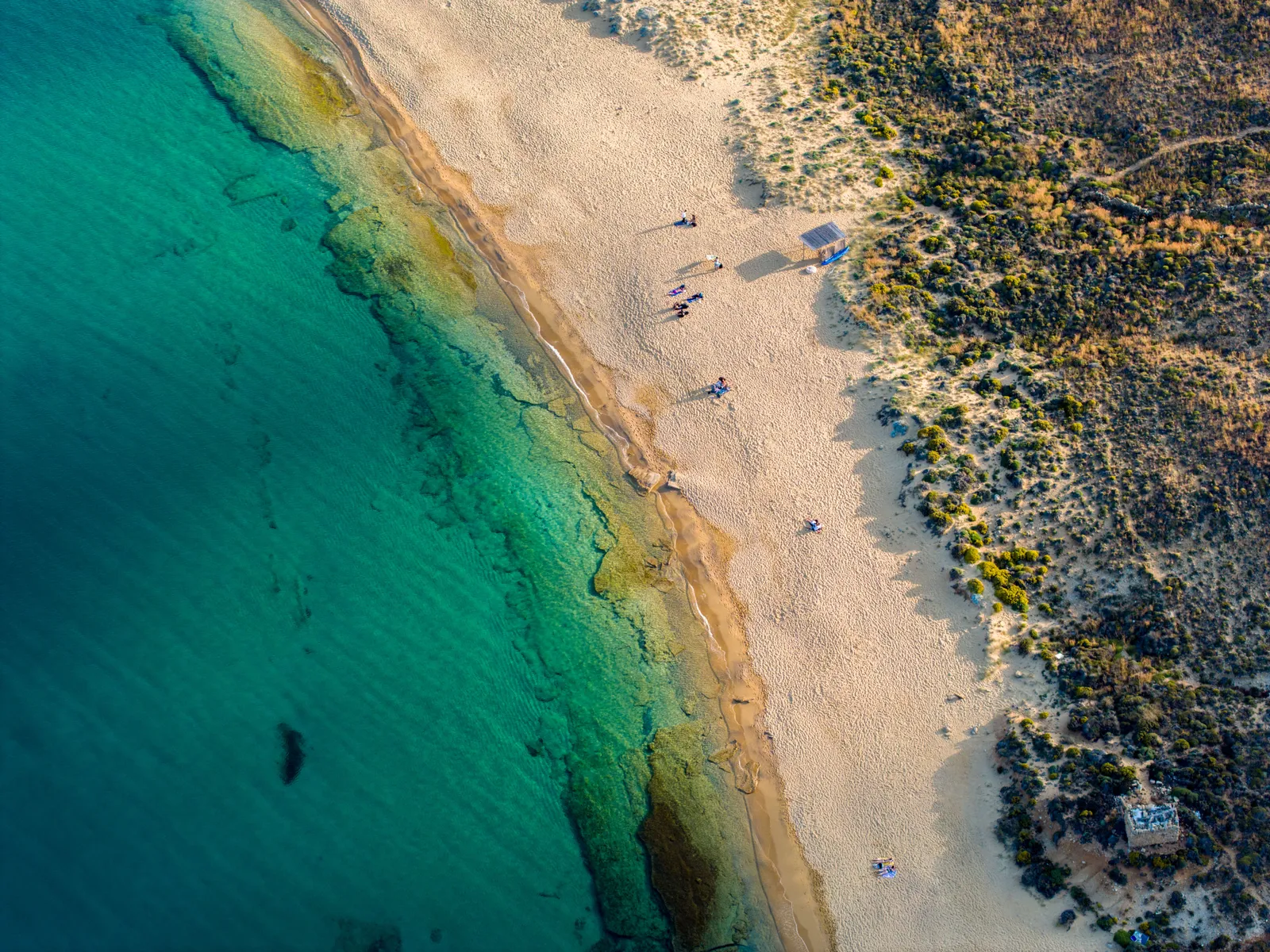
The north faces the meltemi, the summer wind that blows down the Aegean, and that has kept it undeveloped. This is the Mykonos most visitors never see.
Fokos and Agios Sostis have no sunbeds, no music and often almost nobody, reached down rough tracks. Bring your own water and shade. Ftelia is a wide sandy bay that the wind has turned into the island’s kitesurfing and windsurfing centre.
Wow moment of the day: standing on an empty northern beach with the wind coming off the water, ten minutes’ drive from a coastline where a sunbed costs more than dinner.
Practical note: the bus network largely does not serve the north, so this day needs your own transport. See car rental in Greece, and be aware that quad bikes are heavily marketed here and are a common cause of holiday injuries.
Day 5: Slow, then late
Mykonos runs on a late clock. Restaurants fill after nine, bars after midnight, and clubs later still, so the sensible shape for the last day is a slow morning, an afternoon somewhere flat, and an evening that starts properly.
Spend the afternoon back in town for the shops and galleries, or return to a bay you liked. Then eat late, take a drink in Little Venice as the sun goes, and see how the night develops. Honest note: the famous clubs charge accordingly, and the town bars give you most of the atmosphere for a fraction of it. Our Mykonos nightlife guide breaks down which areas suit which kind of evening, and what the beach clubs actually cost once you sit down. For the table itself, where to eat on Mykonos covers the gap between a beach club bill and a taverna two streets inland, and how fish priced by the kilo turns into a bill nobody expected.
If you would rather trade one of these days for a second island, the ferry connections here are excellent and Naxos, Paros and Delos all sit within easy reach. See island hopping by ferry and which Greek island.
Where to base yourself
Mykonos Town is the right choice for most of five days. It is where the atmosphere is, it is walkable, and it is the hub of the bus network, so you can reach the south beaches without driving. Ornos and Platis Gialos put you on a beach with a family friendly feel and a short hop into town. Psarou and Elia are the high end bays. Ano Mera, the island’s only inland village, is the cheap and quiet option and feels like a different island entirely, which is either the appeal or the problem depending on why you came.
Honest note: the town has almost no parking, and what exists is paid and full in season. If you hire a vehicle for the north coast day, factor that in rather than assuming you can keep it outside your door.
Practical tips
- Choosing between the big two: read Mykonos or Santorini if you are still deciding.
- When to go: July and August are the peak of both the crowds and the prices, while June and September give you warm sea with the volume turned down. See the best time to visit Greece.
- Getting here: flights and ferries both serve the island. See ferries from Piraeus.
- Wind: the meltemi is a real factor in high summer, and it cancels boats. Build a spare day into any island hop.
- Budget: this is the most expensive island in Greece by some distance, and the gap between the beach clubs and everything else is enormous. See the Greece budget guide.
- Beaches elsewhere: for the wider picture, see the best beaches in Greece.