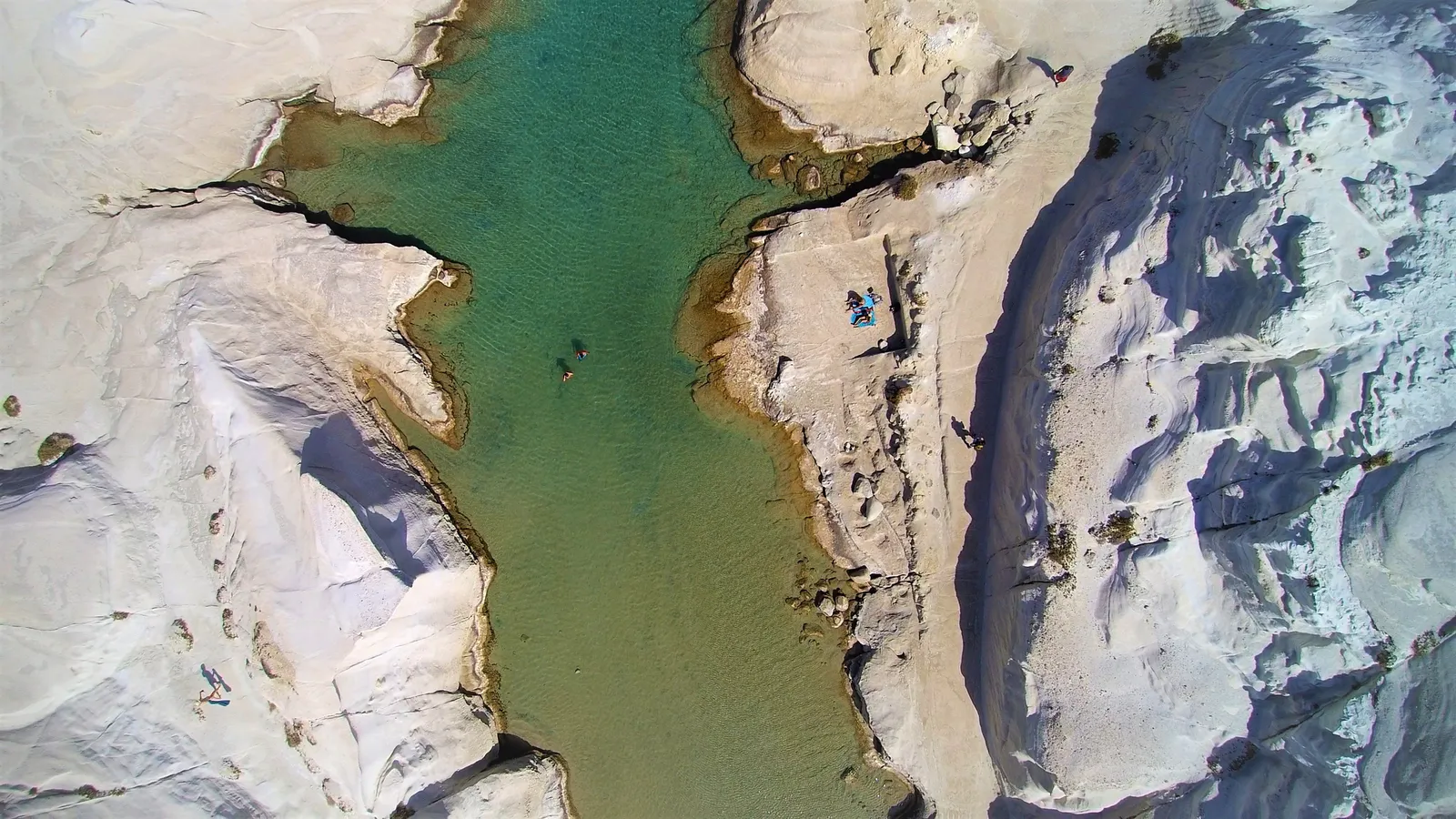
The Cyclades are not only Mykonos and Santorini. Two islands over, the same white villages and the same water come without the queues, the minimum spends and the sunset scrum, and they come with things the famous two do not have: a coastline of white volcanic rock that looks like the moon, and a beach so long that August cannot fill it.
This is a two island week with one ferry leg in the middle. Milos first, Naxos second. If you are still choosing islands, read which Greek island, and plan the crossing with the ferry guide.
Itinerary at a glance
| Day | Island | Signature experience |
|---|---|---|
| 1 | Milos | Sarakiniko, and the painted boat garages |
| 2 | Milos | The boat around to the sea caves at Kleftiko |
| 3 | Ferry, then Naxos Town | The Portara standing alone on its islet |
| 4 | Naxos | The west coast, which does not run out |
| 5 | Naxos | Marble villages and a giant lying in an olive grove |
Day 1: Milos, and a coastline unlike anywhere else
Milos is volcanic and was mined for millennia, which has left it with a coastline of extraordinary variety. More than seventy beaches, in colours from white to rust to black.
Sarakiniko is the one you will have seen: smooth white rock, weathered into curves and ridges, dropping into water that looks artificially blue against it. Go early or late. In the middle of a summer day the white rock throws the light straight back at you, there is no shade at all, and it is genuinely uncomfortable.
Papafragas nearby is a narrow inlet cut deep into the rock, best viewed from above.
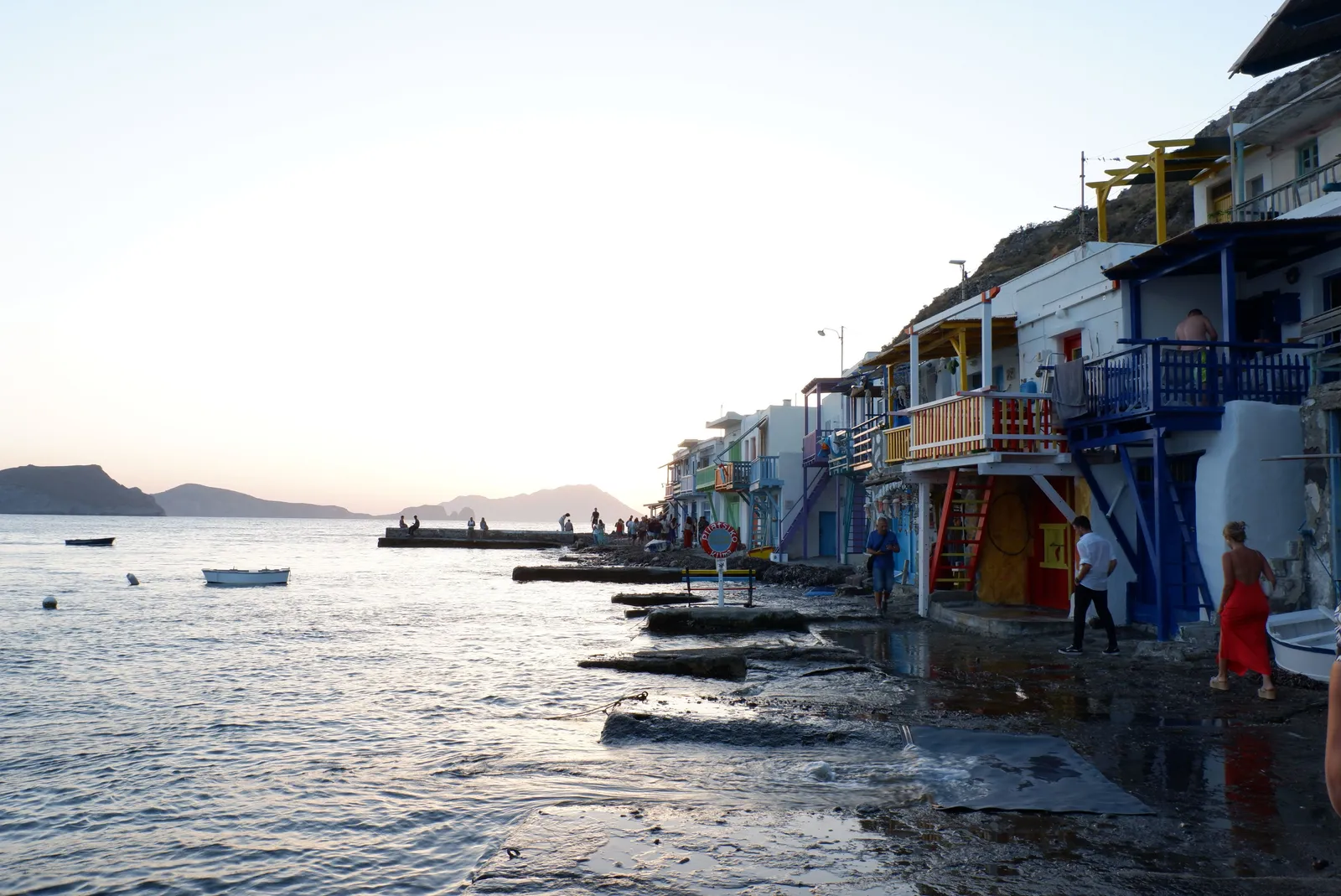
Wow moment of the day: the syrmata at Klima and Mandrakia, boat garages cut into the rock at the waterline with brightly painted doors, houses above and fishing boats parked inside at ground level. Whole villages are built this way.
Day 2: Kleftiko, by sea
The southwest of the island has no road. Kleftiko is only reachable by water, a cluster of white rock stacks, arches and caves in clear shallow sea that was used as a pirate hideout, which is where the name comes from.
Full day boat trips leave from Adamas and typically circle the island, stopping to swim at Kleftiko, at the sulphur mine bay, and at coves along the way. It is the single best day on Milos.
Honest note, and build the trip around it: these boats are cancelled in wind, and in the Cyclades that is a normal summer event rather than bad luck. Leave a spare day, book the trip early in your stay rather than on your last morning, and accept that it may move.
Eat a Milos cheese pie, made with the island’s soft cheese and, unusually, a little sweetness in the pastry.
Day 3: The ferry, and Naxos Town
Ferries connect the two islands, though the schedule is thinner than on the Mykonos and Santorini routes, so this is the day to have checked timings well in advance. See ferries from Piraeus for how the network works.
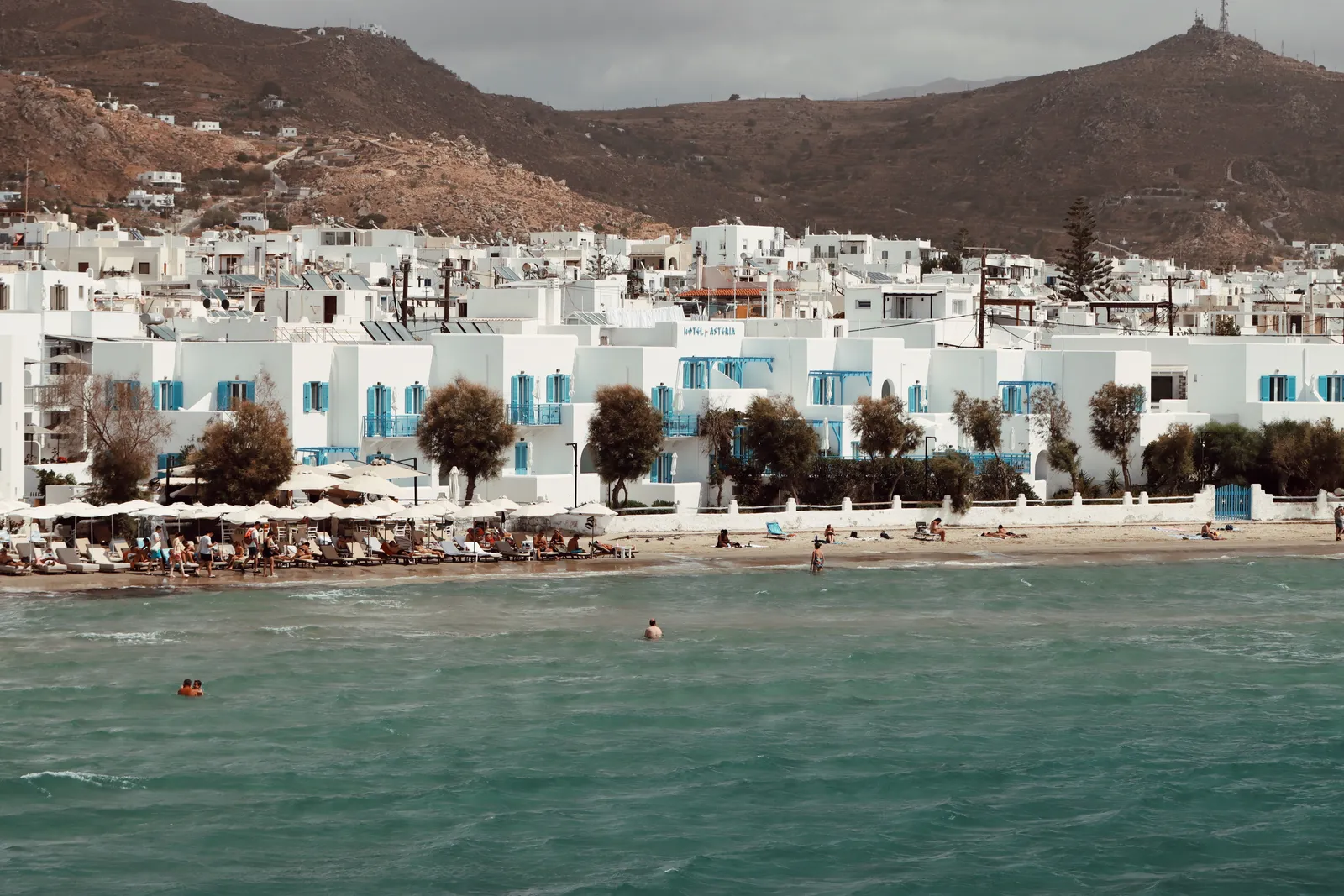
Arriving into Naxos Town, the first thing you see is the Portara, an enormous marble doorframe standing alone on an islet by the harbour. It is the unfinished gateway of a temple to Apollo begun in the sixth century BC and abandoned, and it has stood there ever since because the marble was too big to be worth carting away.
Above the town, the Venetian Kastro is a walled quarter of lanes and coats of arms still lived in today. Eat Naxian graviera, a hard cheese the island is known for across Greece, and try the citron liqueur made here from the leaves of the citron tree. See the Naxos guide.
Day 4: The west coast
Naxos has the best beach coastline in the Cyclades and hardly anyone says so. A single strand runs south from the town: Agios Prokopios, then Agia Anna, then Plaka, then Mikri Vigla and on.
Wow moment of the day: Plaka in August. It is several kilometres of soft sand, and it is simply too big to fill, so you can walk ten minutes and be alone on an island in high season.
Mikri Vigla is split by a headland into a calm side and a windy side, and the windy side is one of Greece’s main kitesurfing spots.
Naxos is also the most agricultural of the Cyclades, which shows up on the table: potatoes that Greeks buy by the sack, cheese, meat and vegetables that are genuinely local rather than shipped in. Beach tavernas here are noticeably better value than on the famous islands. See the Greek food guide.
Day 5: Into the mountains
Inland Naxos is green, mountainous and full of villages, and it is the reason to give the island more than a beach stop.
Halki was the old commercial centre, with neoclassical houses and a working distillery producing the citron liqueur, where you can taste in the original nineteenth century room. Apiranthos, higher up, is built almost entirely of marble, including its streets, because the mountain it sits on is made of the stuff.
Wow moment of the day, and it is the best single thing on the island: the unfinished kouros statues. Two enormous ancient marble figures, each around six metres, still lying on their backs where they were abandoned in the quarries when the stone cracked during carving. One at Flerio, one at Apollonas. They lie in an olive grove and a hillside respectively, and you walk right up to them.
Which way round, and what it costs you
The order here matters more than it looks. Milos first works if you are flying in and out of Athens, because Milos has the thinner connection to the mainland and you would rather sort that out at the start of the trip than the end. Naxos first is better if you are continuing to another island afterwards, because Naxos is a genuine ferry hub and Milos is not.
Honest note on the middle leg: there is no direct sailing between the two on every day of the week, and outside July and August there may be none at all on your dates, in which case the connection routes through Piraeus or another island and eats most of a day. That is the real cost of this pairing, and it is worth checking before you commit. If the dates do not work, Paros substitutes for either island without much loss.
Practical tips
- Ferries first, then everything else. These are not the busiest routes, so check schedules before you fix your dates. See island hopping by ferry.
- Transport on the islands: both need a car or a scooter for the good parts. Naxos in particular is large. See car rental in Greece.
- When to go: June and September are the sweet spot, with warm sea and less wind than the height of summer. See the best time to visit Greece.
- Wind: the meltemi affects boat trips and ferries in July and August. Never plan a sailing on the day of a flight.
- More islands: if you want a third stop, Paros connects well to both. See the Paros guide and the Milos guide.
- Budget: these islands are meaningfully cheaper than the famous pair for rooms and meals alike. See the Greece budget guide.