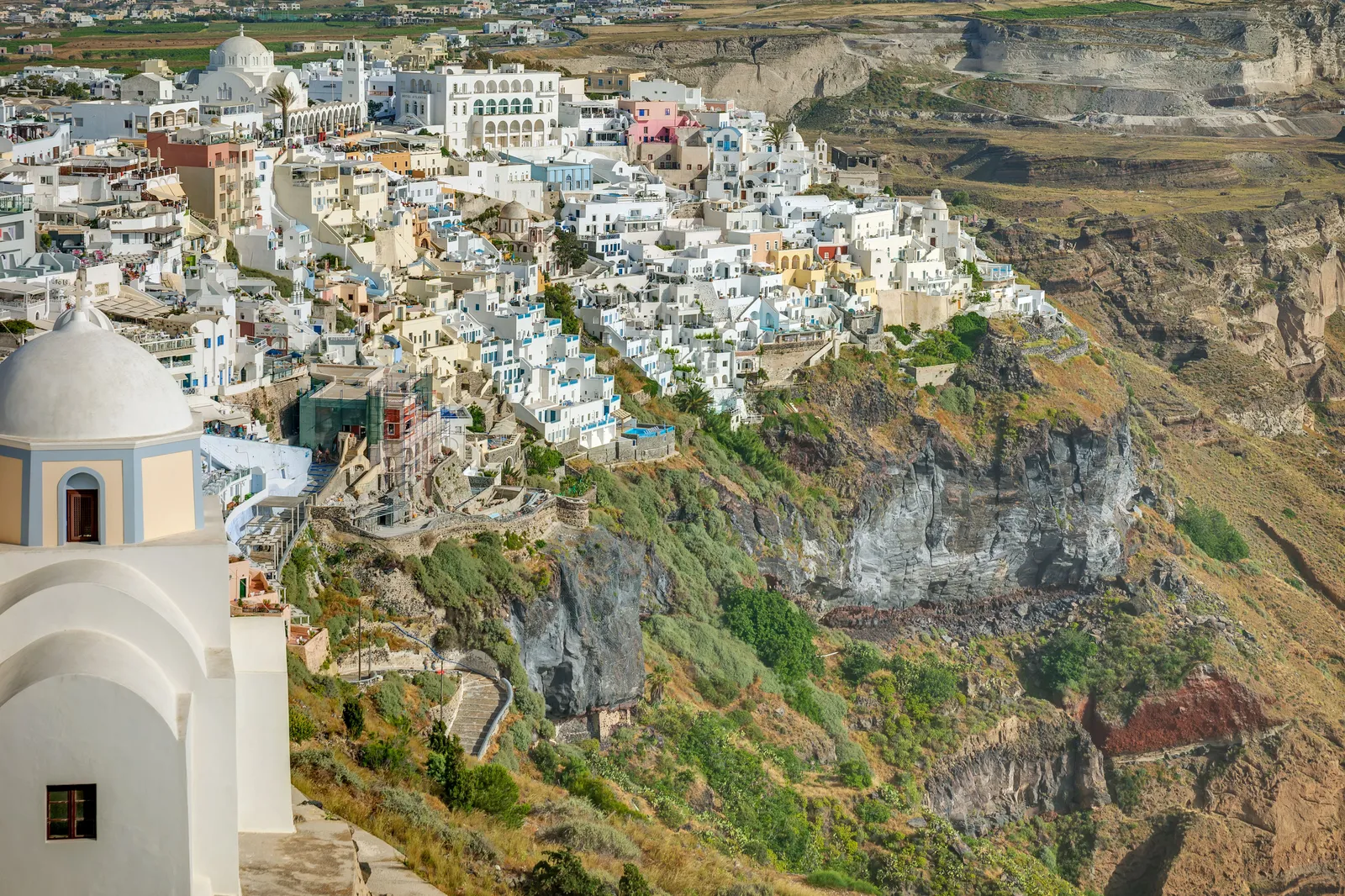
Most people give Santorini two nights, see one sunset from a crowded terrace, and leave thinking it is beautiful but overrated. Five days is what turns it into a proper island: enough for the rim walk in the cool of the morning, a full day inland among vines that grow like nothing else on earth, the black volcanic beaches on the far coast, and a Bronze Age town that was buried under ash and forgotten for three and a half thousand years.
Start with the Santorini guide for background, and the where to stay in Santorini guide before you book, because on this island the choice of village matters more than the hotel.
Itinerary at a glance
| Day | Area | Signature experience |
|---|---|---|
| 1 | Fira and the caldera rim | The clifftop path north towards Imerovigli |
| 2 | Oia and Ammoudi | The village early, before the coaches |
| 3 | The interior and the wineries | Basket vines and assyrtiko |
| 4 | The volcanic coast | Black sand, red cliffs, the crater |
| 5 | Akrotiri and the south | A town preserved under volcanic ash |
Day 1: Fira and the caldera rim
Fira is the island’s main town and the best place to work out what you are actually looking at: a drowned volcanic crater with a village balanced on its edge. Walk the rim path north towards Firostefani and Imerovigli, which gets quieter and prettier with every hundred metres.
The cable car runs down to the old port, and there is a stepped path alongside it. Honest note: donkeys work that path, and the welfare of the animals is a genuine and ongoing concern, so the cable car or your own legs are the kinder choice.
Eat what the island grows: fava, a purée of yellow split peas, and tomato keftedes, fritters made from the small intense Santorini tomato. Both are naturally vegetarian and appear on almost every menu.
Wow moment of the day: the rim path itself at the end of the afternoon, when the light goes low across the water and the whole caldera turns the colour of the rock.
Day 2: Oia, early
Oia is the picture everybody has seen, and it is genuinely lovely for roughly two hours a day: first thing in the morning, when the lanes are empty and the light is soft. Go then. The castle ruin at the western tip is where the sunset crowd compresses itself into an uncomfortable crush every evening; the same view is available from the marble path a few minutes back, or from Imerovigli entirely.
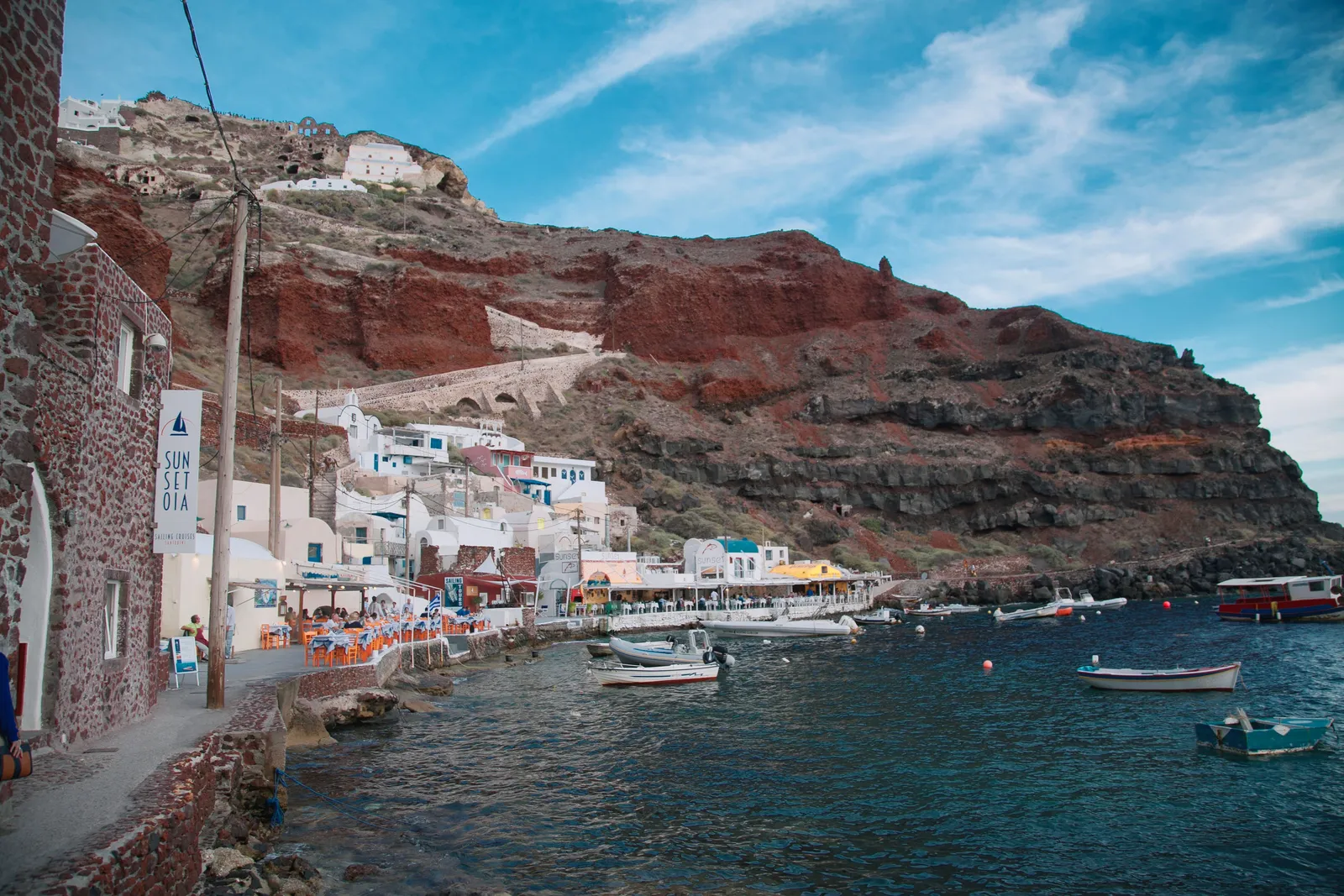
Below the village, a long flight of steps drops to Ammoudi bay, a red rock cove with fish tavernas at the water’s edge. Grilled octopus here is the island cliché for good reason. Coming back up is a real climb in summer heat, so carry water.
Optional guided tour: a small group sunset sail around the caldera moves you away from the land crowds entirely and is the single most popular booking on the island, so it goes early in season.
Day 3: The interior, and the strangest vineyards in Europe
This is the day that surprises people. Away from the rim, Santorini is farmland, and its vines are trained in a way used almost nowhere else.
Wow moment of the day: the koulara, vines woven into low circular baskets that sit on the ground. The wind here would shred an upright vine, and there is barely any rain, so the basket shelters the fruit and lets it drink the sea mist that rolls in at night. The result is assyrtiko, a bone dry white with a mineral edge you can taste the volcano in.
Two or three wineries make a full day, most with terraces looking down over the vines. Ask about vinsanto, the sweet sun dried wine that is the island’s other tradition. Between them, stop in Pyrgos, the old hilltop capital, and walk up through the lanes to the castle for a view that takes in both coasts at once.
Day 4: The volcanic coast
The east and south coasts are where Santorini stops being a postcard and becomes a volcano. Perissa and Kamari are long black sand beaches beneath a hulk of rock. Honest note: black sand absorbs heat, and by midday it is genuinely too hot to cross barefoot, so bring something for your feet.
The Red Beach in the south is exactly what its name says, a cove under crumbling rust coloured cliffs. Access has been restricted at times because of rockfall, so follow whatever signage is in place when you arrive rather than the photograph you saw online.
Boats run out to the crater islet of Nea Kameni, where you walk up over black scree to the rim, and on to the hot springs, which you reach by swimming from the boat into a rusty ochre bay. Honest note: the springs are warm rather than hot, the iron rich water stains light swimwear, and the whole thing depends on the sea being calm.
Day 5: Akrotiri, and the town under the ash
Save the best archaeology for last. Akrotiri was a Bronze Age town of paved streets, drainage and multi storey houses, buried by the eruption that reshaped the island and left almost perfectly preserved. It sits under a modern roof, so this is also the right choice on a windy or wet day.
What stays with most visitors is what is missing: no bodies were found, which suggests the town was evacuated before the eruption. Finish at the lighthouse on the southern tip, which faces open sea rather than the caldera and is the quietest sunset on the island by a wide margin.
Where to base yourself, in one paragraph
This is the decision that shapes the whole trip. Fira puts you on the bus network and within walking distance of most things, and it is the practical choice for five days without a car. Imerovigli and Firostefani give you the same caldera view a little further along the rim, quieter and usually a little cheaper than Oia. Oia is the most beautiful and the most expensive, and it is a long way from the beaches and the airport. Kamari and Perissa on the east coast are the budget option with real beaches, at the cost of a bus ride every time you want the caldera. The full breakdown is in where to stay in Santorini.
Practical tips
- Getting here and on: ferries and flights both serve the island, and the ferry port sits below a switchback road that jams at arrival times. See island hopping by ferry and ferries from Piraeus.
- If Santorini is the finale rather than the whole trip: our ten days in Greece plan reaches the island by ferry at the end and flies home from here, which saves the long crossing back to Piraeus.
- When to go: May, June, September and early October give you the island without the peak crush. See the best time to visit Greece.
- Getting around: buses connect the main villages through Fira, but the interior and the south really want your own transport. See car rental in Greece.
- Santorini or Mykonos: if you are choosing between them, read Mykonos or Santorini.
- Food: the island specialities are worth seeking out. See the Greek food guide, and where to eat in Santorini for the difference between a caldera table and a village taverna.
- Budget: caldera view rooms and caldera view tables both carry a serious premium, and it is easy to eat well a street back for a fraction. See the Greece budget guide.
- If this is a honeymoon: the island is built for it and priced accordingly. A honeymoon in Santorini covers which villages suit one, what a caldera view is really worth, and how to see the Oia sunset without spending the evening in a crowd.